
India Inc. leaders say country’s economic growth story remains intact
ADVERTISEMENT
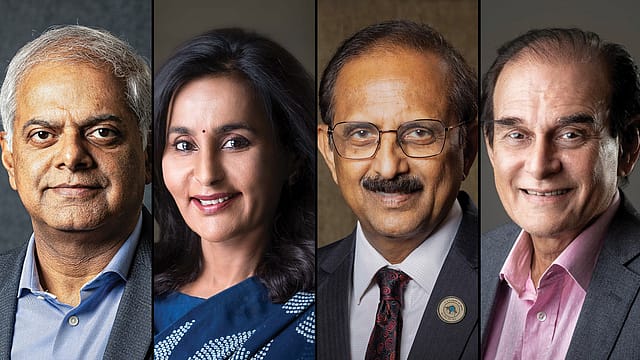
Leaders of India Inc. batted for the Indian economy and expressed confidence that the country can weather the ongoing West Asia crisis, even as the economy faces headwinds from rising crude oil prices and a weakening rupee. Speaking at the Citi India 2026 conference in Mumbai, they were confident about India’s economic growth story being intact and said that corporates were resilient to deal with the current situation.
Manish Tiwary, Chairman and Managing Director of Nestlé India , said, “In the current environment, due to current situation, there is a bit of wait of watch, but the consumer growth story is as intact as it ever was. Great work is happening on the supply side, and on the demand side, I stay very convinced about this sector to grow in double digits,” he said.
In the March-ended quarter, on an average India’s FMCG companies reported high single-digit volume growth, though value-wise growth was better.
“The India growth story may not be homogeneous: the top end of the market is extremely resilient, whether we look at automobiles, real estate or FMCG. Also, the rural economy continues to do well and is growing faster than the urban region. The challenge is in urban metro, where inflation is high, corporate annual earnings have been steady. Here consumers could push out on discretionary expenditures," Tiwary said.
In 2025, Nestlé had already outlined a capex plan of ₹5,000 crore to increase the capacities of various product segments, improve productivity and investment in the new product lines to strengthen its operations for consistent growth in the coming years. “We are very clear that the growth story is there,” he reiterated.
India’s stock markets have however not shown the same optimism, with benchmark indices down about 13% in 2026, as foreign funds have sold equities over $25.4 billion in just five months of 2026.
Suneeta Reddy, Managing Director of Apollo Hospitals , said there was a structured demand for quality healthcare in India. Apollo, in 2025, has announced an ₹8,000 crore planned investment to add 4,300 beds in the next four years, in areas where the hospital chain does not have a major presence.
India’s healthcare infrastructure is short, running well below the WHO norm of 3.5 beds per 1,000 people. But Reddy said that the government, in recent years, has been doing enough to make “healthcare affordable and accessible” for millions.
Earlier, State Bank of India Chairman Challa Sreenivasulu Setty spoke on similar lines. “India’s growth story is a long-term one, one of audacity. We are able to think big, even when we are going through a difficult time,” Setty told the audience, recounting how SBI, in 2018-19, planned on becoming $100 billion by market cap, at a time when it had reported a quarterly loss of ₹2,416 crore—its first in 19 years—in the December quarter of FY18.
“The repositioning of India as a long-term story is justified,” Setty said.
The SBI chairman said that for the banking sector to support India’s aspirations, it has to be built around several pillars: making banking services accessible across every segment of society, building institutional expertise and awareness, leveraging on technology, data and AI to create superior customer experiences and adopting the highest levels of governance, consumer protection and risk management.
Harsh Mariwala, Founder and Chairman of Marico , which has built successful brands such as Saffola and Parachute, said that for entrepreneurs to build a successful brand today, there needs to be innovation. “The product must have a differentiator, the ability to cut ice with the customer. The consumer must be emotionally connected to your brand,” he said.