
India is no longer just another market for Amazon Devices, it's a blueprint
ADVERTISEMENT
The most telling sign that a technology has arrived is not when the sales number flashes in millions, but when it disappears into ubiquity. A voice that dims the lights mid-conversation, a screen that knows what you want to watch before you search, a device that understands not just Hindi or English but the way people actually converse.
For Amazon in India, the country has moved beyond being a high-growth consumer base to becoming a proving ground for how devices are imagined, built and scaled globally.
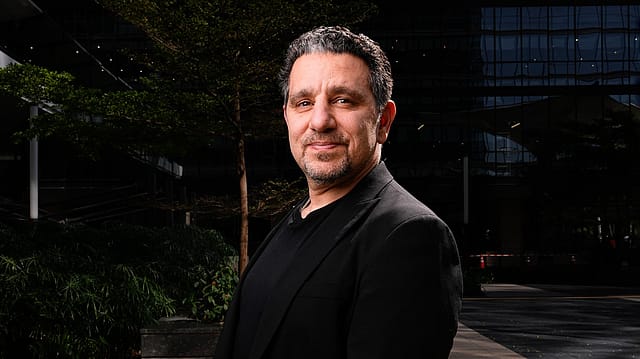
At the centre of this push is Panos Panay, a Greek-American business executive, leading Amazon’s consumer electronics business, who frames the company’s devices strategy with disarming simplicity. “When a customer picks up the product, they need to fall in love with it,” he tells Fortune India. “You move from needing the product to wanting the product and when they use it, they love the product.” The business he oversees includes Alexa, Echo, Kindle, Fire TV, Fire tablets, Ring, eero, Blink, and the Amazon Appstore.
Building for India, not just shipping to it
India’s importance to Amazon’s devices business rests on two parallel realities. It is one of the fastest-growing consumer markets, and it is one of the company’s deepest talent hubs. The intersection of the two is where the blueprint is emerging.
Panay is explicit about this dual role. “You’re building the future with India and you’re building it for India,” he says, pointing to the company’s engineering hubs across Chennai, Bengaluru and Hyderabad. India is now the second-largest hub for Amazon’s device developers.
That matters because the product itself is no longer static hardware. It is a system of connected experiences. Fire TV, Alexa, Kindle and upcoming platforms are meant to “magically connect together and work perfectly in a seamless manner,” as Panay puts it. The connective tissue is artificial intelligence (AI), but not in an abstract sense. It is about making devices understand context, language and behavioral patterns.
India complicates and enriches that ambition at the same time. With 22 official languages and countless dialects, the challenge goes far beyond translation. “It’s not just this straight-up translation of a language,” Panay says. “It is the nuance, the way [Indians] talk and express, and we think Alexa can pick up a lot of this.”
That nuance is critical if devices are to become ambient. The company’s vision is moving from command-based interaction to natural dialogue. The use case is simple but telling. If someone is cooking and needs an ingredient, they should be able to just say it and have it delivered without touching a phone. That frictionless layer is where devices become indispensable.
Alexa today reaches 99% of India’s pin codes. In smart speakers, Amazon leads the domestic market with a 59% share, reinforcing its early-mover advantage with Echo devices. Globally, Echo has historically commanded roughly 75% market share against Google’s 25%, underlining the company’s dominance in voice-led interfaces.
Fire TV, meanwhile, is another anchor. Amazon has sold over 250 million Fire TV devices globally as of April 2026, including more than 50 million in just the past year. In India, its relevance is deeper because of localisation. “Our Fire TV UI is unique to India,” Panay notes, highlighting how global platforms are being reshaped for local consumption habits.
Even manufacturing points to that shift. Every Fire TV Stick sold in India is now made locally, aligning with broader supply chain localisation trends.
The premium pivot and the next layer of growth
What has changed most in the past five years is not just adoption, but aspiration.
“I think five years ago the comment was, what are the lowest cost products?” Panay says. “If you cut to today, it’s quite the opposite. There are people that want something more elegant and more meaningful.”
That shift in purchasing power is forcing Amazon to rethink its portfolio strategy. The company is now preparing to bring its full stack of products to India, including premium Echo devices and higher-end Fire TV experiences. The logic is straightforward because demand has broadened across price tiers, and ignoring that would mean leaving growth on the table.
The opportunity extends beyond existing categories. Amazon is actively evaluating the introduction of Ring cameras and Eero routers in India, both of which sit at the intersection of connectivity and home security. “As I sit here, it’s a big deal for me,” Panay says of bringing Ring to the country, signalling a renewed push into the smart home segment.
Globally, Amazon is already a top contender in the internet-of-things space, driven by its Echo and Ring ecosystem. India, with its rising urban middle class and increasing focus on safety and automation, could become the next major growth driver.
At the same time, the company is careful about price-market fit. Some global products remain absent simply because they sit at price points that do not yet justify scale. “You definitely don’t want to bring a product that doesn’t sell because of the price point,” Panay says.
Still, Amazon plans to invest $35 billion in India by 2030, with devices forming a key part of that expansion.
AI as the glue, not the headline
If there is one thread running through Amazon’s devices strategy, it is AI. “It’s central to our global innovation strategy, period,” he says.
In practice, that means embedding intelligence across devices rather than building standalone AI products. On Fire TV, AI is already shaping content recommendations. On Alexa, the shift is toward conversational interfaces that feel less like commands and more like interactions. On Kindle, it shows up in features like summarising notes or organising highlights.
The next leap is Alexa Plus, which will possibly be launched to India by year-end. “I truly believe that these products are going to be transformative for this market,” Panay says.
The emphasis, however, is on getting it right rather than getting it fast. Language accuracy, dialect understanding and cultural context are non-negotiable. “I don’t want this market to have to deal with mediocrity,” he adds.
Security and privacy, often cited as concerns around AI-led devices, are being addressed through a combination of infrastructure and user control. Built on AWS, Amazon’s ecosystem allows users to decide what data is stored or used. “The number one thing you have to do is give the control to the customer,” Panay says.
Ultimately, what makes India strategically significant is not just its size, but its feedback loop into global product development. Panay believes India’s diversity of language, behaviour and consumption patterns feeds back into how Amazon designs experiences globally. “We learn so much from the Indian market and it has this impact across all our products,” he says.
And if Panay’s thesis holds, the next phase of growth will not be defined by how many devices Amazon sells in India, but by how deeply those devices embed themselves into everyday life.