
India remains a bright spot amid global uncertainty, says Tata Sons Chairman N. Chandrasekaran
ADVERTISEMENT
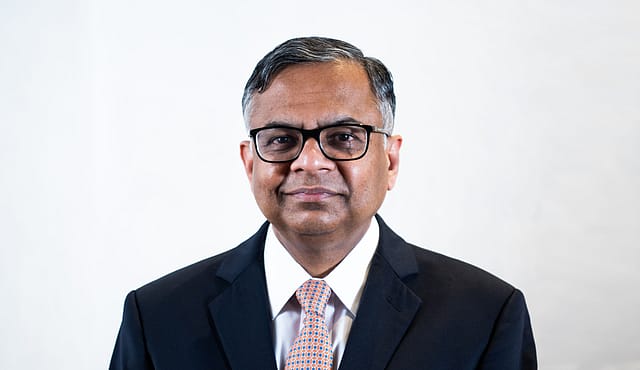
India continues to be a rare bright spot in an increasingly uncertain global economy, and Tata Consumer Products Ltd believes it is well positioned to ride the country's evolving consumption story, Tata Sons chairman N. Chandrasekaran told shareholders at the company's 63rd annual general meeting.
Against a backdrop of geopolitical tensions, supply chain disruptions, energy transition challenges and rapid advances in artificial intelligence, Chandrasekaran said India remains the world's fastest-growing major economy, driven by demographics, rising aspirations and expanding physical and digital infrastructure.
"We are fortunate that India remains a bright spot in the world and continues to be the fastest growing major economy," Chandrasekaran said. "Indian consumers and their consumption patterns are constantly evolving. Lifestyles are changing. New retail formats are emerging. Digital commerce, and particularly quick commerce, is changing the way consumers consume, eat, drink and shop."
For him, companies capable of combining "consumer-first thinking, innovation, execution, excellence, and enjoy a trusted brand", stand to benefit the most from this transition, adding that Tata Consumer is "extremely well positioned" to capitalise on these trends.
The company's consolidated revenue grew 15% to ₹20,290 crore, while constant currency growth stood at around 12%. EBITDA rose 12% to ₹2,815 crore and group net profit increased 20% to ₹1,547 crore. The board has recommended a dividend of ₹10 per share, equivalent to roughly 60% of profits.
Chandrasekaran said Tata Consumer has completed its evolution from a tea and coffee company into a broader food and beverage player. While tea and salt continue to provide scale and stability, newer categories such as packaged foods, pantry staples and ready-to-drink beverages are becoming increasingly important growth engines. Today, the company reaches 290 million households and is leveraging a mix of heritage and newer brands across consumption occasions.
Growth categories such as packaged foods, pantry staples and ready-to-drink beverages now account for 30% of the India portfolio, compared with 26% a year ago. New-age sales channels, led by quick commerce, contribute more than 35% of the India business.
He also highlighted the role of acquisitions in expanding the company's addressable market. The integration of Capital Foods and Organic India has broadened Tata Consumer's portfolio and strengthened its presence in faster-growing segments. New launches in categories such as dry fruits and cold-pressed oils are also contributing to organic growth.
Growth businesses and new channels drive momentum
Managing director and chief executive officer Sunil D'Souza said the company now ranks among India's top 10 FMCG companies. It distributes through around 4.5 million retail outlets, reaches 290 million households and employs more than 11,000 people globally.
"Our consolidated revenue was up 15%. The India business grew 14%, and the growth businesses, which we classify as Sampann, Capital Foods, Organic India, Soulfull and Ready to Drink, were up by 24%," D'Souza said.
India Foods became the company's largest segment with revenue of ₹6,588 crore, growing 18% during the year. India beverages generated ₹6,467 crore, up 8%, while international business revenue approached ₹5,000 crore. Non-branded businesses posted revenue of ₹2,387 crore, growing 23%.
Profit before tax rose 23% to ₹2,193 crore, while group net profit increased 24% to ₹1,552 crore. The company ended the year with cash reserves of ₹2,978 crore and reported free cash flow equivalent to 107% of EBITDA.
D'Souza highlighted the growing contribution of emerging channels. Modern trade accounts for 15% of business and grew 20% last year, while e-commerce and quick commerce contribute 19% and expanded 62%.
The company also launched 80 products during the year, double the pace of FY25. Innovation-led revenue has increased sevenfold, with innovation-to-sales ratio standing at 4.5% over the past two years. Among acquired businesses, Capital Foods reported revenue of ₹839 crore and Organic India contributed ₹478 crore. Combined gross margins stood at 48%, strengthening the company's position in higher-growth categories.
Looking ahead, Tata Consumer plans to deepen investments in digital capabilities and artificial intelligence across product development, demand forecasting, consumer insights, marketing and operations. Chandrasekaran said the company is also advancing its sustainability agenda under the Tata Group's Project Aalingana, positioning itself for long-term growth in an increasingly consumption-driven Indian market.