
India’s airport boom hits turbulence: Passenger traffic growth pegged at just 1-3% in FY27, says ICRA
ADVERTISEMENT
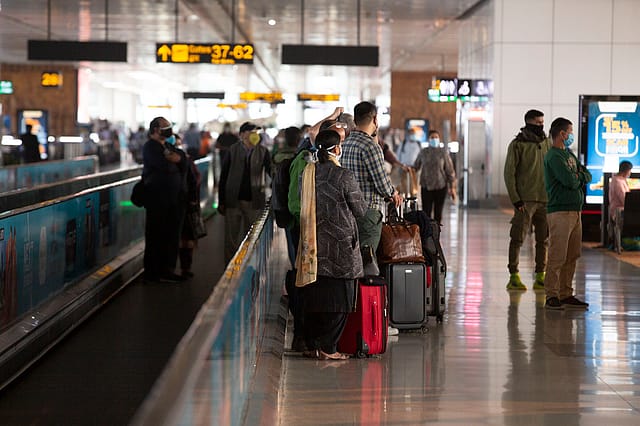
India’s airport sector is likely to see only modest growth in passenger traffic in FY2027 as geopolitical tensions, elevated aviation turbine fuel (ATF) prices and supply-side constraints weigh on the recovery, rating agency ICRA said in its latest report.
Overall passenger traffic at Indian airports is projected to grow 1-3% in FY2027 to around 424-432 million passengers, compared with 420 million in FY2026. Traffic in FY2026 had risen 2% from 412 million passengers in FY2025.
West Asian crisis hits international traffic
The subdued outlook comes despite a gradual recovery in air travel after disruptions caused by the West Asian crisis. International passenger traffic fell 20% during the crisis, while aircraft movements declined 17% in March 2026 from the previous month. Although traffic has since recovered, international passenger volumes in the first four months of FY2027 remained 9% below the year-ago period.
Domestic aviation has remained relatively resilient, supported by improving travel demand and continued investments in airport infrastructure.
“Passenger traffic at airports including domestic, international, and transit passengers; is likely to see moderate growth supported by infrastructure investments and an uptick in domestic travel demand,” ICRA said.
Airport revenues seen growing faster than traffic
Airport revenues are expected to perform better than passenger traffic. ICRA estimates revenues for its sample set will increase 6-8% in FY2027, helped by implementation of new tariff orders, higher non-aeronautical income from segments such as retail and real estate, and relatively stable passenger volumes.
Aircraft movement growth, meanwhile, is expected to remain muted. Movements increased just 1% in FY2026 amid aircraft supply constraints, Flight Duty Time Limitations (FDTL) and geopolitical disruptions. ICRA expects growth of 0-2% in FY2027, with elevated ATF prices and a low-base effect influencing both domestic and international movements.
“Further disruptions owing to West Asian crisis and elevated fuel prices may pose downside risks to our estimates,” the rating agency said.
₹1 lakh crore airport capex pipeline
Despite near-term pressures, airport infrastructure investment remains strong. More than ₹1 lakh crore is expected to be invested over the next four to five years in new greenfield airports, expansion of existing facilities and projects undertaken by the Airports Authority of India (AAI).
“Capex investments in airport infrastructure are likely to remain high,” ICRA said.
“The sector’s long-term outlook remains resilient due to ongoing infrastructure investments and a gradual recovery in domestic travel,” it added, indicating that continued expansion and modernisation could underpin the sector despite near-term global and cost pressures.