
India’s Grade A commercial office vacancy likely to fall by 50 bps this fiscal: Crisil
ADVERTISEMENT
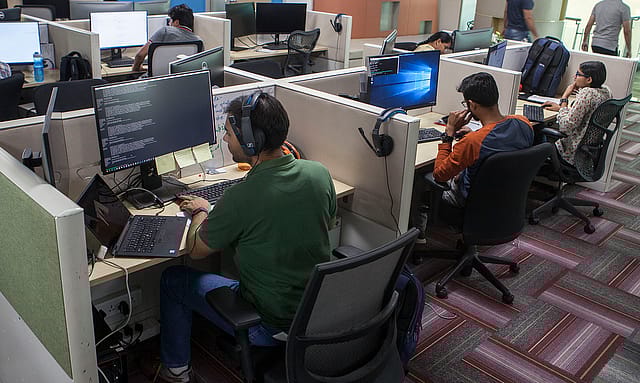
India’s Grade A commercial office vacancy level is expected to decline by around 50 basis points (bps) to 15.5-16% by the end of the current fiscal, supported by healthy leasing growth and a steady demand-supply gap, according to a report by Crisil.
The report said the projected decline follows a similar annual reduction of nearly 50 bps witnessed over the past two fiscals.
According to Crisil, stable demand from flexible workspace operators and the continued expansion of Global Capability Centres (GCCs) are expected to support net leasing growth despite concerns over global uncertainties and potential disruptions arising from Artificial Intelligence (AI).
The study analysed 120 commercial office assets rated by Crisil Ratings, representing nearly one-fourth of the country’s Grade A office stock.
“Overall, the net leasing is expected to grow at 6-7% this fiscal,” said Gautam Shahi, Senior Director at Crisil. He, however, cautioned that AI-led disruptions in the IT and IT-enabled services (IT/ITeS) sector could impact hiring and expansion plans. Geopolitical tensions and tariff-related uncertainties may also affect leasing activity by GCCs in the near term.
“While these pose short-term challenges, India's long-term structural advantages, including a large and skilled talent pool, cost competitiveness, policy-level support from central and state governments and broader economic stability, are expected to help the sector tide over the hiccups,” Shahi said.
The report noted that flexible workspace operators are expected to remain the primary growth driver for leasing activity, backed by large-scale capacity additions to meet rising demand. Leasing growth among domestic IT/ITeS and engineering and manufacturing companies, however, is likely to remain moderate.
NCR, MMR likely to see sharpest decline in vacancies
Regionally, the National Capital Region and Mumbai Metropolitan Region, which together account for nearly one-third of India’s office inventory, are expected to witness a sharper decline in vacancy levels of around 100 bps due to limited fresh supply.
Southern office markets including Bengaluru, Chennai, and Hyderabad, which together comprise nearly half of the country’s office stock, are likely to see vacancy levels decline by up to 50 bps, driven by healthy demand from GCCs and flexible workspace operators.
Meanwhile, vacancy levels in Pune are expected to remain stable after a sharp rise last fiscal due to a significant supply influx.
Crisil said strong leasing demand and lower vacancy levels over the past two years have enabled commercial office players to secure favourable lease renewals, resulting in mark-to-market gains.
Lease rentals for Crisil-rated commercial office players have recorded an annual growth of around 8% over the last two fiscals through fiscal 2026.
“Contracted rental escalation and sustained low vacancy levels are expected to continue to enhance cash flows for Crisil-rated commercial office players,” said Snehil Shukla, Associate Director at Crisil.
He added that prudent leveraging is likely to keep credit metrics healthy, with the median debt service coverage ratio estimated at 1.6 times and debt-to-Ebitda ratio projected at 5 times for the current fiscal. The report, however, flagged higher-than-expected leveraging by developers as a key risk factor for the sector.