
India's growth not accidental; governance, macro stability, productive capacity key themes of economic resilience: Shaktikanta Das
ADVERTISEMENT
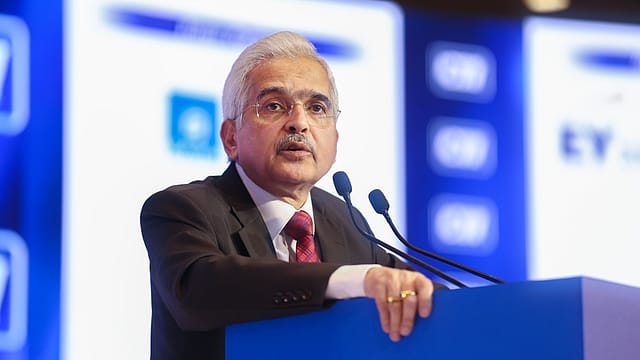
Shaktikanta Das, a top bureaucrat in the Modi government, today said India's economic growth is not accidental and the resilience being witnessed in the Indian economy is on the back of strong domestic demand and investment conditions, along with the foundational steps taken by the government in the last 12 years.
Shaktikanta Das, principal secretary to the Prime Minister of India, also said the global uncertainty is likely to result in restrictive monetary policy by the central banks across the world and global growth will also take a hit.
“Current global economy is characterised by wars, fragmentation, unilateralism technological blockade, energy price volatility, and rising inflation. The interplay of these forces is creating uncertainty across the world and would stifle global growth. What is likely to follow is restrictive monetary policies from the central banks,” Das said in his address at Kautilya Economic Conclave in Delhi.
“Even more critical is the exceptionally high public debt levels in many advanced economies averaging at 110% of their GDP, resulting in rising bond yields, lower fiscal space and the ability of the countries to counter current and future shocks,” he added.
“Despite such global environment, India’s real GDP grew by 7.8% in the first quarter of the current financial year, with strong domestic demand and investment condition,” he added.
Das enumerated the factors behind the resilience in the Indian economy. He said the measures taken over the past decade have not been one-off measures but have been designed to build the foundations of the economy.
“The distinguishing feature of India’s development journey in the last 12 years has been the gradual creation of governance foundations, before the crisis actually emerged. Many of the reforms taken in the past decade were not designed as one off measure, but as specific buffers to enable the economy to absorb the disruptions and recover rapidly,” he said.
“I would put flexible inflation targeting, GST, big push for digital payments and the banking reforms in this category. Thus, India’s resilience is not accidental. It is the outcome of broad reforms,” he added.
Das highlighted three main themes behind the resilience of the Indian economy.
“Strengthening governance and state capacity, building macroeconomic stability and building India’s long-term productive capacity” are the key themes of the resilience in the Indian economy, he said.