
India's power transmission sector to see ₹5-6 lakh crore capex by FY32, but execution delays remain a key concern: ICRA
ADVERTISEMENT
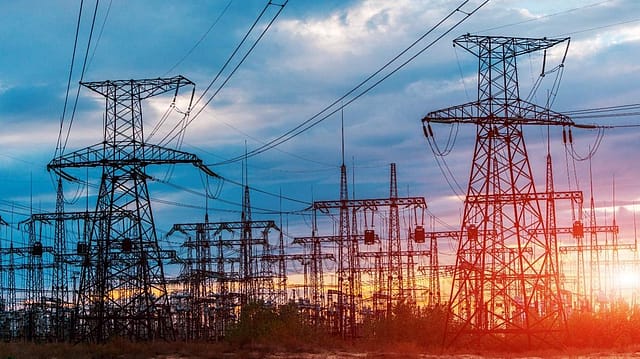
India's power transmission sector is expected to witness capital expenditure of ₹5-6 lakh crore between FY27 and FY32 as the country ramps up grid infrastructure to integrate rising renewable energy (RE) capacity. However, persistent execution challenges such as land acquisition and right-of-way (RoW) issues could delay projects and hamper renewable power evacuation, according to ICRA.
The rating agency said the upcoming investment cycle will be driven by the government's plan to evacuate electricity from over 900 GW of non-fossil fuel capacity by 2035-36, including around 548 GW of solar and wind power.
"The projected transmission capex of ₹5-6 lakh crore entails strengthening the existing infrastructure, adding evacuation capacities and developing new transmission routes to support generation centres," said Ankit Jain, Vice President and Co-Group Head at ICRA.
According to the agency, achieving the targets outlined in the National Electricity Plan will require annual additions of around 20,000 circuit kilometres (ckm) of transmission lines and 120 gigavolt-amperes (GVA) of substation capacity, creating a sizeable investment opportunity over the next six years.
ICRA noted that order books and fresh order inflows for key transmission equipment manufacturers have more than doubled in FY26 compared with FY22, reflecting the strong pipeline of upcoming projects. However, the agency warned that supply-side constraints, including limited manufacturing capacity for critical equipment and shortages of skilled manpower, could slow project execution unless capacities are expanded.
Execution-related hurdles continue to remain a major challenge for the sector. Jain said transmission projects frequently face delays because of land acquisition, right-of-way disputes and regulatory approvals.
"Most transmission projects awarded through the tariff-based competitive bidding (TBCB) route by central nodal agencies have been delayed beyond their scheduled commissioning date," he said.
According to ICRA, only around 12% of TBCB projects commissioned by March 2026 were completed within the scheduled timeline. The remaining projects were delayed by anywhere between two months and three years, with a median delay of more than 10 months.
These delays have significant implications for renewable energy developers, as inadequate transmission infrastructure restricts power evacuation, leading to grid curtailment and affecting project returns.
The report noted that renewable energy generators in regions with high RE penetration have faced considerable capacity curtailment since the last fiscal because transmission infrastructure has not kept pace with capacity additions.
Curtailment in the interstate transmission system (ISTS) has largely been driven by transmission constraints and inadequate temporary General Network Access (T-GNA) margins, resulting in unscheduled power.
Of the 54.8 GW of recently commissioned renewable energy capacity, around 33% is currently being evacuated through the T-GNA route at the all-India level as of May 2026, according to ICRA. During solar hours, curtailment under T-GNA has remained between 50% and 60%, with Rajasthan and Gujarat witnessing the highest instances while southern states have experienced relatively limited curtailment.
Looking ahead, ICRA said around 107 GW of projects across solar, wind, hybrid, hydro, pumped storage and thermal segments that have already secured grid connectivity are scheduled to be integrated into the ISTS network between FY27 and FY31. The agency cautioned that any slippage in commissioning the required transmission infrastructure could delay renewable capacity additions or prolong grid curtailment, materially affecting the return metrics of renewable energy projects.