
Inflation faces upside risks on geopolitical tensions: RBI
ADVERTISEMENT
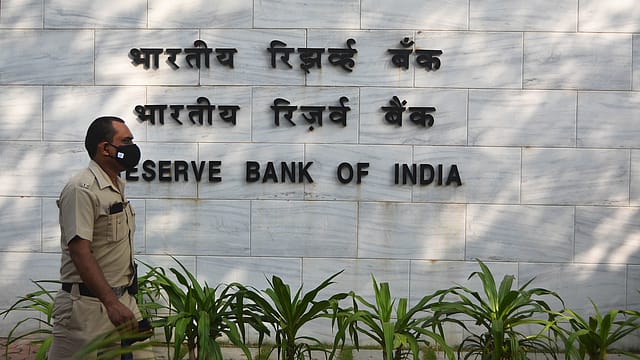
The Reserve Bank of India (RBI) in its annual report for 2025-26 has flagged the risk of inflationary pressures in the near future, on the back of current geopolitical strife and the consequent supply disruptions.
“With continued geopolitical tensions, inflation faces upside risks,” the central bank has stated in its annual report for 2025-26. Surging energy prices and disruptions in key shipping routes could intensify supply-side pressures, the report states.
The central bank had earlier projected inflation for FY27 at 4.6%, with inflation estimated at 4% in the first quarter (Q1), 4.4% in Q2, 5.2% in Q3 and 4.7% in Q4. In IMF’s baseline scenario, the global inflation is projected higher at 4.4% in 2026 than the earlier projection of 3.8% in January 2026.
On the fallout on the broader economy, the report highlights that financial markets may exhibit higher volatility with tighter macroeconomic conditions and “broader risk-off sentiment”.
Elevated valuations in technology sectors may undergo reassessment, raising the risk of corrections in equity markets. With increased protectionism and debt sustainability concerns, the escalating geopolitical risk calls for coordinated policy actions across fiscal, monetary and multilateral fronts.
Economy to weather storm
However, the central bank has struck an optimistic note that the economy will be able to weather the storm. “Against the backdrop of a moderate global growth, the outlook for the Indian economy in 2026-27 remains positive, supported by strong macroeconomic fundamentals, although a prolonged West Asia conflict may pose downside risk,” states the report.
In fact, the RBI is taking comfort from the fact that balance sheets of the corporate and banking sectors along with the government’s continued thrust on capital expenditure bode well for India’s strong growth trajectory. “Moreover, implementation of various trade agreements with the key trading partners would provide further momentum to India’s growth,” states the report.
On the outlook for the agriculture sector in 2026-27, the report states that the progress and distribution of the south-west monsoon will be critical. “The likelihood of El Niño conditions poses downside risks to agriculture output. However, the raininducing positive Indian Ocean Dipole conditions are likely to emerge towards the latter part of the monsoon season, which may partly offset adverse impacts,” states the report.
The RBI feels the ongoing geopolitical tensions are likely to exert pressure on the availability and prices of key inputs, particularly fertilisers. However, the report adds that the government’s continued efforts in ensuring adequate availability of fertiliser and other key inputs through diversified sources and buffer management are expected to mitigate these potential concerns. “Initiatives announced in the Union Budget 2026-27, focusing on diversification, targeted promotion of high-value crop cultivation across regions, enhancing commercial viability of fisheries and aquaculture, and a greater push towards technology adoption with the proposed launch of Bharat-VISTAAR21 would support strong and sustainable growth in the agriculture and allied sectors,” states the report.