
It’s specialty and organic too – how Nandan Coffee is building the premium Indian specialty coffee narrative
ADVERTISEMENT
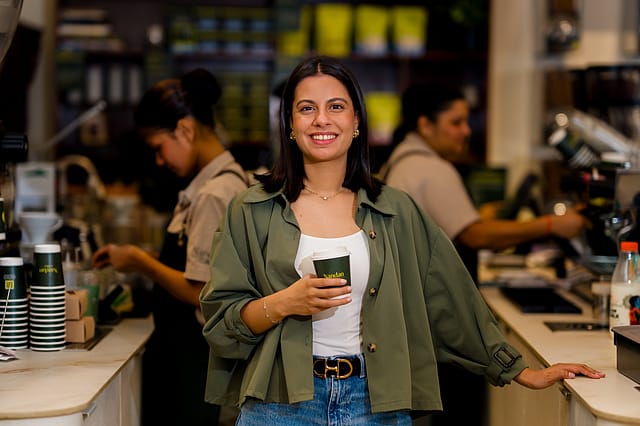
The Indian specialty coffee narrative is gathering steam. While first movers Blue Tokai, Third Wave Coffee and Kruti Coffee are sourcing high-quality arabica coffee from estates across Coorg, Kodaikanal, Chikmagalur and Koraput amongst others, Araku Coffee through its cafes in coffee heartland, Paris, is trying to prove that the world’s best coffee is grown in the Araku valley in Andhra Pradesh. New kid on the block, Nandan Coffee, is building a narrative around single-estate specialty coffee, which is also organic.
Though Nandan’s foray into consumer facing cafes may be new, it’s not literally a new entrant. Coffee from its 40-acre estate, Nandanvan in Kodaikanal, is being bought by institutional buyers in India as well as globally for over 25 years.
“Nandan Coffee was started by my grandparents in the 90s. My grandfather, was actually a biochemist and was looking at growing evening primrose, as an ingredient for nutraceutical products. And, that's what took him to the valley," says Yahvi Mariwala, the third-generation co-founder of Nandan Coffee.
Our neighbours were growing coffee and like any jungle environment, some coffee naturally started growing in our property too. So, when they entertained guests, they would serve produce from the vegetable garden as well as the coffee, which they used to roast on an open stove. People loved the coffee, and that's when they got really interested in it,” added Mariwala.
One of the earliest patrons of coffee from the Nandanvan estate was former Coffee Board of India director, Sunalini Menon, who helped them create three blends (which they sell till date). “We started with bio-dynamic farming and then moved to certified organic farming. We have had our organic certification since 2001,” says Mariwala.
“We were among first organic farm which grew as well as roasted the coffee. We were also among the first to use one-way valves on our packaging. Now you see them everywhere on all coffee packs, but at that time, my grandfather used to import from Germany.”
Thirty-year-old Mariwala, was taking a gap year from college when she decided to take her family’s coffee legacy to consumers in 2018. She started with pop-ups in farmer markets and premium shopping festivals in Mumbai, until she launched her first shop-in-shop at the bookstore in Reliance Jio Drive Mall in 2021.
By then Indian consumers were taking pride in Indian specialty coffee, says Mariwala, unlike a few years earlier, when the narrative was more about specialty coffee sourced from Italy or France.
India has just about 5000-6000 cafes of which barely 5% serve specialty coffee, so the opportunity to build a narrative around coffee from her family estate did make sense. While she added a few shop-in-shops by partnering with the likes of Bombay Shirt Company, the first flagship Nandan Café came up in Kala Ghoda in 2024.
The second flagship store was recently launched in Bengaluru. In FY24, over 80% of the boutique coffee brand’s revenue came for institutional sales. Today, the brand’s consumer-facing business contributes over 63% to its revenue. The intent is to set up 30 stores in the next 3-5 years. But Mariwala realises that setting up stores is hugely capital intensive, hence, she is not in a tearing hurry to build scale.
Maintaining the boutique narrative
A 250-gm pack of Nandan Coffee is priced at Rs 650, around 8%-10% more than other specialty coffee brands. The average order value at its café is in the region of Rs 1,200-1,400, while the average order value of competitor cafes is around Rs 650-700.
All its coffee is sourced, roasted, packed and shipped from the Nandanvan Estate in Kodaikanal. Her coffee is only available either in her store or on the web site. And, Mariwala is clear about maintaining a premium, good-for-you, sustainable positioning.
“The organic certification process is expensive,” she justifies. “Also, we want to minimise our environmental footprint from the products going all over. Secondly, a lot of the higher paying jobs of coffee the coffee supply chain are taken away from the actual coffee growing regions. And so, when you keep it there, you create more and more jobs within that valley itself. So, whether it was from like a people's perspective or a planet perspective, the idea was to always try and do good,” she adds.
Though Nandan coffee is organic certified premium specialty coffee, Mariwala doesn’t want to overwhelm customers who don’t consume specialty coffee. We have something for every kind of coffee drinker, coupled with our fresh food which really differentiates us.
” While on one hand, specialty coffee consumers are given an opportunity to feel the coffee bean and seeing it being ground live, it’s ice-coffee taps are especially popular among the Gen-Zs. The Bengaluru café has a filter kaapi bar, which serves filter coffee in a variety of flavours such as peanut chikki, spiced orange and vanilla.
Unlike the western world, where the coffee is the hero of the cafes, Indians give a lot of importance to food. India was one of the first market were coffee giant, Starbucks, gave equal importance to its food menu. Similarly, Blue Tokai acquired Suchali’s Artisan Bakehouse to step up its food menu. Mariwala claims Nandan’s food menu offers that one could eat every day.
“We have got eggs, bowls….in Bangalore, we have Rassam Minstroni. So, we like to do a little bit of food that celebrates the neighbourhood or the area that we are in. In Mumbai, we do a Bombay bagel, which is fun. It's a play on the street side sandwich, but in a bagel,” she explains.