
NSE flags monsoon as key FY27 risk, warns weak rains could fuel inflation and hit rural demand
ADVERTISEMENT
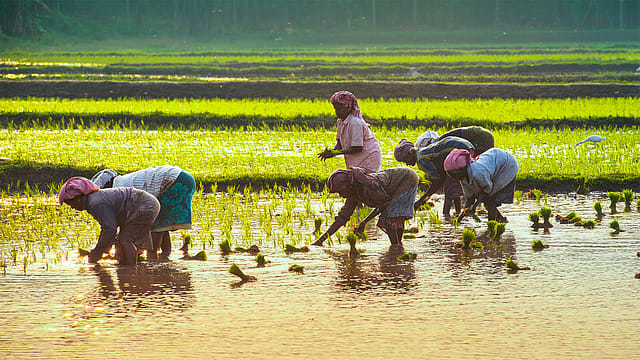
The National Stock Exchange (NSE) has flagged the southwest monsoon as one of the key risks to India’s economic outlook in FY27, warning that deficient rainfall could weigh on agricultural output, stoke food inflation and dent rural demand.
In its June 2026 edition of Market Pulse, NSE said that the rising temperatures and the El Niño conditions impacts the India’s economy. The report argues that weather should increasingly be viewed as a macroeconomic variable rather than a seasonal event, particularly as climate-related disruptions become more frequent.
According to the report, the India Meteorological Department (IMD) has revised its forecast for the 2026 southwest monsoon to 90% of the long-period average (LPA), down from an earlier estimate of 92%. The forecast assigns a 60% probability to deficient rainfall and a further 24% probability to below-normal rainfall, while the likelihood of a normal monsoon stands at just 14%.
NSE noted that rainfall between June 4 and June 15 was already running 64% below normal across central, eastern and southern regions, raising concerns over the progress of kharif sowing and the broader agricultural outlook.
A second supply-side shock
The report warns that a weak monsoon could amount to a “second supply-side shock” for the Indian economy at a time when policymakers are already grappling with external pressures from elevated oil prices, currency volatility and geopolitical uncertainty. It said the impact of deficient rainfall extends beyond crop production to reservoir levels, rural incomes, rabi prospects and food inflation.
To support its assessment, NSE points to historical data showing that four of the five deficient monsoon years over the past 25 years occurred during El Niño episodes. Rainfall deviations in those years ranged from -22.1% in 2002 and -21.4% in 2009 to -13.7% in 2015. “Notwithstanding the dip in reservoir levels during El Nino years, the impact on rabi production in recent years has been muted. Food inflation effects are more nuanced: while food inflation remains independently elevated in El Nino years, the impact is often concentrated in specific food groups rather than being uniformly broad-based,” the report noted.
The report also highlights India’s continued dependence on rainfall despite improvements in irrigation. “Such episodes have had implications for kharif sowing, crop output, reservoir levels, rabi prospects, rural incomes and food inflation. While better irrigation coverage, reservoir buffers and policy support have reduced the transmission to sowing and rabi production in recent years, kharif output and inflation in select food categories remain vulnerable.”
“Climate risk at this point is no longer a distant issue; it is intersecting with geopolitics and inflation in real time,” the report said, underscoring the growing importance of weather-related risks in shaping India’s economic trajectory.