
Prime Video–backed O Womaniya! 2025 report flags streaming gains, decline in women’s creative roles
ADVERTISEMENT
Gender equity in India’s entertainment industry is advancing—but in fragments.
The latest edition of the O Womaniya! 2025 report, backed by Prime Video and researched by Ormax Media in collaboration with Film Companion Studios, presents a nuanced picture of progress and regression across the industry. While streaming platforms and corporate boardrooms show measurable improvement in female representation, women’s participation in key creative roles behind the camera has slipped.
The study analysed 122 films and series released in 2024 across nine Indian languages—Hindi, Tamil, Telugu, Malayalam, Kannada, Marathi, Punjabi, Bengali and Gujarati—covering both theatrical and streaming releases. Now in its fifth year, the report has evolved into one of the industry’s most detailed scorecards on gender representation.
Streaming pulls ahead on representation
At the heart of the study is the O Womaniya! Toolkit, a proprietary test designed to measure whether women characters have agency and narrative influence within a story. Only 32% of the analysed titles passed the test this year, underscoring the slow pace of change. The platform divide, however, remains pronounced. Nearly 47% of streaming films cleared the benchmark—a 16-percentage-point improvement over the previous report—while theatrical releases continued to trail.
The data reinforces a structural shift already visible in commissioning trends. Streaming platforms, operating in a subscription-driven economy that rewards differentiated storytelling, appear more inclined to back narratives centred on complex female protagonists. Hindi-language content continued to perform better on representation metrics, but Telugu titles delivered the most striking improvement, recording a 21-percentage-point jump year-on-year. After historically underperforming in female representation, 31% of Telugu films and series analysed this year met the toolkit criteria.
Interestingly, the report also found that a higher number of projects commissioned by male executives met gender-equity parameters this year. While titles commissioned by women continued to outperform on average, the rise in male-led projects passing the test suggests that conversations around inclusion are expanding beyond gender silos.
For Stuti Ramachandra, director and head of production and post for International Originals at Prime Video India, the findings reinforce the business case for inclusion. “Stories resonate when they reflect balanced perspectives,” she said, adding that representation on screen, behind the camera and at the decision-making table is critical for the industry’s long-term growth. She emphasised that sustained collaboration across stakeholders is essential, noting that meaningful change requires consistent, collective effort.
Behind the camera: a structural bottleneck
Yet, if on-screen representation offered cautious optimism, off-screen metrics told a more sobering story.
Women held just 13% of head-of-department positions across direction, cinematography, editing, writing and production design—down from 15% in the previous edition. Cinematography and editing recorded the steepest declines, while the proportion of films directed by women remained stagnant at 8%. Hindi-language productions accounted for the highest share of female creative participation, with nearly a quarter of analysed titles featuring at least one female HOD. Other language industries largely remained below the 5% mark.
The setback is particularly striking at a time when India’s content economy continues to expand, driven by digital platforms, regional storytelling and global co-productions. The data suggests that while narratives may be shifting incrementally, structural inclusion within production ecosystems remains fragile.
Corporate leadership shows momentum
Marketing metrics further reveal the persistence of male-dominated framing. Women accounted for 29% of trailer talk time across analysed titles, a marginal increase from 27% in 2022. Streaming titles again outperformed theatrical releases, allocating 36% talk time to female characters. The numbers indicate that even when women-led narratives are greenlit, promotional storytelling often continues to centre male perspectives.
In contrast, corporate leadership within media and entertainment firms showed the strongest momentum. Across 25 leading companies analysed, female representation in Director and CXO positions rose from 12% to 18% within a year. While still far from parity, the six-percentage-point jump marks one of the most significant shifts recorded since the report’s inception.
Shailesh Kapoor, founder and CEO of Ormax Media, said the aim of the study is to convert intent into measurable outcomes. The 2025 edition, he noted, highlights both persistent gaps and incremental gains, offering stakeholders actionable insights to drive more meaningful gender inclusion across the ecosystem.
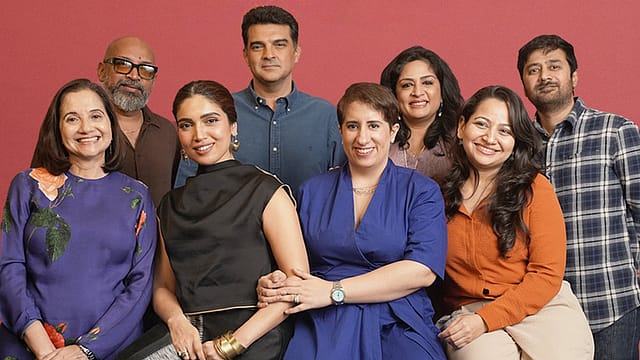
To examine the findings, film critic Anupama Chopra convened a roundtable featuring actor Bhumi Pednekkar, producer Guneet Monga Kapoor, producer Siddharth Roy Kapur, filmmaker Rahul Ravindran, director Suresh Triveni and filmmaker Shazia Iqbal, reflecting the industry’s growing willingness to publicly interrogate its own gaps.
Five years into O Womaniya!, the verdict is neither celebratory nor dismissive. Streaming platforms are nudging the needle forward. Corporate boardrooms are slowly diversifying. But creative pipelines—particularly technical and decision-making roles—remain resistant to sustained gender balance.
For India’s fast-expanding entertainment economy, the message is clear: representation is no longer a peripheral conversation. It is becoming a structural business metric. The pace of change, however, suggests that intent alone will not deliver transformation.