
India’s fandom economy set to hit $10 billion by 2028 as fan-first monetisation gains traction
ADVERTISEMENT
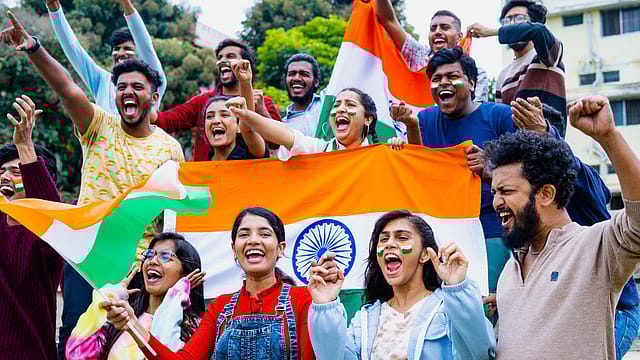
India’s entertainment industry has always thrived on fan loyalty—from first-day-first-show queues outside cinemas to the cult followings of film stars and musicians. What is changing now is not the intensity of fandom, but its structure and monetisation.
A new report by MYFANDOM, fan platform, suggests that this cultural phenomenon is fast formalising into an economic engine, with the potential to grow into a $10-billion market by 2028.
Are fans no longer just passive consumers?
The shift reflects a broader transformation in how audiences engage with content. Fans are no longer passive consumers; they are active participants shaping conversations, building communities, and, increasingly, driving revenue. The report characterises this as an “emotional capital economy”, where fan loyalty translates into tangible economic and social value.
This evolution is underpinned by the rapid expansion of India’s digital ecosystem. With over 600 million OTT users and a growing base of music streaming subscribers, the country has built one of the largest entertainment audiences globally. But scale alone does not explain the opportunity. What stands out is the changing nature of demand.
According to the report, 45% of fans now prefer official merchandise, signalling a willingness to spend on identity-driven consumption, while 40% are seeking more immersive experiences such as meet-and-greets and live interactions with artists.
How are companies monetising fandom differently?
These behavioural shifts are pushing companies across streaming, music, and live entertainment to rethink their business models. The traditional content-first approach is giving way to a fan-first strategy, where engagement extends well beyond the screen. Industry players are increasingly experimenting with premium merchandise, exclusive digital content, and curated fan experiences designed to deepen emotional connection—and unlock new revenue streams.
Live entertainment, in particular, is emerging as a critical growth lever. India’s recent surge in large-format concerts and festivals has demonstrated both the depth of demand and consumers’ willingness to pay for experiences. The success of global and domestic tours alike points to a structural change in consumption patterns, with fans willing to travel, upgrade tickets, and pay for proximity to their favourite artists. This mirrors trends seen in more mature markets, where live experiences have become central to the monetisation of fandom.
Why is fandom expanding beyond metros?
At the same time, the geography of fandom is expanding. The report highlights growing participation from non-metro markets, driven by affordable data, regional content, and social media penetration. This is widening the addressable market and reshaping the industry’s growth narrative. What was once concentrated in urban centres is now a nationwide phenomenon, with smaller cities contributing meaningfully to engagement and spending.
MYFANDOM estimates that around 100 million Indians can be classified as “experience-active” fans—those who go beyond consumption to participate in events, communities, and fandom-led activities. Within this base, a smaller but highly valuable segment of “superfans” is expected to emerge. These consumers, willing to spend significantly on their interests, could become the backbone of the fandom economy, driving a disproportionate share of revenues.
Despite the momentum, the report notes that India’s fandom ecosystem remains underdeveloped compared to global benchmarks. While the country has strong intellectual property, cultural depth, and a large audience base, it lacks the fully integrated infrastructure needed to monetise fandom at scale. Bridging this gap will require closer collaboration between artists, platforms, event organisers, and brands to create seamless, direct-to-fan ecosystems.
There is also a broader cultural and economic context to this shift. Policymakers are increasingly recognising the role of entertainment and fandom in enhancing India’s global soft power. The report includes a foreword by Maharashtra Chief Minister Devendra Fadnavis, who highlights the growing influence of fan communities in shaping cultural narratives and economic opportunities.
For businesses, the implications are clear. The future of entertainment will not be defined solely by content creation, but by the ability to build, engage, and monetise fan communities. As digital platforms mature and live experiences scale up, the lines between media, commerce, and community are blurring.
In that sense, India’s fandom economy is not just growing—it is being redefined. What was once an intangible cultural force is steadily becoming a measurable, monetisable market. And for companies that can tap into this shift early, the payoff could be substantial.