
Public-private partnerships key to creation of intelligent hospital ecosystem; adoption still in its infancy, says Yujia Gao, Assistant Group CTO, NUHS, Singapore
ADVERTISEMENT
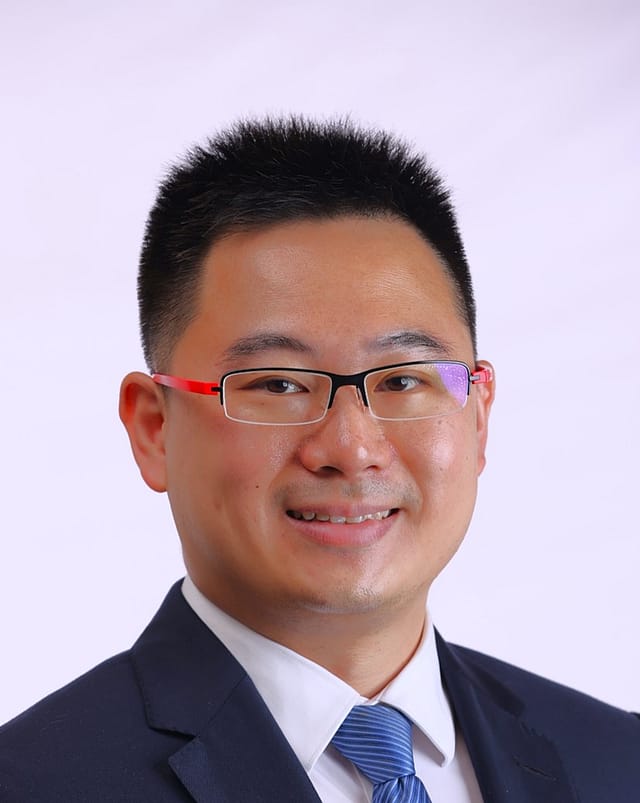
Singapore’s public healthcare cluster National University Health System (NUHS) and its education, research and treatment hub - National University Hospital (NUH) – is one among the handful of hospital systems globally that has integrated advanced technologies such as AI, robotics, IoT and other digital solutions into its treatment and patient care protocols. In an exclusive interview, Dr. Yujia Gao, Assistant Group Chief Technology Officer at the NUHS tells FORTUNE INDIA how technology is transforming medical services and what it means for healthcare providers and patients in other parts of the world. Below are the edited excerpts:
Q: We hear a lot about automation, robotics in healthcare services. How widely are these technologies being used today?
Dr Gao: The honest answer is that, apart from a few implementations around the world, adoption is still in its infancy if you look at the whole spectrum. With 5G, that spectrum extends from communications to intelligent platforms. At the communications end, its use is already fairly common. Some hospitals use private 5G, while others use public networks. Many are using some form of 5G to deliver healthcare through telemedicine, remote devices and wearables, for example. I do not have an exact figure, but I would say the penetration of 5G-enabled or 5G-enhanced technology at the communications end is greater than we might think. Even in India, there are examples of telemedicine. Ericsson, for instance, has an initiative involving remote kiosks in towns and villages connected through 5G. In countries such as South Korea and Sweden, there are examples of 5G-connected ambulances.
However, as we move along the technology and software spectrum—from communications towards intelligent platforms—the numbers start to fall. That end of the spectrum is much more complex. An intelligent network or intelligent fabric requires an entire infrastructure capable of supporting not just the hardware, but also software integration.
Q: Where do place NUHS, in terms of technology adoption?
Dr Gao: We are still somewhere in the middle. We started using 5G in 2023, so we have been using it for about three years. We began with communications, taking advantage of low latency and high bandwidth. Many of the examples in my presentation were at that end of the spectrum. We are now gradually moving towards the intelligent fabric concept. We are embedding AI into the network and deploying next-generation indoor antennas to support applications such as spatial AI, ambient AI and location-tracking services. But this remains a work in progress. Around the world, most hospitals are still at the communications end, while some are further along. Not many have moved beyond what we have done at NUH. There is a gradual shift. A few hospitals are willing to take the lead, explore unknown areas and pave the way for others. It is essentially a pyramid: most are at the base, with fewer further up. But adoption is going to grow.
Q: Are we talking about a single intelligent hospital, or an intelligent ecosystem comprising a network of hospitals?
Dr Gao: The eventual goal is an ecosystem. Having one intelligent hospital would not be very different from what we have today: tertiary and highly specialised centres that do complex, high-tech work and have access to technology and AI, while those around them do not because the ecosystem has not been built to provide that access. What I hope to see is the platform extending beyond a single centre into regional healthcare systems, all the way down to small clinics in remote locations. Accessibility is one of the barriers we need to break down in healthcare, particularly physical barriers. An advanced network can provide access not only to physicians and specialists in a main hospital, but also to technology and AI. For example, a small village clinic screening patients for diabetes might take images of the eyes or skin. Those images need to be analysed. If the clinic wants AI to perform that analysis, it needs access to those capabilities. We cannot install servers and workstations in every small facility across a country. But those facilities can use connectivity to access central servers and virtual machines, allowing them to use AI wherever they are.
Q: Is that already happening within your healthcare system?
Dr. Gao: We have not connected everything yet. However, we are beginning to connect parts of the system. For example, nurses visiting patients at home have tablets equipped with 5G SIM cards. The aim is to expand the ecosystem into home and community care, rather than keeping these capabilities isolated within specialist hospitals.
Q: How are 5G-enabled holomedicine and immersive technologies supporting surgical planning and operating-room experiences?
Dr. Gao: We have indoor 5G antennas in our operating theatres. We connect our devices and software to the 5G network and use them for several applications, including pre-surgical planning. For example, we convert patients’ CT and MRI scans into 3D holograms. We use these before surgery and, in some cases, during surgery itself. For some complex procedures, we wear extended-reality, or XR, glasses while operating. It is a little like Iron Man: you have a display of holograms in front of you, which helps guide the surgery. Previously, we used Wi-Fi. Sometimes it worked well, but when there was congestion, we could have difficulty even downloading the images from the cloud, making the technology unusable. With a dedicated 5G network, that is no longer a problem. We have AI inference at the edge and seamless communication, which makes the overall experience much smoother. That has made the technology usable.
Q: Has it become routine?
Dr Gao: Yes, particularly for more complex surgeries. Over the past three years, we have used it in about 180 cases across disciplines including cardiac surgery, paediatrics, liver transplantation and complex tumour surgery. We apply it wherever we believe 3D imaging will help, either before or during surgery.
Q: Is it a big opportunity for India?
Dr Gao: The technology is there. We are at a stage where technology is not the biggest issue. The biggest hurdle, anywhere in the world, is translating the technology into practice and adapting it to the environment in which it will be deployed. Replicating exactly what we have done in Singapore would not work in India because the context and the system are different. We have had a few meetings with (Indian) ministries and service providers, which have helped us better understand India’s ecosystem. One of the most important things is to establish public–private partnerships. We could not have done this without our industry partners or government support. When we began deploying 5G in the hospital, we received a government grant to explore 5G innovation. That is how we started working with Ericsson and Singtel, our service provider in Singapore. Together, we conceptualised how to deploy a system at NUH, what it would look like, what its future could be and what our strategic roadmap should be. We also considered how advances in cellular technology could translate into clinical applications.
The same conversations need to happen in India. Technology companies need to understand the healthcare context in which they are deploying their solutions: the differences between a major hospital in an Indian city and a smaller facility in a village or district, for instance. They also need to understand how government and private hospitals differ in their workflows, processes and potentially their regulatory environments. With that understanding, they can identify how their technology can address gaps in the healthcare system. Healthcare providers, in turn, need to understand the technology, its full capabilities and the use cases it could address within their hospitals. I see this as similar to AI literacy. Five years ago, we were hesitant about how to use and deploy AI in hospitals because, as end users, we did not fully understand it. Now, AI is everywhere. Healthcare systems that have not yet considered it really should. The same learning journey needs to happen with networks. To me, it is about network literacy, just as we talk about AI literacy. Most healthcare systems still understand networks primarily as a means of communication. That reflects our experience with 2G, 3G and 4G, where the focus was on bandwidth. With 5G, however, we can customise the network and build software infrastructure to support the different verticals and silos within a hospital. Hospitals and end users need to understand that before they can visualise what is possible. That partnership, discussion and mutual understanding are essential. It should not simply be a vendor–customer relationship in which a technology company says, “This is what we have, this is the price, and you can deploy it in your hospital.”
It is a learning journey for both sides. To me, that is one of the most important aspects.
Q: There is the economic aspect—whether care becomes more cost-effective—and the clinical aspect—whether outcomes improve. From your experience, what are the most significant advantages?
Dr Gao: Measuring outcomes is actually one of the most challenging parts of implementation. In healthcare, the return on investment is not necessarily a direct financial return because we do not commercialise these technologies; we are more or less consumers of them. Many of the returns are therefore indirect. In surgery, for example, we have seen technology, AI and advanced networks improve surgical capabilities. They can help reduce operating time and potential complications, enable patients to go home earlier and allow smaller incisions because we can plan surgery more precisely. Telemedicine has also changed what we can do from a productivity perspective. For example, where a clinic might previously have been able to see 10 patients because of the turnaround time, it might now be able to see 15, supported by digital platforms and shorter turnaround times. Voice-to-text and ambient AI can help as well. A consultation can be transcribed as it happens, and the clinician can then move that information into the electronic medical record system rather than spending time typing it. Much of the benefit comes from improvements in workflows and processes, as well as in the experience of patients and healthcare workers, including doctors, nurses and therapists. That is just the clinical side. We also need to consider non-clinical applications. A hospital is still a physical building. AI, agents and advanced networks that help manage the building can also deliver returns. For example, motion sensors that activate air conditioning only when someone is in a room can reduce energy use and contribute to sustainability. There are also studies indicating that telemedicine saves not only patients’ time but also travel-related emissions because patients do not need to come to the hospital. The saving may be small for an individual patient, but it can become substantial when scaled across the healthcare ecosystem. Sustainability and carbon costs are significant considerations in healthcare. I see considerable potential for AI, advanced networks and automation to help manage healthcare facilities and improve sustainability. That is another important area of return.
Q: Rather than the broader impact, what has your experience been of the investment needed to become an intelligent hospital?
Dr Gao: It depends on what you are investing in. The investment priorities of a tertiary or highly specialised facility will differ from those of a primary healthcare facility. For a primary facility, the investment will mainly involve putting the technology and infrastructure in place so that it can be used routinely in day-to-day care. For a tertiary hospital, some of the investment may also go towards innovation—sandboxes, testbeds and research laboratories within the hospital. These are not just for routine patient care. They might include joint laboratories with industry to research and develop the next generation of healthcare technology, AI and networks. The purpose and nature of the investment depend on the facility’s mandate. Is its role to provide healthcare and ensure the population has access to quality care? Or does its mandate also include innovation and pushing boundaries? The mandate determines how outcomes are measured, what success looks like and which key performance indicators we use to demonstrate to the chief financial officer that the investment has been put to good use. We therefore need to establish the mandate of a particular healthcare system or facility before deciding what investment makes sense. It is not about simply spending money and bringing in technologies from everywhere. Investment and deployment need to be sensible and systematic.