
Ray Dalio warns of ‘the trap’ in holding paper gold over real metal
ADVERTISEMENT
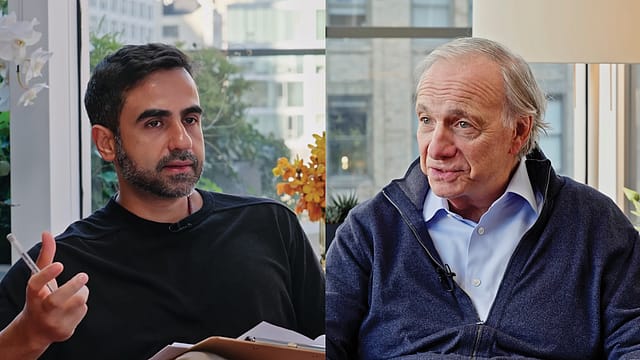
Legendary hedge fund investor Ray Dalio, founder of Bridgewater Associates, has issued a warning to investors about choosing paper promises of gold over the physical metal itself in pursuit of yield.
In a conversation with Zerodha co-founder Nikhil Kamath on WTF is Finance, Dalio describes this choice as “the trap” that has repeatedly ensnared investors throughout history.
The interaction comes against a phenomenal bull run in gold, with spot gold prices zooming past $4,000 an ounce for the first time in October; the yellow metal is currently hovering around $4,480 levels, up nearly 70% in dollar terms over the past one year.
The distinction between physical gold and gold-backed financial instruments is crucial, according to Dalio. Physical gold is “the only money that you can have. Nobody has to give you anything to have it,” he explains. “All other money is dependent on somebody giving you something.”
Sovereign gold bonds, gold certificates, or promises to deliver gold introduces, what Dalio calls, credit risk. “You’re still dealing with credit risk,” he says when discussing gold lending schemes. “What you’re getting paid for is credit risk. So, it’s not gold. It’s a promise to get your gold back.”
The Great Trick
Dalio traces the problem back through centuries of financial history. “The great trick of history, and everybody believed it back then for a long time, is if I hold the promise to get the gold, then I will get an interest rate. And I could always turn my money in for gold,” he says.
The logic seems sound: why hold physical gold that generates no income when you can hold a paper claim on gold that pays interest? “So why won’t I hold the promise to get the gold and get an interest rate on it rather than to hold the actual gold, which wouldn’t give me an interest rate,” says Dalio, articulating the reasoning that has led countless investors astray.
“And that was the trap,” he says emphatically.
The conversation highlighted India’s unique approach to managing gold imports. The government offers sovereign gold bonds that pay interest to bondholders. Kamath explains that investors can even monetise physical gold by lending it out for a percentage return.
But Dalio is unequivocal in his assessment: “That ain’t gold.”
These instruments, regardless of government backing, represent promises rather than ownership. Holders are exposed to the risk that the promise won’t be kept, especially during times of financial stress when such instruments are most likely to fail.
The Interest Risk
The absence of yield on physical gold is a feature, not a bug, in Dalio’s view. “Gold doesn't have an interest rate,” he notes, because it’s not someone else’s liability.
“You have an interest rate... on the promise to get your gold back. That’s what everybody believed and that's the great trick of history,” Dalio explains, describing how historical monetary systems worked when currencies were backed by gold. Interest rates existed to compensate for the risk of not getting the gold back.
Physical gold’s “confiscation risk is less in others,” says Dalio, because it doesn't depend on any institution’s solvency or willingness to honour its obligations. Additionally, “you can’t deflate its value, but you can’t print it”.
Dalio framed today’s choice simply: With U.S. bonds yielding around 4%, investors must ask themselves, “if gold goes up by more than 4%, then I’m better holding gold and if it goes up by less than 4%, then I’'m better holding the bond.”
But this calculation only applies when comparing assets of similar risk. Paper gold instruments carry additional credit risk that physical gold does not.
Dalio’s warning carries particular weight given his track record of anticipating financial crises. Throughout history, periods of monetary stress have repeatedly exposed the difference between holding physical gold and holding promises of gold.
“Gold fell out of fashion as a money and bonds fell into passion,” Dalio notes, describing how confidence in paper claims has waxed and waned. But when that confidence evaporates, that is when investors most need their gold, the distinction between physical metal and paper promises becomes painfully clear.
The veteran investor’s message is revelatory as he believes the extra yield offered by gold-backed instruments is very credit risk that physical gold is meant to avoid.