
Red Sea, Hormuz shipping traffic declines as security risks persist: S&P Global
ADVERTISEMENT
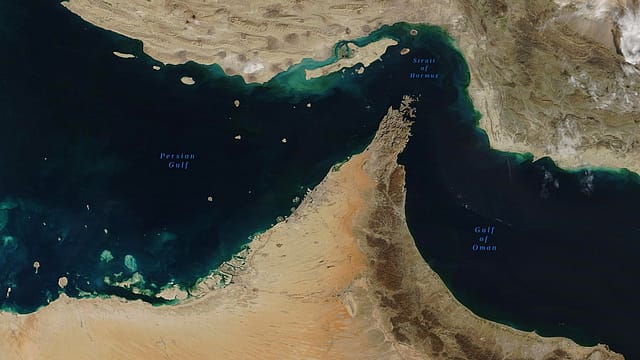
Vessel traffic through two of the world's most critical maritime chokepoints, the Bab el-Mandeb Strait and the Strait of Hormuz, has slowed sharply over the past three days as heightened security threats and geopolitical tensions continue to disrupt global shipping, according to an S&P Global report.
The report said vessel crossings through the Bab el-Mandeb Strait averaged 31 per day over the past three days, down from an average of 43 daily crossings in the first half of July. Traffic through the Strait of Hormuz also eased to an average of 17 vessels a day, reflecting continued caution among ship operators.
Security incidents keep shipping on edge
The slowdown follows fresh security incidents reported by the UK Maritime Trade Operations. On July 25, a tanker operating in the Gulf of Oman reported an encounter involving "military forces", an incident believed to involve the LPG tanker LAVINE, which US Central Command said had been disabled after allegedly attempting to breach a US naval blockade despite repeated warnings.
In a separate incident, a tanker in the southern Red Sea reported a projectile impact close to the vessel, highlighting the persistent threat to commercial shipping in the region.
Adding to concerns, Yemen's Houthi movement claimed responsibility on July 25 for drone and missile attacks targeting Saudi Aramco facilities in Jizan and Yanbu, including the 400,000 barrels-per-day Jizan refinery.
Bab el-Mandeb traffic remains subdued
Daily vessel movements through the Bab el-Mandeb Strait remained weak, with 36 transits on July 24, 26 on July 25, and 32 on July 26.
The decline coincided with reports that several major insurers had suspended war-risk cargo insurance for Saudi-linked vessels transiting the Red Sea, potentially affecting regional trade flows. About 46% of the vessels over the three-day period were northbound into the Red Sea, while the remainder travelled southbound.
Despite the security concerns, Saudi-linked vessels accounted for 24% of total Bab el-Mandeb crossings, rebounding from an average share of 13% immediately after the Houthis announced a blockade on Saudi ports on July 20.
One such vessel, the VLCC NEW EXPLORER, loaded one million barrels of Saudi crude at Yanbu on July 21 before successfully transiting the Bab el-Mandeb on July 26 en route to Ningbo, China.
Ship operators adopt different strategies
The report said shipping companies are increasingly adopting different operational strategies to mitigate security risks.
Some vessels continue using the Red Sea route while avoiding direct calls at Saudi Red Sea ports. Others are bypassing the region altogether and rerouting around the Cape of Good Hope despite the significantly longer voyage.
For instance, the Marshall Islands-flagged VLCC BUKHA transited northbound through the Bab el-Mandeb on July 25 with a declared destination of Sidi Kerir, indicating it may avoid Yanbu and instead load Saudi crude from Egypt's Mediterranean export terminal.
Meanwhile, the Hong Kong-flagged VLCC NEW PRIME, which had initially been heading towards Yanbu via the Gulf of Aden, altered course on July 21 and is now sailing around the Cape of Good Hope, suggesting a decision to avoid the Red Sea.
Hormuz traffic eases
Traffic through the Strait of Hormuz also moderated, with 18 vessel transits on July 24 and 16 each on July 25 and July 26. For the week ended July 26, the strait recorded 117 vessel crossings, averaging 17 per day, compared with 130 crossings, or 19 per day, in the previous week.
Iranian-linked vessels continued to dominate movements through the waterway.
The report noted that US forces paused further strikes against Iran from July 24 after nearly two weeks of military operations, while Tehran also announced a halt to its military actions, signalling a possible easing of tensions amid renewed diplomatic engagement.
Among notable commercial movements, the LR1 tankers MEZAIRA'A, owned by ADNOC, and the Panama-flagged KITION M exited the Strait of Hormuz on July 26 and July 25, respectively, after loading naphtha cargoes in Qatar.
The VLCC NISSOS KYTHNOS, owned by Greece's Okeanis Eco Tankers and operated by Kyklades Maritime, entered the Gulf on July 25 after previously delivering Kuwaiti crude to Japan. Another vessel from the same operator, NISSOS HERACLEA, exited the Gulf on July 24 after loading Basrah Medium crude on July 22.
S&P Global said the latest vessel movements indicate that while commercial shipping continues through both strategic waterways, operators remain cautious and are adjusting routes and operations in response to evolving security risks across the Middle East.