
Reliance Industries bags US licence for Venezuelan oil: Report
ADVERTISEMENT
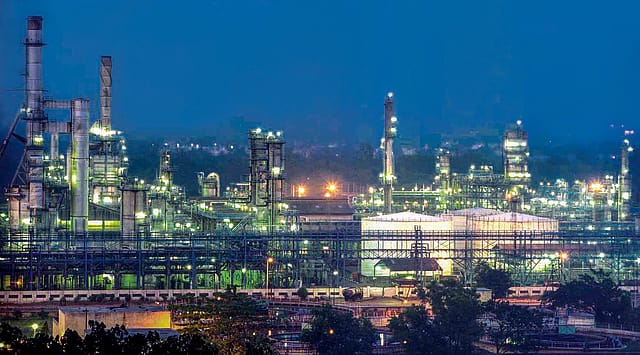
Mukesh Ambani-led Reliance Industries has received a general licence from the United States to directly buy Venezuelan oil without violating sanctions, news agency Reuters reported, quoting sources. This development marks a shift in India’s energy procurement strategy and signals a thawing of trade relations between Washington and Caracas following a turbulent start to 2026.
Restoration of direct trade
According to the report, the licence issued by the US Treasury Department allows Reliance—the operator of the world’s largest refining complex at Jamnagar—to resume direct imports, bypassing the complex third-party intermediary networks it was forced to use over the last year. The move comes as part of a broader "America First" energy realignment, following the dramatic capture of Nicolas Maduro in January and the subsequent US-led effort to stabilise the Venezuelan economy through a $100 billion reconstruction initiative.
Pivoting away from Russian crude
Reliance is reportedly looking to diversify its feedstock as it pivots away from Russian Urals. Recent geopolitical pressure from the Trump administration has made Russian oil increasingly difficult to settle in traditional currencies, pushing New Delhi to seek alternatives. Venezuelan "Merey" crude, though heavy and sour, is a perfect match for the sophisticated deep-conversion units at the Jamnagar refinery.
Industry analysts suggest that while Venezuelan oil is technically more expensive to refine due to its high sulphur and metal content, the economic benefits lie in the "complexity margin." Reliance’s Jamnagar facility is uniquely equipped with advanced coking and hydrocracking units designed specifically to process "bottom-of-the-barrel" crudes that most global refineries cannot handle. By securing this licence, Reliance can negotiate directly with PDVSA, potentially securing discounts that offset the higher freight costs associated with the long-haul journey from the Caribbean.
Geopolitical leverage and trade deals
The report also indicates that the US move is a calculated lever to pull India further into its trade orbit. By providing a stable, sanctioned alternative to Russian barrels, Washington is effectively offering India a "relief valve" for its energy security needs. Earlier this month, Reliance had already moved to secure approximately 2 million barrels of Venezuelan crude through private traders at a discount of nearly $7 per barrel to ICE Brent.
The shares of Reliance Industries ended 2.09% lower at ₹1,418.60 on the national stock exchange on Friday. The company's stock has surged over 16% in the past year, outperforming the benchmark Nifty 50 index which has gained almost 11% during the same period.