
Sam Altman 'delighted to be wrong' on AI job market disruption despite 144,000 global layoffs this year
ADVERTISEMENT
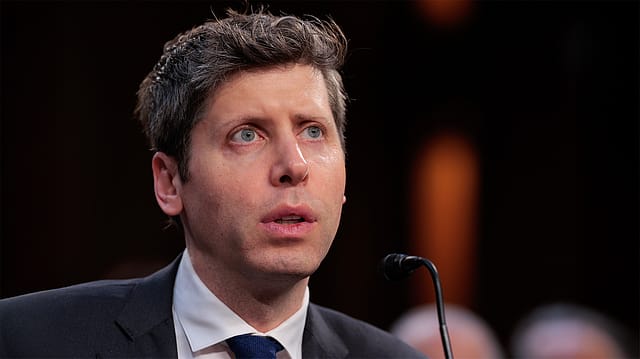
OpenAI chief executive officer Sam Altman says he is relieved that the much-feared “job apocalypse” from artificial intelligence has not materialised as quickly as many had predicted, even as companies continue to pour billions into AI infrastructure and cut thousands of jobs globally.
Speaking via video link at Commonwealth Bank’s Accelerate AI event in Sydney alongside CEO Matt Comyn, Altman said he had been wrong about the near-term impact of AI on entry-level white-collar jobs. “One of the areas where I personally had been wide off the mark was on AI’s short-term impact on entry-level white-collar jobs, which had not been nearly as bad as I had once predicted,” Altman said. “I’m delighted to be wrong about that.”
Layoff details say otherwise
His remarks come amid growing anxiety around AI-led restructuring across the technology industry, where companies are simultaneously ramping up AI investments while reducing headcount. According to layoff tracker TrueUp, more than 1.44 lakh tech workers have been laid off globally so far in 2026. Among the biggest cuts this year, Meta has announced plans to lay off around 8,000 employees as part of its AI restructuring push, with further cuts expected through the year. Massive workforce reductions occurred at Oracle and Amazonas well, with both companies linked to cuts running into tens of thousands of roles as AI infrastructure spending intensifies.
The layoffs are unfolding alongside an unprecedented surge in AI capital expenditure. Major technology firms are expected to collectively spend well over $700 billion on AI infrastructure, chips and data centres in 2026, as companies race to build large-scale AI systems.
Altman calls for transparency on implications
Despite that backdrop, Altman argued that the broader economic adoption of AI was still at an early stage.“Overall, I think the technology has gotten to a notable place,” he said, adding that while AI models had become highly capable, businesses and institutions were still figuring out how to deploy them meaningfully. “We have these incredibly smart models [but] I think one has to look at the state of the economic adoption and say we’re still very early.”
He said OpenAI had attempted to “think out loud” publicly about AI’s risks and implications, even at the cost of occasionally getting predictions wrong. “I believe that so much of society here is going to be impacted by this, that we are all stakeholders, and it is better for us to be going in the direction of too much transparency and occasionally being wrong,” he said.
Altman also suggested that some parts of human interaction should remain untouched by automation. Recalling his own experiments with using AI to manage personal communication, including emails and Slack messages, he said he quickly realised there were limits to what he wanted AI to replace. “We really do care about our interactions with people,” he said, adding that personal communication was “not something that I can imagine myself outsourcing to an AI anytime soon”.
Altman said the next phase of AI could involve persistent systems that continuously understand a user’s goals and proactively assist them, rather than waiting for prompts. “What I think will be possible soon is you will have an AI that is always running,” he said. “It is understanding you and your goals and your company’s goals. And it’s just trying to be as helpful as it can.”