
Shapoorji Pallonji Mistry welcomes RBI decision on Tata Sons, calls listing a ‘social and moral imperative’
ADVERTISEMENT
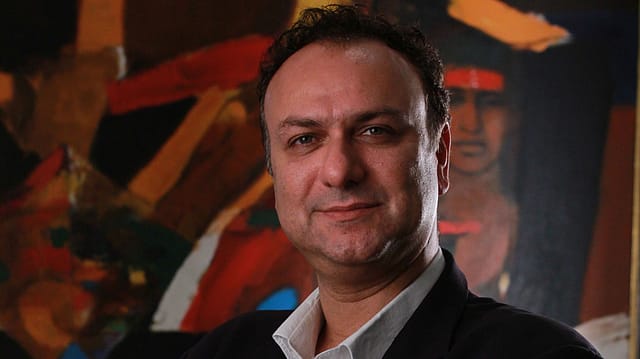
Shapoorji Pallonji Mistry has welcomed the Reserve Bank of India’s decision on Tata Sons, saying it provides “full clarity” on the company’s regulatory position and the way forward.
“I receive the Reserve Bank of India’s decision with deep respect and profound humility. I welcome the decision wholeheartedly, and I believe it marks a pivotal moment not merely for Tata Sons, but for the principles of transparency, accountability, fairness and responsible institution-building that should guide enterprises of national importance,” Mistry, chairman of the Shapoorji Pallonji Group, said in a statement.
The RBI had classified Tata Sons as an Upper-Layer NBFC under its Scale-Based Regulatory Framework, and the prescribed listing route followed from that regulatory architecture, Mistry said. With the RBI rejecting Tata Sons’ application to surrender its registration and directing the company towards the necessary compliance at the earliest, “the path forward is clear,” he said.
Mistry acknowledged the RBI and the government for the “clarity of purpose” brought to the process and for holding all institutions, regardless of size or standing, to the same standard.
He also expressed his “profound admiration” for Prime Minister Narendra Modi, particularly for his commitment to strengthening institutions and enabling them to discharge their responsibilities with clarity, authority and purpose. Mistry said the establishment and development of institutions such as NITI Aayog, the emphasis on transparent and accountable governance, and the government’s stated respect for RBI's autonomy reflected the conviction that a strong India rests on strong institutions.
Tata Sons listing ‘social and moral imperative’
Mistry said he has repeatedly maintained that the public listing of Tata Sons is not merely a financial or regulatory matter, but “a social and moral imperative”.
“It is about strengthening transparency and public accountability in one of India’s most consequential business institutions, while preserving and advancing the extraordinary philanthropic purpose that lies at the heart of the Tata legacy,” he said.
He said the RBI decision should not be viewed as a victory of one stakeholder over another, but as an opportunity to bring people and institutions together.
“The listing of Tata Sons can become a bridge. A bridge between shareholders and Trusts, between private heritage and public accountability, between generations of stewardship, and between India’s great past and the extraordinary future that lies ahead,” Mistry said.
The relationship between the Shapoorji Pallonji and Tata groups is more than a century old and has been built over generations through enterprise, trust and shared experiences, he said. Mistry said he looked forward not merely to a resolution of the present chapter, but to forging a greater partnership, greater engagement and deeper relationships with Tata Sons and the Tata Trusts in the years ahead.
He cited Jamsetji Tata’s philosophy that “in a free enterprise, the community is not just another stakeholder in business but is in fact the very purpose of its existence”, saying that this should guide the next chapter of Tata Sons.
“The larger question should be how can one of India’s greatest industrial institutions become even stronger, more transparent, more accountable and more capable of serving the nation,” he said.
‘Stronger Tata Sons can strengthen philanthropy’
Mistry said a transparent and publicly accountable Tata Sons could strengthen the wider ecosystem by broadening participation, enhancing governance, providing greater visibility to value, protecting the legitimate interests of investors and creating the basis for a more robust and equitable dividend policy.
“Most importantly, it can strengthen the capacity of the Tata Trusts to pursue their philanthropic responsibilities over generations,” he said.
The Tata Trusts are among India’s most important philanthropic institutions, Mistry said, adding that it should be a shared ambition for the Trusts to become one of the largest and most consequential philanthropic corpuses in the world over the coming five years.
He said a stronger Tata Sons, operating transparently and responsibly, could help make that ambition possible through sustained enterprise growth and a durable flow of value towards philanthropy.
Mistry also pointed to the millions of Indians who have invested in listed Tata companies, saying they have placed their faith and savings in the Tata name. A publicly accountable holding company, he said, could strengthen the relationship between this community of investors and the institution whose success underpins the wider Tata ecosystem.
“Tata Sons now stands at the threshold of another extraordinary era,” Mistry said, pointing to India’s growing focus on semiconductors, advanced manufacturing, aviation, defence, artificial intelligence, digital technologies, energy and strategic infrastructure.
“These are not simply new businesses; they are capabilities that will shape India’s economic sovereignty and competitiveness in the decades ahead,” he said.
Mistry said he would like to see Tata Sons evolve into a modern, globally respected and publicly responsible holding institution that creates value for shareholders, respects every stakeholder, remains committed to philanthropy and places national interest at the heart of its long-term decisions.
He appealed to all sections of the Tata Group, including individual trustees, Tata Sons, its leadership, shareholders, employees and other stakeholders, to come forward “in a spirit of harmony and shared purpose”. “Let us not allow the listing to become even a minor point of division. Let us use it as a bridge. Let us make it an opportunity for reconciliation, renewal and a stronger institutional future,” he said.
Mistry said the Shapoorji Pallonji Group was ready to engage constructively with Tata Sons, with respect for Tata’s heritage, confidence in its future and a shared commitment to the national interest.
“The objective is not victory for one side. The objective is a stronger Tata institution, stronger philanthropy, greater accountability, deeper partnership and, ultimately, greater service to India,” he added.