
Shining aluminium sparks ₹2.4 lakh crore race as Vedanta, Birla and Adani bet big on India’s next growth engine
ADVERTISEMENT
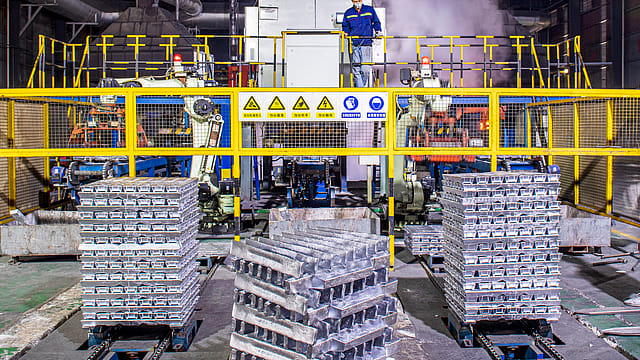
India’s aluminium industry is entering one of its biggest expansion phases, with the Adani Group, Vedanta, and the Aditya Birla Group together committing an estimated ₹2.43 lakh crore over the next four to five years. The investment wave reflects a structural shift in the highly cyclical sector, where demand is being powered by electric vehicles, solar panels, power transmission and distribution infrastructure, even as China’s production ceiling tightens global supplies.
Unlike previous commodity cycles driven largely by global demand, the current expansion is anchored in India’s own consumption story. Aluminium demand, one of the most cyclical among industrial metals, is now finding support from multiple long-term sectors. Rising EV production, rapid solar capacity addition, grid expansion and defence manufacturing are creating sustained demand, encouraging producers to significantly expand capacity.
India’s aluminium consumption rose by around 10% to nearly 6 million tonnes in FY26, according to Vedanta. Hindalco estimated domestic demand growth at 11-12% during the year, led by the electrical and automotive sectors and backed by infrastructure spending. The central government is targeting annual aluminium production capacity of 8.5 million tonnes (MT) by FY30, almost double the current 4.2 MT.
The momentum extends beyond India. Vedanta expects global aluminium demand to grow at a compound annual rate of 2.5% between 2025 and 2030, with decarbonisation and transport electrification becoming major demand drivers. "The demand for renewable energy will drive an increased demand for aluminium for solar panel manufacturing, transmission and distribution, and the replacement of existing copper wiring in power distribution systems," the company said in its annual report.
The newest challenger is the Adani Group, which has unveiled the single largest proposed investment in the sector. Adani Enterprises Ltd has partnered with Abu Dhabi-based IHC Group to build an integrated $11.5-billion (₹1.08 lakh crore) aluminium complex in Odisha. The project includes a 4 MT alumina refinery, a 2 MT aluminium smelter, a 4,000-megawatt (MW) captive power plant (including 400 MW from green power), and a 1 MT downstream manufacturing park.
"We expect all the approvals to be in place in the next 12-18 months and post that it will take us anywhere between three and three and a half years to get Phase 1 running," Adani Ports and Special Economic Zone Managing Director Karan Adani said. He expects the entire project will take four to five years to be commissioned. The investment also complements the group’s renewable power ecosystem, creating natural synergies with its solar panel manufacturing and green power generation.
Vedanta, India’s largest primary aluminium producer, is equally aggressive. Last year, it announced a ₹1 lakh crore investment to establish a 6 MT alumina refinery and a 3 MT aluminium plant powered by renewable energy in Odisha. The company already has primary aluminium capacity of about 2.4 MT across Jharsuguda and BALCO’s Korba facility, while its Lanjigarh refinery has expanded its alumina capacity to 5 MT annually from 2 MT.
"The refinery reached a run rate of 4 MTPA in March and is expected to complete its ramp-up to full capacity in FY27," the company said.
Vedanta is simultaneously moving up the value chain. Value-added products already account for around 60% of its aluminium sales, with a target of increasing the share to 90%, allowing the company to improve margins while reducing dependence on commodity-grade metal.
Hindalco, the metals flagship of the Aditya Birla Group, is pursuing a similar strategy. The company is in a ₹35,000 crore capital expenditure cycle for investments in alumina, smelting and recycling while strengthening downstream operations. The projects will be completed by 2029. The strategy seeks to balance upstream production with higher-margin downstream businesses, including battery materials, flat-rolled products and speciality aluminium.
Managing Director Satish Pai said the company’s upstream expansion remains on schedule. "Notably, the phased expansion at the Aditya smelter, spanning 181 KT in Phase 1 and 193 KT in Phase 2, is advancing on schedule. It will take total upstream capacity to 1.71 MT by FY29... Specialty Alumina is finding increasing traction in applications that range from flame retardants to semiconductor chips... The expansion at Aditya Alumina Refinery is progressing towards commissioning in FY28," he said.
He added that downstream investments are opening new opportunities in electrification and e-mobility. "The downstream business has opened up new market opportunities, with electrification and e-mobility emerging as key sectors," Pai said in the annual report, adding that battery foil, battery enclosures and flat-rolled products are being ramped up to meet rising demand.
The investment push is unfolding amid favourable global market dynamics. Aluminium prices on the London Metal Exchange (LME) climbed sharply through FY26, supported by US tariffs, China’s production nearing its statutory 45 MT cap, a weaker US dollar and geopolitical disruptions following the Iran war. Prices touched multi-year highs of around $3,400 per tonne in March. The price reached $3,675 in May before falling to the current level of around $3,140.
China remains the world’s largest aluminium producer, accounting for nearly 60% of global output. But with production already approaching its regulatory ceiling, the country's ability to expand supply is increasingly constrained. That has strengthened India's long-term opportunity.
"Meanwhile, India stands out with its robust domestic demand outlook of more than 8% growth for FY27. Key sectors like the electrical industry, automotive, and anticipated growth in renewables, defence and aerospace will continue to drive aluminium consumption in the country," Vedanta said.
Vedanta Executive Director Arun Misra and CFO Ajay Goel said the company’s capital expenditure cycle is now entering the execution phase. "Aluminium is central to Vedanta’s growth focus, with several expansion and vertical integration projects ongoing to scale capacity, efficiency and profitability. We target to achieve 3 MT smelting capacity by FY28."
"We commissioned the 1.5 MT Train 2 at the Lanjigarh refinery, enhancing total alumina capacity to 5 MT. Value-added product capacity increased to 70% of total aluminium capacity. We are on track to reach 90% by FY27," Misra said.
Yet the industry’s optimism is tempered by one growing concern—imports. Total aluminium imports, including scrap, rose to about 3.6 MT in FY26 from 3 MT a year earlier. Flat-rolled products, extrusions and scrap continue to enter India at competitive prices, squeezing domestic producers, particularly in value-added segments.
"Rising imports of aluminium products, including scrap, remain a key concern. Domestic producers continue to face pressure from increasing imports of rolled and foil products, particularly from China and FTA countries at competitive prices," Hindalco said, while noting that anti-dumping duties on selected imports have provided relief to domestic producers.
Despite the import challenge, the long-term outlook remains overwhelmingly positive. The government projects domestic aluminium demand to rise to 8.5 MT by FY30, 18 MT by FY40 and 28 MT by FY47. More significantly, the government’s vision goes beyond import substitution. It aims to transform India into a major aluminium export hub by expanding national production capacity to 37 MT by FY47 and increasing India’s share in global aluminium trade from the current 3.8% to 10%.
If the current investment cycle delivers as planned, India’s aluminium story could move beyond being a commodity expansion and emerge as one of the defining industrial growth narratives of the coming decade.