
SpiceJet shares zoom 14% as airline plans to beef up operations amid IndiGo crisis
ADVERTISEMENT
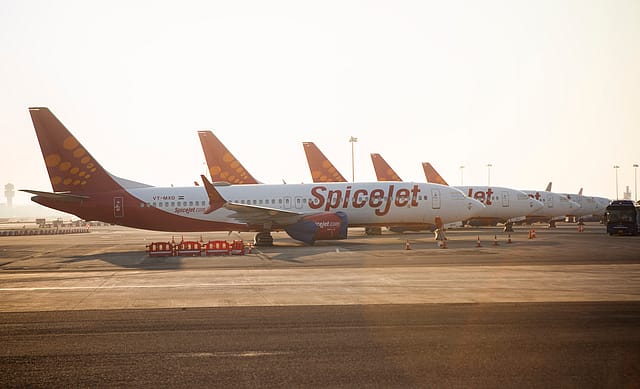
The Indian aviation market is facing an overall turbulence stemming from the massive number of flight cancellations that began last week, which continues to this week even though at a much lower scale.
SpiceJet, which is long-regarded as an underdog in the Indian aviation industry dominated by two strong players, is trying to position itself as a formidable player in the market while the bigger ones are struggling to stabilise daily operations.
The airline on Friday announced 22 additional flights between major routes, while its bigger rival, IndiGo faced cancellations of over 1000 flights.
As a result, SpiceJet shares surged 14.11% to an intraday high of ₹35.50 apiece on the Bombay Stock Exchange (BSE) while the shares of IndiGo plunged 9.5% to an intraday low of ₹4,859.50 apiece on the National Stock Exchange (NSE).
SpiceJet, by the end of 2025, aims to more than double its capacity and triple its Available Seat Kilometres (ASKM), which would mark a major milestone in its growth journey, the company had said in its investor presentation dated November 17, 2025. The company plans to operate 250 flights daily during the Winter Schedule 2025, a sharp increase from 125 daily flights in the preceding Summer Schedule, and 150 flights during the last winter season.
SpiceJet’s wet-lease deals helps sidestep DGCA norms
Another factor that helped SpiceJet navigate this crisis without much damage is the fact that almost 50% of SpiceJet’s aircraft are wet-leased as of late 2025.
Before understanding what wet-leasing is, let’s have a quick recap of the new Flight Duty Time Limitations (FDTL) rules by the Directorate General of Civil Aviation (DGCA).
According to the latest FDTL norms (which the DGCA proposed in early 2024), the maximum flight duty period for a pilot is set at 12 hours to prevent fatigue-related incidents. The DGCA had also mandated increased the weekly rest period from 36 to 48 hours, and also capped the weekly number of landings a pilot can make from midnight to early morning at two, from six earlier.
Due to the wet-leasing agreement in place, SpiceJet has managed to sidestep the strict FDTL norms.
Wet-leasing refers to short-term aircraft rental where the lessor provides the plane plus crew, maintenance, and insurance (unlike dry leasing, which is just the aircraft). Under DGCA rules, wet-leased foreign aircraft with foreign crew are exempt from domestic FDTL norms for up to a year, as they're treated as "international operations."
As mentioned earlier, almost half of SpiceJet’s fleet is wet-leased. They are mostly Boeing 737s from foreign lessors, crewed by foreign pilots.
IndiGo, which boasts close to 60% of the domestic air passenger traffic, only has about 5-10% of its fleet under wet-lease agreements, focused on international routes. As a result, 90% of its fleet uses Indian crew, who are fully exposed to the DGCA’s stricter rules, leading to a perfect storm of crew shortages tied up and flight cancellations leaving thousands of passengers in distress.
The DGCA’s new regulations, which were proposed in early 2024, were implemented in two phases this year, with the latest implementation being on November 1, 2025, that resulted in a textbook pandemonium.
Even as the DGCA on Friday issued notification easing its rules, and reportedly gave IndiGo exemption from night duty limits for pilots until February 10, the crisis still continues. IndiGo has cancelled almost 300 flights today as its operational crisis entered its seventh day. SpiceJet, on the other hand, is hoping that higher capacity and better aircraft utilization is expected to materially improve its Cost per Available Seat Kilometre (CASK), lift overall profitability.