
Strait of Hormuz traffic eases as Red Sea security risks persist amid Houthi threats
ADVERTISEMENT
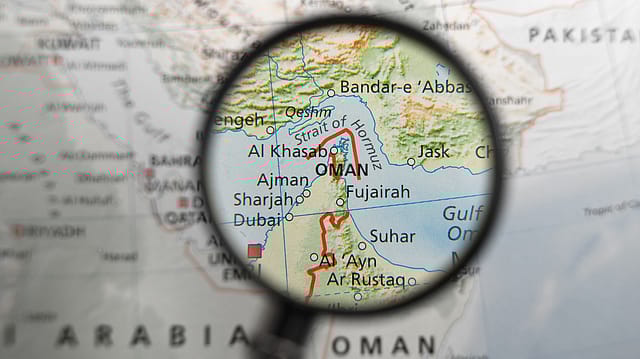
Ship traffic through the Strait of Hormuz declined on August 4 while security concerns in the Red Sea remained elevated following fresh Houthi claims of attacks on commercial shipping, according to data from S&P Global report.
Total vessel transits through the Strait of Hormuz fell to 14 on August 4 from 17 a day earlier. The crossings included 10 inbound and four outbound movements, with Iran-linked vessels accounting for half of all traffic. Vessel movements comprised six product tankers, three bulk carriers, two very large crude carriers (VLCCs), two container ships and one cargo vessel.
According to the report, six ships crossed the strait without broadcasting visible signals, including two VLCCs linked to South Korean operator Sinokor. One of them, PANAMA PROSPERITY, entered the Gulf on its first Middle East voyage since the conflict began on February 28 and is currently bound for Dubai. The second, SURINAME PROSPERITY, had loaded a 2-million-barrel cargo of Basrah Medium crude on July 19 and is presently off Fujairah.
Iraqi crude continued to dominate confirmed tanker departures from the Gulf, with around 9 million barrels of Basrah crude successfully exiting the Strait of Hormuz since July 30, accounting for nearly 70% of detected crude tanker departures during the period.
Among refined product movements, ADNOC-owned LR1 tanker MEZAIRA'A transited inbound after loading products at Qatar's Mesaieed in mid-July. Another ADNOC vessel, LR2 tanker TARIF, moved outbound and is believed to be carrying refined products from the Ruwais refinery.
At the US naval blockade line, 44 vessel crossings were recorded during the day, comprising 20 inbound and 24 outbound movements. Authorities identified one non-compliant vessel. LPG tanker NOOH GAS sailed inbound toward Khor Fakkan, while G SILVER, carrying Iranian-origin LPG and initially bound for Pakistan, appeared to reverse course before crossing into the Arabian Sea.
Meanwhile, traffic through the Bab el-Mandeb Strait rebounded sharply, with total crossings rising to 30 on August 4 from 21 a day earlier. The movements were evenly split between northbound transits into the Red Sea and southbound departures toward the Gulf of Aden.
The increase in traffic came even as Houthi military forces claimed on August 5 that they had successfully targeted a tanker north of the Red Sea near Yanbu, underscoring persistent security risks in the region.
According to S&P Global, observed vessel traffic through Bab el-Mandeb has slowed since the second half of July, although increasing "dark activity"—ships switching off their transponders for extended periods—may be masking actual movements. Several vessels have reportedly remained undetectable throughout most of their Red Sea transit before reappearing near the Suez Canal or Gulf of Aden.
The VLGC GAS LEO transited northbound through Bab el-Mandeb on August 4 and is currently in the Red Sea, with an estimated Suez Canal transit on August 7. Although its next loading destination remains unknown, the vessel had previously loaded LPG at Yanbu in June before delivering cargoes to the Philippines and China.
If GAS LEO returns to Yanbu, it would become the third VLGC to load LPG from the Saudi Red Sea port since the Houthis announced a blockade on July 20. GAS KING and NY LORD loaded LPG cargoes from Yanbu on July 20 and July 29, respectively, before transiting the Suez Canal. Their declared destinations—Japan and Singapore—suggest recent Yanbu LPG exports are primarily headed to Asian markets.
S&P Global noted that routing LPG cargoes via the Suez Canal, instead of the shorter Bab el-Mandeb route, increases voyage distances, boosts ton-mile demand and keeps vessels employed for longer.
Yanbu has emerged as an increasingly important Saudi LPG export hub this year. LPG loadings from the port reached 1.6 million metric tonnes in the first half of 2026, double the volume recorded in the corresponding period last year.