
Traders call off October 2 ‘No UPI Day’ after meeting FM Sitharaman over MDR
ADVERTISEMENT
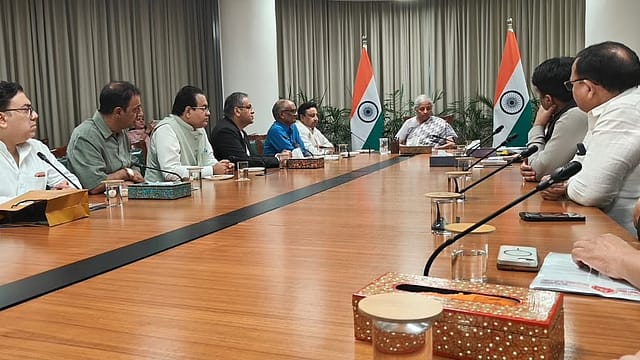
Two leading trader bodies have withdrawn their planned 'No UPI Day' protest on October 2 (Friday) after a delegation met Finance Minister Nirmala Sitharaman in New Delhi on Wednesday and discussed concerns over the proposed Merchant Discount Rate (MDR) on select high-value UPI transactions.
The All India Mobile Retailers Association (AIMRA) and the All India Consumer Products Distributors Federation (AICPDF) announced the decision following the meeting. The delegation was led by Praveen Khandelwal, Member of Parliament from Chandni Chowk and secretary general of the Confederation of All India Traders (CAIT), and included around 20 senior trade leaders from different states.
The associations had planned the protest to oppose the proposed MDR, which is scheduled to apply to specified UPI person-to-merchant (P2M) transactions above ₹2,000 from October 15.
Traders seek phased MDR rollout
During the meeting, the trade bodies urged the government to postpone the MDR rollout, citing the approaching festive season and the expected rise in business activity. They also proposed a phased implementation of the charge.
Under their proposal, MDR could start at 0.20% in FY26-27 and increase by 0.05 percentage points each year until it reaches 0.40%. The associations said a gradual increase would give merchants sufficient time to adjust to the new system. “In view of the constructive discussions and the assurance that the concerns raised by the trading community will receive due consideration,” Khandelwal said while briefing the media, both organisations had decided to withdraw the call for the October 2 protest.
The trade bodies also sought a review of the proposed ₹1 lakh threshold. They urged the government to raise it to ₹5 lakh, arguing that the higher threshold would better reflect the way merchants conduct transactions.
They further sought exclusion of merchant-to-merchant transfers from the MDR framework. The associations proposed setting up a special committee to examine the concerns raised by traders and recommend a balanced approach to the implementation of MDR.
Sitharaman rejects tax, cess claims
The development comes amid a wider debate over the proposed MDR on high-value UPI transactions. Sitharaman has said the charge is neither a tax, cess nor surcharge and that the collections would not accrue to the government. She made the remarks while rejecting criticism from Opposition parties over the proposed framework.
The Supreme Court on Monday also refused to grant an interim stay on the proposed MDR on specified UPI P2M transactions above ₹2,000, which is scheduled to take effect from October 15.
A bench comprising Chief Justice Surya Kant and Justice Joymalya Bagchi and Justices V. Mohana issued notices to the Centre, the Reserve Bank of India (RBI), and the National Payments Corporation of India (NPCI), seeking their responses within four weeks.