
US imposes 10% tariff on Indian goods over forced labour rules; lower rate follows policy change
ADVERTISEMENT
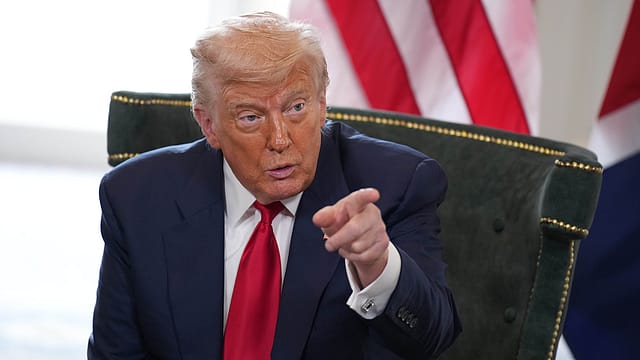
The US has imposed a 10% tariff on imports from India and 16 other countries under Section 301 of the Trade Act of 1974, citing their implementation and enforcement of measures against goods produced using forced labour. The tariff takes effect from 12:01 am Friday.
India was initially slated to face a 12.5% tariff when the US Trade Representative (USTR) unveiled the proposed action on June 3. However, Washington lowered the levy to 10% after New Delhi amended its Foreign Trade Policy on July 14 to prohibit the import of goods produced using forced labour.
In a memorandum issued on Thursday, US President Donald Trump said the reduction reflected the steps taken by countries that had introduced such prohibitions. "As a result of these actions, the Trade Representative has advised me that the goods of these economies should be tariffed at the 10% rate to further encourage these economies to effectively enforce such prohibitions," Trump said.
The USTR announced that Ambassador Jamieson Greer had taken the final action, at the direction of President Trump, following investigations into forced labour practices across 60 economies. The probe included two rounds of public hearings, more than 2,100 public comments, and consultations with trading partners.
"President Trump recognises that decades of moral suasion have not eradicated forced labour from global supply chains. The United States has had a forced labour import ban for nearly a century, and rigorously enforces it. It is well past time for our trading partners to do the same," Greer said in a statement.
He added that the new tariffs are intended to address both human rights concerns and unfair trade practices while encouraging countries to effectively enforce bans on imports made using forced labour.
India among 17 countries facing 10% tariff
Of the 60 economies covered by the action, 17—including India, Canada, the UK, Bangladesh, and Pakistan—will face a 10% tariff after taking steps to prohibit imports of goods produced through forced labour.
The remaining 43 economies, including countries such as China and Japan that do not have comparable prohibitions, will face a 12.5% tariff.
The tariffs will not apply to raw materials whose restriction could disrupt domestic supply, products that could trigger economy-wide disruptions, or goods that cannot be produced in sufficient quantities within the United States.
The action follows two Section 301 investigations launched by the Trump administration after the US Supreme Court, in February, struck down the administration's sweeping reciprocal tariffs imposed under emergency powers. Following that ruling, the administration introduced a temporary 10% tariff on imports from all countries for 150 days beginning February 24. That measure expires on Friday, when the new country-specific tariffs come into effect.
A Federal Register notice accompanying the latest action acknowledged India's amendment to its Foreign Trade Policy after the proposed tariffs were announced in June.
Section 301 of the Trade Act of 1974 allows the US government to take action against foreign government policies or practices considered unjustifiable, unreasonable or discriminatory, and which burden or restrict US commerce.
India continues to oppose investigations
India has contested the USTR's investigations and has maintained that issues related to labour standards should be addressed within the framework of the proposed bilateral trade agreement currently under negotiation between the two countries.
According to data from India's Commerce Department, the US is India's second-largest trading partner and its largest export destination. Bilateral merchandise trade stood at nearly $141 billion in 2025, with India's exports valued at $87.3 billion.