
WTO Ministerial - what are key agenda items? What is India's stand?
ADVERTISEMENT
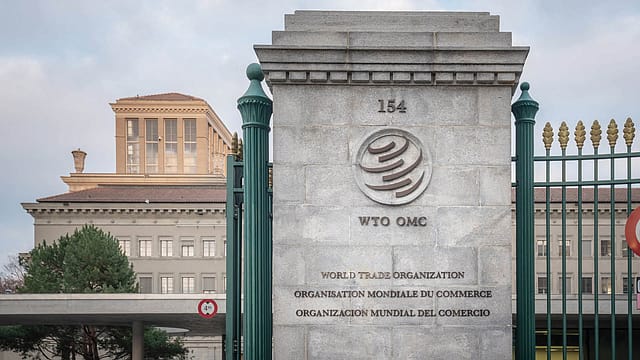
As the most important programme of the World Trade Organisation (WTO), Ministerial Conferences, usually held every two years, see trade ministers from WTO’s 166 member countries and economic regions meet to discuss the challenges and opportunities facing the multilateral trading system and deliberate on the future work of the WTO. The 14th Ministerial Conference (MC14) will begin next week (from March 26 to 29) in Yaoundé, Cameroon. While MC14 will not be different from earlier Conferences in its broad objectives, it has come at a time when WTO’s most powerful member United States of America is unilaterally setting rules of global trade (reciprocal tariffs) and introducing new practices in the form of geopolitical linkages to trade (restrictions imposed on countries that purchase Russian, Iranian, Venezuelan oil etc). As the only international organisation dealing with the rules of global trade, WTO will have to reinvent, reprioritise and reassure itself in MC14 to stay relevant and productive in the coming days and ensure that global trade flows as smoothly, predictably and freely as possible.
Given the context, let’s see what the key agenda items before MC14 are:
Reforms
According to WTO’s MC14 briefing note, WTO members have completed discussions in Geneva on a draft ministerial statement and a work plan intended to frame the scope for reform efforts. The work plan outlines the scope of the future work, starting with the areas where members have recently focused their initial efforts, including decision-making, development and special and differential treatment, and level playing field issues. It sets out modalities for how the work will be carried out, with indicative timelines and check points. It also includes a reference to reform of the WTO's dispute settlement system, noting that consultations will continue after MC14 under the auspices of the Dispute Settlement Body (Dispute settlement reform is a priority among the wider discussions on WTO reform as members were unable to reach consensus on the appointment of new Appellate Body members due to objections from the United States. This blockage eventually led to the Appellate Body no longer being able to function, starting from 11 December 2019). At MC14, ministers will be asked to endorse the work plan so that work can start as early as April 2026. Ministers will also engage in a high-level political exchange on WTO reform.
During WTO’s General Council Meeting held on 16-18 December, 2025 in Geneva, India had stated that the country, while maintaining that the sanctity of consensus-based decision making is a fundamental rule of the WTO that is non-negotiable, remains committed to engaging in the reform process in a constructive and meaningful way.
Development Issues
WTO MC14 Briefing Note states that discussions in the run-up to MC14 have focused on areas such as priorities for least-developed countries (LDCs), the effective integration of small economies into the global trading system, technology transfer, and special and differential treatment provisions in WTO agreements.
India has proposed strengthening of the provisions related to Special and Differential Treatment (S&DT) in order to achieve food security, rural development and structural transformation for all developing countries including LDCs. The country maintains that ensuring domestic food security and safeguarding the livelihoods of low-income or resource-poor farmers in developing countries has to be a priority for the MC14.
Investment Facilitation
The Investment Facilitation for Development Agreement (IFDA), a proposal made by 128 members of WTO claiming to promote foreign direct investment (FDI) flows, particularly to developing economies and least-developed countries (LDCs), in support of sustainable development will come up at MC14 for approval to be included to the WTO legal framework. India has been strongly opposing this initiative stating that the country is against WTO initiating an agenda without the consensus of its members. Secondly, India states that IFDA’s linkage with trade has not been established. In December, India has stated in the context of IFDA that rules based system must not allow rules to be discarded, even if they prove to be inconvenient for some. ‘Reform of this organisation cannot mean stretching its rules. This does not strengthen the WTO; it undermines confidence in its foundations, and rewrites WTO’s mandate, the Ministerial decisions, and how the Marrakesh Agreement applies through the backdoor, changing the character of the organisation and damaging it beyond repair’, said India’s statement.
E-commerce
WTO’s MC14 brief says WTO members are discussing how to build consensus for an MC14 ministerial decision based on members' proposals covering elements such as the extension of the moratorium on customs duties applicable to electronic transmissions and the reinvigoration of the E-Commerce Work Programme, including through the establishment of a WTO Committee on Digital Trade. The idea is to ensure that the benefits of e-commerce and digital technologies are broadly shared and that challenges are addressed in a globally coordinated manner, it says.
India on the other hand does not see any need for reimagining or updating the Work Program on E-Commerce (WPEC) both in terms of structure or substance. The country stands for strengthening the work of the relevant bodies under the WPEC based on its existing mandate with particular focus on its development dimension. India has consistently shared its concerns on the issue of moratorium on customs duties on electronic transmissions. It has stated that a re-consideration of the moratorium is critical for developing countries most importantly to preserve policy space and achieve domestic industrialization and India does not support extension of the moratorium on customs duties on e-commerce.
Agriculture
Concerns about trade and food insecurity remain high on the WTO agenda. It is also one of the areas where consensus has eluded for a long time. In 2013, WTO members had agreed to negotiate a permanent solution to the issue of food purchases for public stocks at minimum support prices like that offered by India. They had also agreed not to challenge such public stockholding programmes under Agreement on Agriculture through WTO’s dispute settlement process.While some WTO members wanted to fast-track progress on specific topics, others favour a comprehensive approach that would address all outstanding issues as a single package.
India continues to stress on the need to address longstanding asymmetries in agriculture related rules under WTO. The persistent imbalance arises from the considerable flexibility available to a few members to extend high levels of product specific support, often at a significant cost to others, it has maintained. India has called all the members to work towards delivering outcome in agriculture based on the demand of the developing countries, including LDCs, in MC14.