
At BRICS agriculture ministers’ conference, Shivraj Singh Chouhan pitches farmer-centric growth model
ADVERTISEMENT
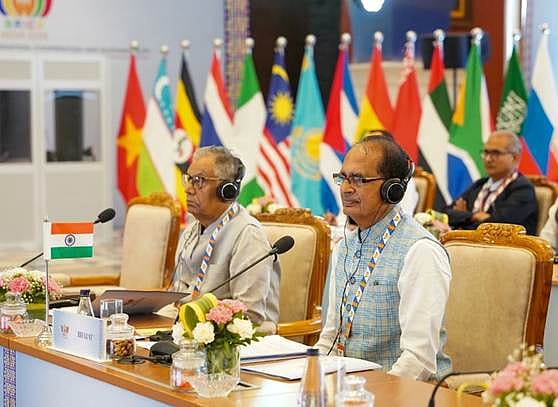
Union Minister for Agriculture and Farmers’ Welfare and Rural Development Shivraj Singh Chouhan on Friday addressed a conference of agriculture ministers of BRICS countries in Indore where he highlighted India’s agricultural achievements, cultural values, and commitment to global cooperation.
The minister said the conference was an important platform for collectively addressing challenges faced by small and marginal farmers across the world, particularly those arising from climate change, pressure on natural resources, rising input costs and uncertainties in agricultural markets.
He said that ensuring the welfare and empowerment of small farmers was central to strengthening global food security and sustainable agricultural growth. If small and marginal farmers become economically strong and technologically capable, he said, the world’s food security structure would also become stronger and more resilient.
Highlighting India’s agricultural achievements, the minister said the country’s agriculture sector had registered an average annual growth of nearly 4.5% over the last decade. He informed delegates that India’s total foodgrain production has now reached nearly 376 million tonnes (MT), reflecting sustained growth in the sector.
Notably, the wheat production in the country has reached close to 118 MT, while horticulture production has crossed 378 MT. Fish production has also increased significantly and has now exceeded 19 MT, demonstrating broad-based growth across multiple agricultural and allied sectors.
He said that India is implementing the world’s largest food security programme, through which food security is ensured for a very large section of the population.
According to Chouhan, approximately 43% of India’s workforce is associated with agriculture and allied sectors, making it one of the most important pillars of the country’s economy. He noted that agriculture is not only linked to food security but also serves as the primary source of livelihood for millions of rural families. Emphasising the role of small and marginal farmers in India’s agricultural structure, Chouhan said nearly 87% of farmers in the country belong to this category. Therefore, empowering them remains the key to ensuring inclusive and balanced development in rural India.
He also said the Pradhan Mantri Kisan Samman Nidhi Yojana is providing direct financial assistance to crores of farmers, helping them meet agricultural and household requirements. Similarly, initiatives such as the Kisan Credit Card scheme and crop insurance programmes are providing financial security and institutional support to cultivators during times of uncertainty and crop losses.