
Budget 2026: Auto industry eyes demand boost, EV incentives and policy continuity
ADVERTISEMENT
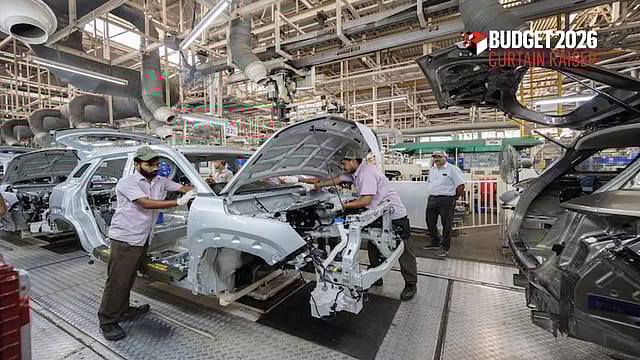
As the Union Budget 2026 approaches on 1 February 2026, India’s automobile sector is bracing for measures to stimulate demand, accelerate the transition to electric mobility, and provide long-term policy stability. With the industry contributing significantly to manufacturing output, employment and GST collections, the stakes are high.
Past Budgets set the context
Over recent years, successive Budgets have redefined the sector. The Faster Adoption and Manufacturing of Electric Vehicles (FAME) scheme, launched in 2019 and extended through multiple phases, incentivised EV adoption via subsidies for two- and three-wheelers.
The Production Linked Incentive (PLI) schemes, introduced in 2021, focused on scaling domestic automotive, cell and battery manufacturing, attracting significant private investment. Complementing these, customs duty exemptions on critical EV inputs and GST rationalisation across various vehicle segments eased costs and improved affordability. These measures laid the groundwork for the sector’s current trajectory.
Stimulating demand remains critical
Despite resilient sales in premium passenger vehicles (PVs) and sport utility vehicles (SUVs), demand in entry-level cars, two-wheelers and commercial vehicles has been uneven.
Industry bodies are looking to Budget 2026 for GST rationalisation, reduction of inverted duty structures, and interest subvention schemes to support financing for first-time buyers and rural markets. Dealers also stress measures that enhance credit availability in semi-urban and tier-II towns to stabilise consumption.
EV transition and infrastructure support
Electric mobility continues to dominate expectations across the industry. Automakers are seeking enhanced incentives for battery and component localisation, expanded PLI coverage for critical subsystems, and stronger support for charging infrastructure. Continuity in EV subsidies and clear regulatory frameworks are seen as essential to sustain private investment and consumer adoption.
Policy stability for long-term competitiveness
Beyond immediate incentives, the industry emphasises predictable tax and duty structures, enabling strategic planning and global competitiveness. Sustained infrastructure investment, particularly in roads and logistics, is viewed as critical to supporting commercial vehicle demand and broader economic activity.
With Budget 2026, the auto sector is looking for a balance: short-term demand stimulus coupled with structural incentives that can secure India’s position in the global automotive and EV landscape.