
Cabinet clears ₹2,169-crore Ahmedabad Metro extension to airport; network to expand to 77.6 km
ADVERTISEMENT
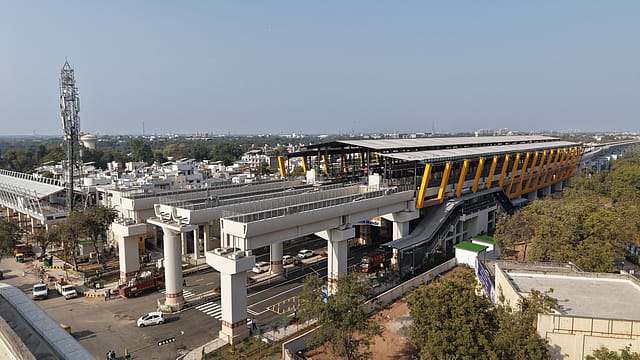
The Union Cabinet on Wednesday approved Phase 2A of the Ahmedabad Metro Rail project, clearing a ₹2,169.04-crore investment to extend the city’s rapid transit system to the airport and expand the operational Ahmedabad-Gandhinagar metro network to 77.63 km.
The 6.032-km corridor will run from Koteshwar Road to the airport and add five stations—Ashram Road, Koteshwar Prachin Mandir, Sabarmati River, Sardar Nagar and Airport. Of these, four stations will be elevated, while the airport station will be constructed underground, reflecting the engineering complexity of integrating air connectivity into an urban metro grid.
Airport link becomes key addition to city’s transit map
The new corridor plugs a critical gap in Ahmedabad’s public transport network by providing direct metro access to the airport. Once operational, it will allow passengers to move between the airport and key residential and commercial districts through the existing Ahmedabad-Gandhinagar metro system.
The extension is also expected to improve interchange access to railway stations and bus terminals, strengthening multimodal connectivity in one of Gujarat’s fastest-growing urban centres. The addition takes the city closer to a fully integrated metro-led transport framework, where airport connectivity becomes part of the core urban transit spine rather than a standalone link.
At a project cost of roughly ₹360 crore per km, Phase 2A underscores the capital-intensive nature of urban metro expansion, particularly where underground infrastructure is required in high-density zones such as airport terminals.
Infrastructure push ahead of future urban demand
The government has indicated that the corridor could support planned urban infrastructure development linked to major sporting events, including the World Police Games in 2029 and the Commonwealth Games in 2030, subject to the creation of supporting facilities in the region.
Beyond event-linked planning, the metro expansion is expected to ease pressure on Ahmedabad’s road network, where rising private vehicle usage has increased congestion across key arterial routes. Improved mass transit access to the airport and commercial hubs is expected to redistribute commuter traffic towards rail-based systems.
The project is estimated to generate employment for around 2,000 people during peak construction activity. Another 500 jobs are expected to be created during operations and maintenance once the corridor becomes functional.