
What if Bab al-Mandeb also closes in the Red Sea? A catastrophe for the world economy
ADVERTISEMENT
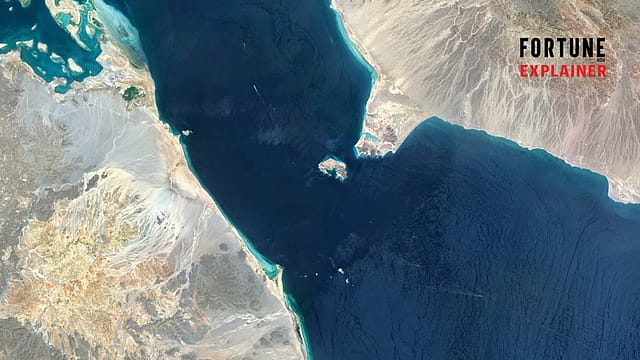
At the southern tip of the Red Sea, Bab al-Mandeb is another vital checkpoint of international waters, like the Strait of Hormuz, that is essential for the global oil flow. The Houthis, the Iran-backed military group in Yemen, are threatening to block the strait as a result of reignited hostilities with Saudi Arabia. They have already attacked two Saudi oil tankers, which pushed global oil prices above $100 per barrel for the first time since May 2026.
If the Houthis successfully block Bab al-Mandeb, this would be a major blow to Saudi Arabia and a catastrophe for the global oil economy, experts say. Let’s explore why.
Why is Bab al-Mandeb so vital?
It is important to note that Bab al-Mandeb is one of the world's most important maritime chokepoints that facilitates global oil shipping and significantly reduces transport time for the oil-exporting Asian economies. The strait connects the Red Sea with the Gulf of Aden and the Arabian Sea, making it the gateway to the Suez Canal for ships travelling between Europe and Asia.
During the ongoing US-Israel war against Iran, Bab al-Mandeb became an even more vital checkpoint following Iran's closure of the Strait of Hormuz. During the conflict, more than 7 million barrels per day (bpd) passed through Bab al-Mandeb, of which the major share of 4 million bpd came from Saudi Arabia, while the rest came from Kazakhstan, the UAE, Qatar, Iraq, etc.
For many Gulf countries that sell their oil to the European markets, this is the primary route for exports. This means a closure of Bab al-Mandeb, along with the Strait of Hormuz, would delay or halt the flow of oil from the Gulf to the world and ultimately worsen the global economy.
Why Saudi Arabia is most affected
Saudi Arabia would be among the hardest hit if Bab al-Mandeb were blocked because it exports large volumes of crude and refined fuels from its Yanbu terminal on the Red Sea. Even oil that avoids the Strait of Hormuz via the East-West Pipeline must pass through Bab al-Mandeb to reach European customers.
A closure would force tankers to sail around the Cape of Good Hope, adding about 10-15 days to voyages and significantly increasing freight, fuel, and insurance costs.
In short, while Saudi Arabia, Iraq, Kuwait, the UAE, and Qatar all use Bab al-Mandeb for exports to Europe, Saudi Arabia has the greatest direct dependence on the strait for its Red Sea oil exports, making it one of the countries most vulnerable to any disruption there.
How is the US responding to this challenge from the Iranian Axis?
After the Houthis’ recent attacks on two Saudi oil tankers, US President Donald Trump said, “The US will hold Iran responsible, in that the Houthis are a surrogate and/or proxy of Iran, and major military punishment will be inflicted upon Iran and, of course, the Houthis themselves.”
“We have done that with the Houthis before... If something like that happens, we take care of it,” Trump separately said.
To curb the Houthi threat in the Red Sea, the US’ response is multifront, including military, economic, and diplomatic measures.
The US has deployed more warships, including destroyers and carrier strike groups, to the Red Sea, Gulf of Aden, and the Middle East in general. These vessels carry Aegis missile defence systems to counter Houthi missiles and drones attacking commercial ships.
In addition, the US has bolstered its aerial surveillance and reconnaissance capabilities over the Red Sea to detect launches and targets.
The US has launched several airstrikes and missile strikes inside Yemen targeting Houthi missile launch sites, drone hangars, radar facilities, air-defence systems, command and control centres, and weapon warehouses.
Iran is not backing down from supporting the Houthis
Despite the US’ relentless military attacks on both Iran and the Houthis, Iran is not backing down from supporting the Houthis. In fact, its support is only growing.
Iran’s support to the Houthis is both strategic and tactical. During the current fighting, intelligence reports and western officials accused Iran of giving the Houthis military support to target shipping interests in the Red Sea and to intimidate the United States and its allies.
However, Iran has denied supplying military assistance to the Houthis.
According to reports, Iran has been providing the movement with technical expertise, missile parts, and drones for its ballistic missiles, cruise missiles, and drones that can carry out attacks on ships and energy facilities.
The Houthis have received both military and technical assistance from Iran. A Reuters article published on July 23 revealed that Iran sent its commanders and military advisers to Yemen to provide assistance to the Houthis. They were transported to Houthi-controlled Yemen along with missile and drone technology that enhances the group’s military capabilities.
What it means for the Indian economy
If this strategic waterway is blocked, it will have serious implications for the Indian economy as the bulk of India’s trade with Europe goes through the Suez Canal via Bab al-Mandeb, and any impediment on this traffic route will increase the freight and insurance charges for Indian shippers and traders.
The alternate route will be via the Cape of Good Hope, which will add 10-15 days to the voyage and make engineering goods, pharmaceuticals, textiles, chemicals, and other Indian exports more expensive.
This may also have a deleterious impact on the Indian economy as more than 85% of the crude oil that India consumes as fuel is imported. If any adverse development takes place at the two strategic waterways simultaneously, the price of crude oil in the international market is bound to increase, which will affect our oil import bill, trade deficit, the value of the rupee, and inflation, thereby having an adverse impact on the Indian economy, industries, and the common people.