
Food stocks rally as India lifts wheat export curbs after 4 years; wheat flour exports freed
ADVERTISEMENT
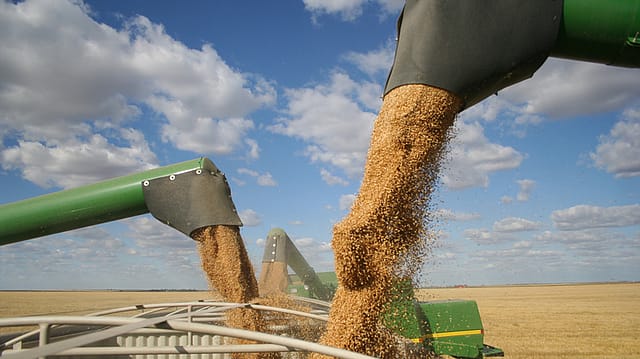
Shares of food and rice-exporting companies rallied on Monday after the government lifted restrictions on wheat and wheat flour exports after four years, while global food prices remained elevated amid concerns over supply disruptions.
Rice exporters were among the biggest gainers. Shares of LT Foods rose by as much as 13% to hit a fresh 52-week high, while KRBL gained up to 9% in intraday trade. Other rice-related stocks, including Chaman Lal Setia Exports, GRM Overseas, Kohinoor Foods and Sarveshwar Foods, also advanced.
The broader market, however, remained subdued, with the Sensex and Nifty trading lower amid concerns over escalating tensions in West Asia and uncertainty around US sanctions on Iran.
The market reaction came after the Directorate General of Foreign Trade (DGFT) on Monday revised the export policy for wheat and specified wheat products from "Prohibited" to "Free" with immediate effect.
The change covers wheat, including durum wheat, as well as wheat or meslin flour (atta), maida, semolina, wholemeal atta and resultant atta. The move effectively removes the export restrictions that had been in place since 2022.
India, the world's second-largest wheat producer, had restricted wheat exports in May 2022 amid concerns over domestic supplies and rising food prices. The government had subsequently allowed limited exports, including an additional quota for wheat flour and related products earlier this year.
The latest decision comes at a time when global wheat markets are facing supply concerns following intensified attacks on grain infrastructure and commercial vessels in the Black Sea. Chicago wheat futures have risen more than 17% since early July, while import-dependent countries are looking for alternative supplies.
India's latest wheat harvest reached a record 120.6 million tonnes, providing the government with greater room to reopen overseas markets. The resumption of exports could allow Indian suppliers to tap demand from import-dependent markets across Asia, Africa and West Asia, particularly as disruptions affect shipments from Russia and Ukraine.
The government’s move therefore comes as a broader positive signal for India’s agricultural commodity exporters, giving traders and food companies greater flexibility to participate in overseas markets amid tight global supplies.