
CAFE regulations to generate cumulative fuel cost savings of Rs 38,000 cr over FY28-32: Icra
ADVERTISEMENT
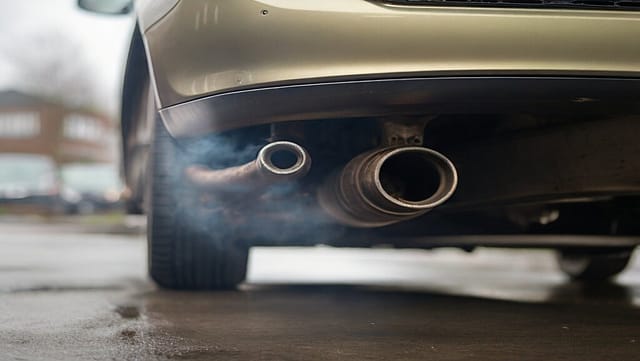
The proposed CAFE-III regulations could generate cumulative fuel cost savings of around Rs 38,000 crore over FY28-32, supporting India's transition towards a more energy-efficient and lower-carbon passenger vehicle ecosystem, ratings agency Icra said on Friday.
In its report, Icra also said that a higher electrified mix lowers fleet-average CO2, reducing the depth of abatement needed from internal combustion engine (ICE)-powered vehicles, and this would enable OEMs to avoid high-cost ICE technologies, consequently limiting ICE vehicle price hikes, improving affordability and margin stability.
The ratings agency's comments came a day after the government proposed tighter fuel efficiency standards for passenger vehicles under the third phase of the Corporate Average Fuel Efficiency (CAFE) regulations, including stricter carbon dioxide emission targets, incentives for cleaner technologies, and a market-based compliance mechanism.
The new rules will come into effect from April next year, after the existing norms (CAFE-II) expire on March 31, 2027.
CAFE-I standards were initially introduced in 2017, focusing on fleet-based compliance rather than model-wise limits. The same were followed by CAFE II norms in 2022, which tightened the fleet average emission limit.
Progressive tightening of emission limits under CAFE III is expected to drive a steady reduction in fleet-average fuel consumption, translating into rising annual and cumulative fuel savings over the compliance period, it said.
"As per Icra's estimates, annual savings are projected to increase materially despite rising vehicle volumes, with aggregate fuel saving potential of around Rs 38,000 crore estimated over the CAFE III period on account of improved fuel consumption standards," the ratings agency said.
CAFE Phase III marks the next stage of India's fleet-level fuel efficiency framework, aimed at further curbing energy consumption and CO2 emissions from passenger vehicles, Icra said.
The draft norms propose to significantly tighten fleet-average CO2 targets over time, with thresholds around 16 per cent tighter by FY28 and nearly 30 per cent by FY32 compared to FY27.
This would push OEMs to adopt a mix of efficiency measures to reduce fleet emissions, while stronger penalties enforce compliance. At the same time, flexibility is provided through credit generation, trading, and fleet pooling, Icra said.
Moreover, original equipment manufacturers (OEMs) can pursue CAFE III compliance through a mix of tactical levers, it said, adding that technology upgrades to the existing ICE portfolio, besides a reduction in EV prices, would accelerate EV penetration and offer recurring medium-to-long-term benefits.
In contrast, carbon credit purchases from other OEMs or the Bureau of Energy Efficiency (BEE) largely act as a short-term compliance backstop. OEMs are likely to deploy a calibrated combination of these levers, shaped by their portfolio mix and cost-benefit trade-offs, it said.
At the same time, it embeds compliance flexibility through provisions for credit generation, trading, and pooling, while strengthening accountability via clearly defined non-compliance penalties, the agency added.
The impact of CAFE I and CAFE II on vehicle prices remained limited and was largely diffused over multiple years, mainly absorbed through periodic price hikes undertaken by OEMs. And that enforcement under the earlier frameworks was also relatively weaker, which resulted in muted compliance costs.
Icra said that under CAFE-III, the government intends to enhance enforcement, with clearer penalty mechanisms and reduced flexibility for OEMs.
Compliance with CAFE Phase-III norms would entail the usage of multiple technologies to bring down emission levels, it said, adding that OEMs are expected to first exhaust low-cost, calibration and software-led measures, followed by progressively more hardware-intensive solutions with a view to limiting price increase for the customers.
As a result, CAFE compliance is likely to result in a multi-year investment curve, where marginal abatement costs could increase non-linearly as OEMs progress towards stricter targets, the agency said.
Overall, CAFE III is likely to support India's transition towards a more energy-efficient and lower-carbon passenger vehicle ecosystem, it added