
‘Changing public behaviour is India’s biggest road safety challenge as road deaths near 1.8 lakh a year’: Nitin Gadkari
ADVERTISEMENT
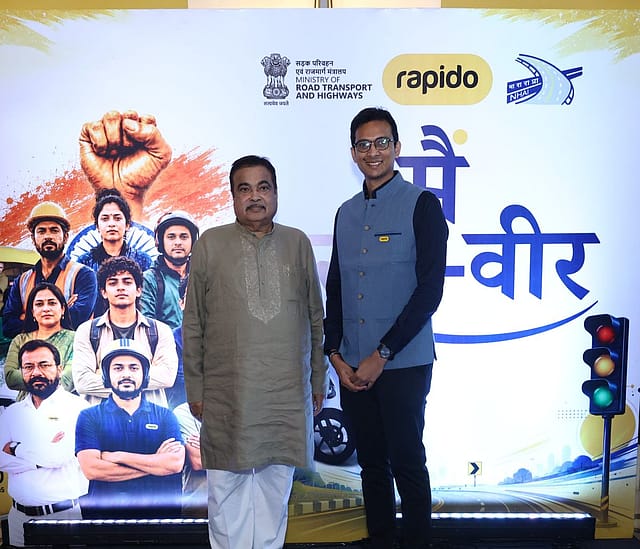
ndia's road safety challenge extends far beyond highways and vehicle technology, with changing public behaviour emerging as the single biggest hurdle in reducing fatalities, Union Road Transport and Highways Minister Nitin Gadkari said on Monday.
Speaking at a road safety awareness event organised by mobility platform Rapido in collaboration with the Ministry of Road Transport and Highways (MoRTH), Gadkari highlighted the alarming scale of accidents across the country and stressed that infrastructure improvements alone cannot solve the problem. Instead, greater compliance with traffic rules and active citizen participation are essential to bringing down the death toll on Indian roads.
“Road safety is a shared responsibility and citizen participation is critical to reducing fatalities on our roads. Our biggest problem is changing public behaviour and enforcing traffic laws,” Gadkari said.
His comments come against the backdrop of persistently high road fatalities despite significant investments in highways, safer road design and emergency response systems. Official data shows that road accident deaths rose 2.3% to more than 1.77 lakh in 2024, translating into nearly 485 deaths every day.
Road accidents continue to exact a heavy economic cost
India remains among the countries with the highest number of road fatalities globally. According to government data, 4,80,583 road accidents were reported across states and Union Territories in 2023, resulting in 1,72,890 deaths and injuries to more than 4.62 lakh people.
The issue carries significant economic implications as well, affecting workforce productivity, increasing healthcare expenditure and placing a substantial burden on families and businesses.
To address the challenge, the government has adopted a multi-pronged strategy based on the “4 Es” of road safety—Education, Engineering, Enforcement and Emergency Care.
Gadkari said the Ministry of Road Transport and Highways has spent nearly ₹40,000 crore on eliminating accident-prone black spots across the national highway network. Black spots are stretches of roads that witness a disproportionately high number of accidents and fatalities.
Golden Hour response at the centre of policy push
The minister was speaking at the launch of a road safety awareness initiative under the Rahveer Scheme, through which the government is seeking to encourage citizens to assist accident victims during the critical Golden Hour. The programme is aimed at increasing public participation in emergency response and improving survival rates following road accidents.
Under a recently modified nationwide scheme, road accident victims are entitled to cashless treatment of up to ₹1.5 lakh per person for a maximum period of seven days from the date of the accident.
Gadkari also reiterated the importance of the Rahveer initiative, under which citizens who help accident victims reach medical care within the Golden Hour are eligible for a reward of ₹25,000 along with a certificate of appreciation.
The minister also underlined the growing importance of the automobile sector to the Indian economy. According to Gadkari, the industry's size has expanded from about ₹14 lakh crore when he assumed office to nearly ₹23 lakh crore today, making it one of the country's largest contributors to GST revenues and employment. The sector currently provides livelihoods to around 4.5 crore people and ranks as the world's third-largest automobile market after the United States and China.