
Food prices push India’s retail inflation to 3.21% in February: SBI Ecowrap
ADVERTISEMENT
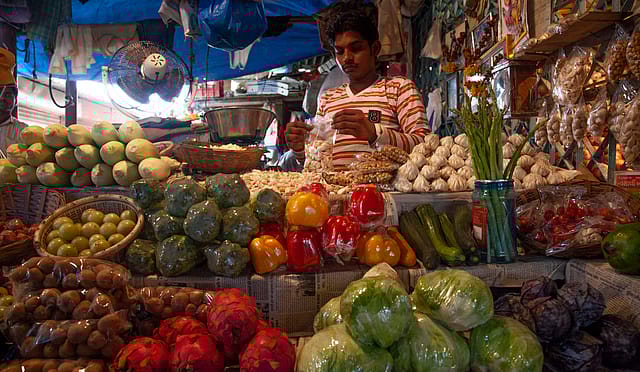
India’s headline inflation rose modestly in February 2026, largely driven by an increase in food prices, according to the latest Ecowrap report by State Bank of India Research. Consumer Price Index (CPI) inflation increased to 3.21% in February, up from 2.75% in January, marking the second consecutive monthly rise under the revised 2024 base year series. The uptick was primarily led by food inflation, which jumped 129 basis points to 3.55% during the month.
How food prices drive inflation up
Food inflation rose sharply to 3.47% in February from 2.13% in January, reflecting rising price pressures across essential food items. The report noted that both rural and urban inflation recorded an upward trend during the month, though the drivers differed.
Rural inflation rose from 2.73% in January to 3.37% in February, largely driven by food prices. The food and beverages category increased from 0.82% to 1.41%, while personal care inflation edged up from 1.02% to 1.08%.
Urban inflation also increased, climbing from 2.75% to 3.03%, mainly due to higher food and beverage prices, which rose from 2.46% in January to 3.37% in February. Inflation in the “pan, tobacco and intoxicants” category also increased from 3.16% to 3.51%.
However, some categories recorded moderation in urban areas. Inflation in clothing and footwear declined from 2.24% to 2.12%, healthcare from 2.26% to 2.07%, and recreation, sports and culture from 2.56% to 2.43%.
Core inflation stable but state trends diverge
At the national level, core CPI inflation increased marginally by 5 basis points to 3.40% in February, compared with 3.35% in January. The rise was partly driven by higher prices of precious metals.
However, state-level trends showed significant divergence. Core inflation in Telangana crossed the 6% mark in February, while in most states core inflation remained higher than overall CPI. Only a few states, including Kerala, West Bengal, Punjab, and Maharashtra, reported core inflation lower than headline CPI.
Personal care inflation surged to 19.64% in February, largely due to a sharp rise in precious metal prices. Gold inflation stood at 48.16%, while silver inflation surged to 160.84%.
External factors are also adding to inflationary pressures. The report noted that the rupee-dollar exchange rate, currently hovering between ₹91 and ₹93 per dollar, combined with supply chain disruptions and volatile crude oil prices, is pushing imported inflation higher.
Imported inflation—carrying a 24.4% weight in the CPI basket—stood at 5.7% in February, about 245 basis points higher than headline inflation, and is expected to rise further if global commodity volatility persists.
Commodity prices and precious metals
Precious metals have regained momentum after a sharp correction at the end of January. Gold averaged $5,020 per troy ounce in February, compared with $4,753 in January, supported by its status as a hedge during periods of global uncertainty.
Silver prices have hovered around $85, and could see stronger demand from emerging industrial sectors once geopolitical tensions in West Asia ease.
Data from the World Bank’s Pink Sheet also showed rising global commodity prices, particularly in metals and fertilisers during January and February. While silver and platinum recorded year-on-year inflation above 100%, gold prices increased by around 75% year-on-year.
Geopolitical tensions and energy markets
The ongoing conflict in West Asia continues to disrupt global trade and energy supply chains. With the Strait of Hormuz facing severe disruptions, prices of fertilisers, natural gas and Brent crude could rise further, potentially feeding into domestic inflation.
According to the report, prolonged geopolitical tensions could trigger heightened speculation in commodity markets while also creating genuine supply shortages across multiple jurisdictions.
Weather developments may also influence inflation trends in 2026. Forecasts indicate a possible build-up of El Niño conditions later this year.
The Nino 3.4 Sea Surface Temperature (SST) index currently suggests that the El Niño–Southern Oscillation (ENSO) system is in a neutral phase but could transition into a positive phase in 2026.
India’s monsoon patterns are influenced by ENSO as well as movements in the Indian Ocean Dipole (IOD). Historically, El Niño combined with a negative IOD has been associated with deficient monsoons. At present, the IOD remains negative and forecasts suggest a 40–60% probability of El Niño formation this year.
LPG price risks
The report also cautioned that a prolonged LPG supply disruption could impact inflation in certain states where the weight of LPG and piped gas in the CPI basket is relatively higher than the national average. States such as Mizoram, Manipur and Punjab, where the weight of LPG exceeds 2.5%, could face greater price pressures if cooking gas prices rise further.