
India, New Zealand target ₹35,000 crore bilateral trade by 2030, elevate ties to Strategic Partnership
ADVERTISEMENT
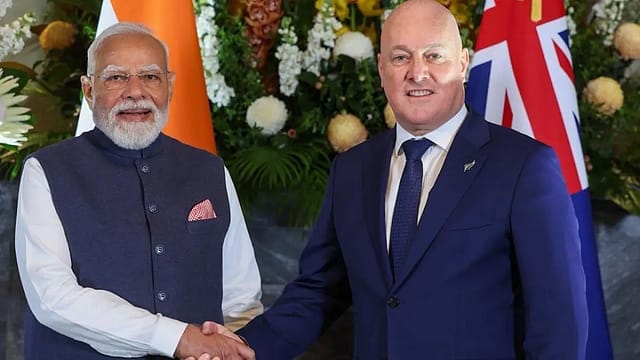
India and New Zealand have elevated their bilateral relationship to a Strategic Partnership and set an ambitious target of doubling two-way trade in goods and services to around ₹35,000 crore (NZ$7 billion) by 2030, signalling a significant expansion of economic and strategic engagement following the recently signed Free Trade Agreement (FTA).
The decision was announced after wide-ranging talks between Prime Minister Narendra Modi and his New Zealand counterpart Christopher Luxon in Auckland, marking the first visit by an Indian Prime Minister to the island nation in four decades. The two sides also unveiled the India-New Zealand Strategic Partnership: Roadmap to 2030, alongside 18 outcomes, including 10 agreements, spanning trade, defence, agriculture, digital payments and maritime cooperation.
Calling the partnership a new chapter in bilateral ties, Modi said the two democracies were moving beyond intent to measurable outcomes. "In today's meeting, we have taken the historic decision to elevate our cooperation to the level of a Strategic Partnership. Under this, we will move ahead with clear goals and solid results in every field," he said. Luxon described India as one of New Zealand's most important long-term partners and said the Roadmap to 2030 would unlock new opportunities across trade, investment, innovation and regional security.
FTA, investment push to drive trade expansion
The leaders agreed to work towards bringing the FTA into force at the earliest, expressing confidence that the agreement would accelerate bilateral commerce over the next five years. Modi noted that trade between the two countries has already risen by more than 50% over the past three years and said the pact would provide the foundation to double trade by 2030.
"With trade, we are preparing the blueprint for trust, technology and talent. We are confident that in the next five years, the FTA will be a strong foundation to double our trade," Modi said, while welcoming New Zealand's proposed US$20-billion investment commitment in India, which he said would create fresh opportunities for Kiwi companies to participate in India's growth story.
According to Rubix Data Sciences, merchandise trade between the two nations expanded at an 8% compound annual growth rate between FY22 and FY26 to reach US$1.16 billion, although India's trade balance slipped into a US$23-million deficit in FY26 as imports outpaced exports.
Digital payments, agriculture and defence in focus
Beyond trade, both countries identified fintech, agriculture, dairy, food processing and healthcare as priority areas for collaboration. Modi announced that India and New Zealand are working to integrate India's Unified Payments Interface (UPI) with New Zealand's payment ecosystem, while also expanding cooperation in traditional medicine.
"To make our Strategic Partnership meaningful, we are turning the strengths of both countries into practical cooperation," Modi said, highlighting initiatives on digital payments and agricultural collaboration that would benefit farmers in both countries.
Maritime cooperation strengthens Indo-Pacific agenda
The strategic partnership also places defence and maritime security at the centre of bilateral engagement. The two nations signed agreements covering reciprocal logistics support, hydrography and nautical cartography, while agreeing to institutionalise an annual Maritime Security Dialogue, expand naval exercises and strengthen cooperation on counter-terrorism, cyber security and transnational crime.
Emphasising the broader regional significance of the partnership, Modi said, "As two maritime nations, our close cooperation lends new strength to the Indo-Pacific, and our ties can infuse fresh energy into achieving our shared goals of peace." The leaders also reaffirmed their commitment to a free, open and rules-based Indo-Pacific, while calling for freedom of navigation and uninterrupted global commerce.