
India rejects US claims of excess capacity in textiles, steel sectors; says production is aligned with domestic demand
ADVERTISEMENT
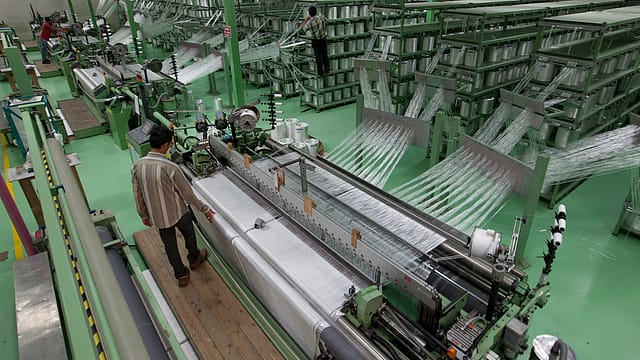
India has strongly contested allegations made in a US trade investigation that it maintains excess manufacturing capacity in the textiles and steel sectors, saying production levels are aligned with domestic demand and consumption needs.
According to a report by Reuters, Additional Trade Secretary Amitabh Kumar on Wednesday rejected claims being examined under the US Trade Representative's (USTR) Section 301 investigation, stating that India does not have surplus manufacturing capacity in either textiles or steel.
Kumar said India's output must be assessed in the context of its large population and expanding consumption base. He noted that on a per-capita basis, both production and consumption in these sectors remain significantly lower than in many developed countries.
The comments come as the USTR examines whether certain countries use industrial policies such as subsidies, wage suppression or other measures to create structural advantages that distort global trade.
Textile industry counters US allegations
India's cotton textile industry has also pushed back against the US claims. The Cotton Textiles Export Promotion Council (TEXPROCIL) has submitted a detailed response to the USTR, disputing allegations of excess capacity.
The Ministry of Commerce has separately filed representations on behalf of affected industries, rejecting claims related to overcapacity as well as allegations of forced labour in India's cotton textile sector.
According to TEXPROCIL, the country's cotton textile industry is primarily dependent on domestic demand, with more than 80% of total production consumed within India.
The industry body said the high share of domestic consumption leaves little room for the kind of export-driven overcapacity highlighted in the US investigation.
TEXPROCIL further argued that production trends across cotton, yarn and fabric segments do not indicate any rapid expansion of manufacturing capacity. Instead, output growth in several segments has remained stable or moderated in recent years, making claims of structural oversupply difficult to justify.
US probe covers multiple sectors
The latest scrutiny follows the launch of a Section 301 investigation by the USTR into whether foreign governments support industries in ways that create unfair competitive advantages in global markets.
In its notice, the USTR cited India's trade surplus with the US and identified sectors including textiles, steel, petrochemicals, health products and automotive goods for examination.
The notice also flagged India's solar manufacturing sector, arguing that installed production capacity exceeds domestic demand.
India has maintained that its manufacturing expansion reflects the requirements of a large and growing economy rather than an effort to create export-led excess capacity, and has sought to counter the allegations through formal submissions to US authorities.