
India steps up critical minerals push, eyes FTAs and global partnerships to secure supply chains: Piyush Goyal
ADVERTISEMENT
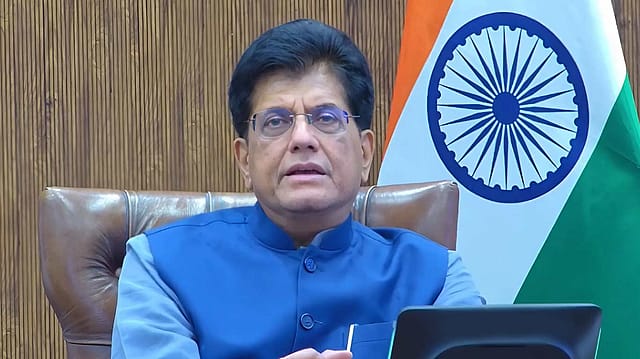
India is stepping up efforts to secure access to critical minerals, with the government in talks with multiple countries, including the US, UK and European partners, to build processing and supply-chain partnerships, Union Commerce and Industry Minister Piyush Goyal said on Wednesday.
The government is also looking to use Free Trade Agreements (FTAs) to secure greater access to critical minerals needed by strategic industries, as India seeks to reduce vulnerabilities arising from concentrated global production and processing.
“We are talking to some countries with whom we will be having collaborations and partnerships to promote critical minerals being processed and developed for our requirements, with the US also,” Goyal told reporters on the sidelines of the 66th Annual Session of the Automotive Component Manufacturers Association of India (ACMA).
“We are a member of the Critical Minerals Partnership, we are active in the Pax Silica grouping that they have created. With several of our partners in UK and Europe, we are in dialogue about how we can build more resilient supply chains,” he added.
FTAs to widen access to critical minerals
Goyal said India would pursue trade agreements with countries around the world to gain greater access to critical minerals, which are increasingly important for electric vehicles, batteries, semiconductors, renewable energy, electronics and defence manufacturing.
“The US and India are working together as partners in critical mineral partnership and the Pax Silica initiative launched by the United States... so that like-minded, democratic, well-meaning and fair-played countries can work together to ensure that no single geography can weaponise trade,” Goyal said at the ACMA session.
Pax Silica is aimed at strengthening cooperation around resilient supply chains spanning critical minerals, semiconductors and artificial intelligence. For India, diversifying sourcing and processing capabilities is becoming increasingly important as global manufacturing shifts towards electric mobility and other technology-intensive sectors.
Goyal pushes auto industry to go global
The minister also called on Indian auto-component manufacturers to move beyond exports and establish a manufacturing presence in developed markets, leveraging the market access created through recent trade agreements.
He said the component industry already accounts for nearly $50 billion in international trade, split broadly between imports and exports, but needs to increase overseas investment and build a larger global footprint.
Goyal said nine trade agreements finalised over the past four to five years had added 38 developed countries, representing a combined GDP of around $60 trillion, to India's trade-access map. He contrasted this with FTAs concluded before 2014, which collectively covered economies representing about $10 trillion in GDP at today's value.
“Now it is time that we go to the world. We start manufacturing across the world. We start making our footprint in developed countries,” he said.
Goyal urged component makers to convert local businesses into global enterprises, strengthen indigenous supply chains and move up the value chain by developing integrated, high-value products for global markets.
He also pitched dedicated plug-and-play industrial parks for auto-component manufacturing, including the possibility of parks built around an India-US partnership, as the government seeks to deepen domestic manufacturing and integrate Indian companies more closely with global supply chains.