
India’s coal gasification ambitions gain momentum; technology and coal quality challenges remain
ADVERTISEMENT
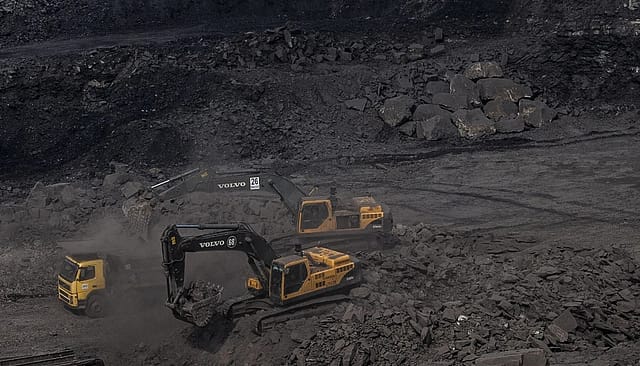
India’s search for new energy streams to ensure energy security has gathered momentum with the launch of a ₹37,500-crore scheme aimed at accelerating the country’s coal and lignite gasification programme, primarily as an import-substitution initiative for key products such as LNG, urea, ammonia, methanol and related chemicals.
Coal gasification converts solid coal into synthetic gas or syngas — a mixture of carbon monoxide, hydrogen, carbon dioxide and methane — by reacting coal at high temperatures with a controlled amount of oxygen and steam rather than through complete combustion. The syngas can then be used to produce electricity, liquid fuels such as gasoline and diesel, and chemicals including fertilisers, methane and ammonia. The push assumes significance as India remains heavily dependent on imports of critical energy products, importing more than 50% of its LNG requirement, 20% of urea, 100% of ammonia and 80-90% of methanol demand.
India’s import bill for key substitutable products — LNG, urea, ammonium nitrate, ammonia, coking coal, methanol, DME and others — stood at around ₹2.77 lakh crore in FY25, a vulnerability further exposed by the continuing geopolitical tensions in West Asia. At the same time, India possesses one of the world’s largest coal reserves of 401 billion tonnes and lignite reserves of 47 billion tonnes, with coal still accounting for more than 55% of the country’s energy mix.
Atanu Mukherjee, CEO of US-based new energy technology and engineering firm Dastur Energy and an expert on coal gasification, says the success of the programme will depend largely on disciplined execution. “The right gasification technology must be matched to the right coal. Indian coal is high-ash and has very different characteristics from coal used in many global gasification systems. Therefore, technology selection, coal chemistry, project scale, downstream integration, financing structure and carbon management will determine whether these projects become commercially bankable,” he says.
The new scheme
The latest scheme builds on the National Coal Gasification Mission launched in 2021 and the ₹8,500crore viability gap funding (VGF) scheme approved in January 2024, under which eight projects worth ₹6,233 crore are already under implementation. The earlier VGF programme was designed to promote coal and lignite gasification projects by PSUs as well as the private sector across three categories.
The new scheme, cleared by the Union Cabinet on May 13, targets the gasification of around 75 million tonnes of coal and lignite by 2030. It provides incentives of up to 20% of plant and machinery cost, extends coal linkage tenure to 30 years, and is expected to mobilise investments of ₹2.5-3 lakh crore. The government has also extended coal linkage tenure up to 30 years under the “Production of Syngas leading to Coal Gasification” sub-sector in the Non-Regulated Sector linkage auction framework, providing long-term policy certainty to investors.
The incentive will be disbursed in four equal instalments linked to project milestones. Any single project will be capped at ₹5,000 crore; incentives for any single product, excluding Synthetic Natural Gas and urea, will be capped at ₹9,000 crore; while any single entity group can receive a maximum of ₹12,000 crore across all projects. The scheme is technology-agnostic, although indigenous technologies will be encouraged.
The government expects the programme to ensure energy security and import substitution for LNG, urea, ammonia, ammonium nitrate, methanol and coking coal while generating investments of up to ₹3 lakh crore. It is also projected to create around 50,000 direct and indirect jobs across 25 projects in coal-bearing regions and generate annual revenues of ₹6,300 crore for governments from the gasification of 75 million tonnes of coal.
Ongoing projects
By late 2024 and early 2025, the Ministry of Coal had issued Letters of Award to Category I, II and III recipients, including Bharat Coal Gasification and Chemicals Ltd (BCGCL), the Coal India-GAIL SNG project, Coal India’s Niljai SNG project, Jindal Steel & Power Ltd (now called Jindal Steel Limited), New Era Cleantech, Greta Energy and New Era’s ethanol demonstration project. The government has also approved Coal India’s equity participation in the CIL-BHEL and CIL-GAIL joint ventures.
Among the major projects under implementation is Talcher Fertilisers Ltd in Odisha, a joint venture involving Coal India, GAIL, Rashtriya Chemicals and Fertilisers (RCF) and Fertiliser Corporation of India Ltd (FCIL), which aims to produce 1.27 MMTPA of urea using high-ash coal from the Talcher coalfields blended with pet-coke.
BCGCL, a joint venture between Coal India and BHEL, is setting up a 2,000 tonnes-per-day ammonium nitrate plant at Lakhanpur in Odisha’s Jharsuguda district with an investment of ₹11,782 crore. Another joint venture between Coal India and GAIL — the Coal Gas India Sonepur Bazari coal-to-SNG project in West Bengal — aims to produce 1.83 MMSCMD of syngas with an investment of ₹13,052.81 crore using coal from the Sonepur Bazari and Raniganj areas. Coal India is also planning a similar 1.83 MMSCMD syngas project at Niljai in Maharashtra with an investment of ₹12,214.86 crore.
Coal India and SAIL are planning a syngas-based DRI and steel decarbonisation project at the Durgapur Steel Plant in West Bengal. New Era Cleantech is planning an ammonium nitrate, hydrogen and CO2-to-methanol project at Bhadravati in Maharashtra’s Chandrapur district with an investment of ₹6,976 crore, besides an 18 KTPA ethanol project at Chandrapur costing ₹667 crore. Greta Energy is also developing a coal gasification-based DRI project at Bhadravati with an investment of ₹2,763 crore.
NLC India is developing a 1,200 tonnes-per-day lignite-to-methanol project at Neyveli in Tamil Nadu with a proposed investment of more than ₹4,394 crore.
Jindal Steel’s 2 MMTPA coal gasification project at Angul in Odisha has received ₹569.05 crore in financial incentives. The ₹3,793 crore project will convert coal into Direct Reduced Iron through gasification while also setting up a Carbon Capture, Utilisation and Storage (CCUS) facility designed to capture 30 tonnes per day of CO2 for conversion into valuable products.
New Era Cleantech Solution Pvt Ltd has secured ₹1,000 crore in incentives for its Bhadravati project, which aims to produce 0.33 MMTPA of ammonium nitrate and 0.1 MMTPA of hydrogen. The project will also use CCUS technology to convert captured CO2 into methanol through a proposed 3,000 TPD methanol plant.
Greta Energy has received ₹414.01 crore in incentives for its Bhadravati coal gasification project, which aims to produce 0.5 MTPA of Direct Reduced Iron with an investment of ₹2,763 crore.
An old technology
While coal gasification is being positioned as a major pillar of India’s energy transition and industrial strategy, the technology itself is far from new. During World War II, Germany used coal gasification and the Fischer-Tropsch process to produce petrol, diesel and kerosene. In the US, coal gasification gained prominence after the Arab oil embargo of the 1970s and 1980s, when oil and gas shortages triggered investments in alternative fuel technologies. Projects such as the Wabash River facility produced power from gasified coal, while others produced ammonia and chemicals using petroleum coke and coal. The Coffeyville project in the US has operated for nearly three decades, producing ammonia, while the Dakota Gasification Company has been operating since 1985, producing a range of chemicals from coal-derived syngas.
However, many US coal gasification projects lost economic competitiveness after the shale gas revolution sharply increased the availability of low-cost natural gas. South Africa, meanwhile, began coal gasification around 1955 in response to apartheid-era sanctions restricting fuel imports and today hosts one of the world’s largest gasification complexes. Saudi Arabia has also built large-scale gasification facilities since 2012 as part of its industrial ecosystem.
China today remains the undisputed global leader in coal gasification, gasifying around 340-350 million tonnes of coal annually to produce methanol, ammonia, hydrogen, synthetic natural gas and various chemical derivatives. China has also developed large downstream industries that convert methanol into olefins, plastics and petrochemical products.
Technology and fuel challenges
For India, however, the biggest challenge may lie in adapting technologies to the country’s unique coal characteristics. Experts point out that feedstock quality remains the most visible technological constraint. Ministry documents distinguish the Odisha ammonium nitrate project as using high-ash coal, the West Bengal SNG project as using low-ash coal and the NLC project as lignite-based. Most domestic projects using identified technologies are based on ash-tolerant configurations rather than imported plug-and-play systems. The Lakhanpur project, for instance, uses BHEL’s Pressurised Fluidised Bed Gasification technology, while JSPL’s Angul complex deploys Lurgi fixed-bed dry-bottom gasifiers.
BHEL has emerged as the most visible indigenous technology and execution player in the sector. It is Coal India’s partner in BCGCL, is deploying its in-house Pressurised Fluidised Bed Gasification technology at Lakhanpur, and has also signed a strategic MoU with NLC India for lignite-to-methanol projects. Larsen & Toubro is the key downstream EPC contractor at Lakhanpur and also highlights its earlier execution of the JSPL Angul gasification package to Lurgi specifications.
“This programme should not be judged only by the number of tonnes of coal gasified. It should be judged by the value created — imports substituted, strategic feedstocks produced, industrial clusters developed, carbon captured or managed, and the ability of projects to stand on their own economics over time,” says Mukherjee.
With the right technology choices, integrated coal-to-chemicals clusters, bankable financing structures and CCUS integration, coal gasification could emerge as a practical pillar of India’s energy resilience and industrial transformation, even as questions remain over technology adaptation, project economics, and long-term sustainability.