
India's oil dependence halves in 12 years as EV adoption, renewables curb consumption: SBI Research
ADVERTISEMENT
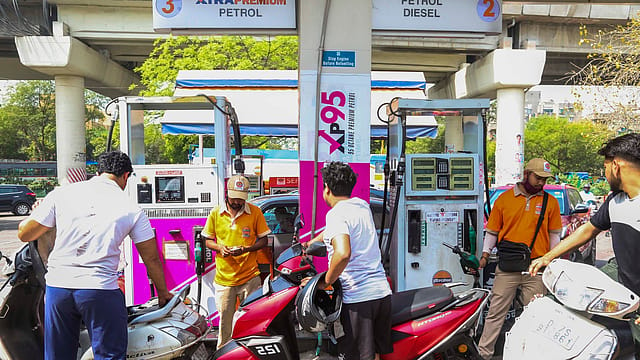
India's dependence on crude oil has declined significantly over the past decade, driven by the growing adoption of electric vehicles (EVs), renewable energy, and improved public transport infrastructure, according to a report by SBI Research.
The report said India's oil intensity, measured as oil consumption as a percentage of GDP, declined to 0.7% in FY26 from 1.4% in FY14, reflecting improved energy efficiency and reduced reliance on fossil fuels. Similarly, crude oil imports as a share of GDP declined sharply to 3.1% in Q2 FY26 from 8.6% in Q2 FY14.
SBI Research attributed the decline to several structural changes, including the replacement of diesel-powered agricultural pumps with solar-powered systems, rapid expansion of metro rail networks, greater adoption of renewable energy and increasing penetration of electric vehicles.
EV adoption gathering pace
The report noted that India remains the world's largest market for electric three-wheelers and has recorded strong growth in electric bus deployment. However, adoption of battery-powered passenger vehicles and electric trucks continues to lag despite government incentives.
Under the PM E-DRIVE Scheme, the government offers upfront purchase incentives of up to ₹9.6 lakh per electric truck, with the programme expected to support the deployment of around 5,600 e-trucks nationwide.
In comparison, one in every four trucks sold in China in 2025 was electric, highlighting the gap in commercial EV adoption.
Higher EV penetration can cut import bill
SBI Research said electric vehicles now account for more than 8% of all registered vehicles in 2026. Raising this share to 20% by 2030 could reduce India's oil import bill by nearly ₹1 lakh crore, it estimated.
The report called for a comprehensive 10-15 year national EV roadmap with clearly defined targets covering vehicle segments, charging infrastructure, battery manufacturing and regulatory policies.
It also recommended creating an EV Credit Guarantee Fund, providing concessional land for public charging stations, expanding government procurement of electric vehicles and introducing a dedicated green mobility financing category to accelerate adoption.
Geopolitical tensions reshape oil imports
According to the report, oil consumption declined during April and May 2026 despite resilient economic indicators. Using the Bai-Perron multiple breakpoint test, SBI Research identified four statistically significant structural breaks in India's crude oil import trends. The report linked these shifts to geopolitical events, including the Russia-Ukraine conflict in 2022 and the escalation of tensions in West Asia in March 2026, which disrupted global energy markets.
The report also observed that EV registrations accelerated significantly following the onset of the West Asia conflict.
Average monthly EV registrations increased to 2.3 lakh during March-June 2026, compared with 1.3 lakh per month in 2025. At the current pace, total EV registrations are expected to exceed 2.5 million (25 lakh) in 2026.
Charging infra remains a key challenge
India currently has 29,151 public EV charging stations, with Karnataka and Maharashtra accounting for nearly 35% of the total.
However, fast chargers constitute only around 30% of the charging network. States such as Tamil Nadu, Telangana, Andhra Pradesh and Goa have a higher share of fast chargers, exceeding 50%.
The report stressed that expanding fast-charging infrastructure is critical for faster EV adoption, noting that several states continue to have more than 200 EVs per charging station, while others have a much lower burden of around 50 vehicles per station.
Delhi's latest EV policy aims to address this gap by installing 32,000 charging points over the next four years.
Strong policy support needed
The report highlighted that government support has played a crucial role in accelerating EV adoption globally. In China, public spending accounted for nearly 60% of global EV incentives in 2025, while Southeast Asian countries relied largely on tax exemptions and import duty relief.
It also praised Delhi's new EV policy, which offers purchase incentives of up to ₹60,000 for electric two-wheelers, ₹1.2 lakh for electric three-wheelers, and ₹1 lakh for eligible N1 commercial trucks, along with a full waiver of road tax and one-time registration charges.