
India’s rainfall deficiency widens to 14% so far this season: Crisil report
ADVERTISEMENT
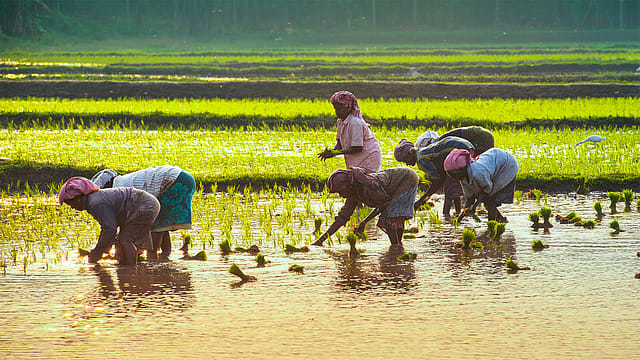
Rating agency Crisil, in its latest impact note on India’s rainfall in 2026, said that rainfall deficiency has widened to 14% so far this season, worse than expected for the southwest monsoon.
"Although sowing has progressed well, it does not mean the crop sector is out of danger. The focus of concern has shifted from acreage to yields, and crop incomes are likely to moderate as a result," the report, written by Crisil's chief economist Dharmakirti Joshi and principal economist Dipti Deshpande, said.
September, too, is forecast to witness below-normal rainfall.
"That said, a single weak monsoon season need not undo the resilience rural India has built over recent years. However, if rainfall deficiencies deepen, weather anomalies persist and the strain extends into the winter cropping season, rural buffers could weaken, placing broader pressure on incomes and demand," the report said.
In the past 25 years, there have been 11 instances of below-normal rains. Of these, six were classified as El Niño years but only five saw deficient rainfall (that is, less than 90% of LPA).
The data shows that monsoon shocks do sting crops, but, as seen in previous decades, they have not necessarily translated into higher food inflation. Kharif production, which is nearly half of total foodgrain production, showed vulnerability to southwest monsoon shocks in all but two of the 11 years. Rabi production was impacted in fewer years. Active government intervention in recent years has helped weaken the linkage between weak monsoons and food inflation, the economists said.
Contrary to what such an uneven monsoon might suggest, the rainfall shock has not translated into a major acreage shock. There is some shortfall, but overall sowing stands at 98% of the normal area and 96% of last year's level as of September 4, 2026.
Details of sowing for this season show that it has already exceeded normal levels for rice, tur, maize, groundnut and sugarcane. "Progress continues to lag in urad, cotton, bajra, jowar, moong and soybean. Interestingly, all these, barring moong, had seen below-normal sowing in 2025 as well," the report said.
Rural India may absorb the impact of one weak monsoon
The weakness in this year's monsoon cannot be ignored, Crisil's economists said in the report. Yet a single poor rainfall season need not undo the resilience rural India has built over recent years. Lower yields could depress agricultural output and kharif-driven incomes, but the impact on rural consumption may be less severe.
But from an economic perspective, rural incomes are less dependent on crop incomes than they were in previous decades. There has been a significant occupational shift towards livestock, fisheries and forestry. Thus, non-crop activities account for more than 40% of agriculture and allied-sector output and have historically demonstrated stronger growth and resilience during weather shocks.