
India’s textile exports rise 2.1% in FY26 despite conflict in West Asia
ADVERTISEMENT
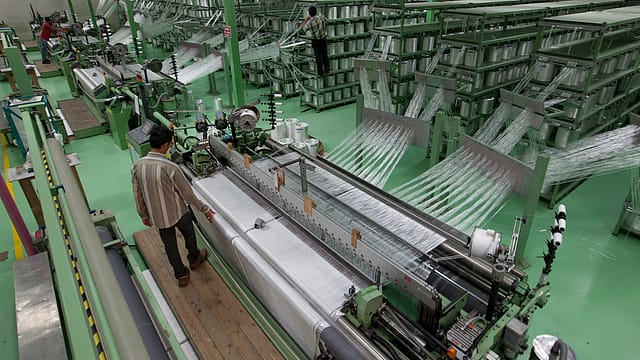
India’s textile exports posted modest growth of 2.1% in FY25–26 despite ongoing disruptions at the Strait of Hormuz that hurt India’s exports. Total exports, including handicrafts, increased to ₹3.16 crore from ₹3.09 lakh crore in the previous fiscal, according to official data.
Ready-made garments (RMG) continued to anchor outbound shipments, remaining the largest export segment. Exports in this category rose 2.9% year-on-year to ₹1.39 lakh crore. Cotton yarn, fabrics, made-ups and handloom products saw largely stable performance, inching up 0.4% to ₹1.02 lakh crore. Man-made yarn, fabrics and made-ups recorded a relatively stronger expansion of 3.6%, reaching ₹42,687 crore.
Among value-added segments, handicrafts excluding handmade carpets emerged as the fastest-growing category, with exports rising 6.1% to ₹15,855 crore. The growth in such segments highlights a gradual shift towards higher-value products within the export basket.
Broad-based geographical expansion
The sector also seen broad-based geographical expansion. Export growth was recorded in over 120 destinations between April 2025 and February 2026 compared to the same period last year. Key markets such as the UAE, UK, Germany, Spain, and Japan reported healthy increases while emerging markets, including Egypt, Nigeria, Senegal, and Sudan, registered particularly sharp growth rates.
Policy support remained a key driver
The government extended export incentive schemes such as the Rebate of State and Central Taxes and Levies and the Remission of Duties and Taxes on Exported Products beyond March 2026, providing continued relief to exporters.
At the same time, progress on trade agreements is expected to support future growth. A series of deals signed or concluded during the year, including those with EFTA, the UK, Oman, New Zealand and the European Union, are likely to improve market access, lower tariff barriers and strengthen supply-chain integration. These agreements are expected to open new opportunities across textiles, apparel, handicrafts, and technical textiles, aiding diversification and boosting India’s role in global value chains.
The steady uptick in exports, backed by policy support and trade deals, signals a stable outlook for the textile sector, with a gradual move towards higher value-added segments and wider market reach.