
Middle East conflict puts delivery of 5.4 lakh homes at risk as developers brace for cost, supply-chain shocks: Anarock
ADVERTISEMENT
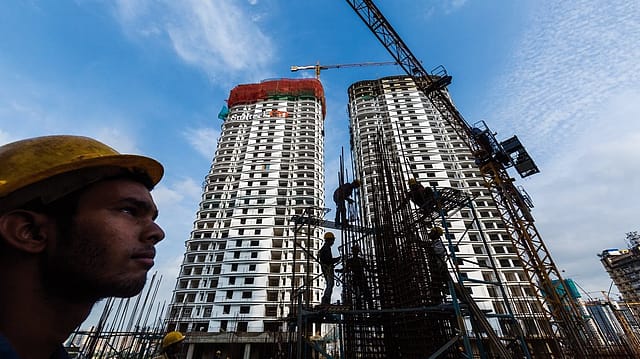
India’s residential real estate sector is staring at a major execution challenge in 2026, with a record 5.40 lakh homes scheduled for completion across the top seven cities even as the ongoing Middle East conflict threatens to disrupt global supply chains, raise construction costs and pressure project timelines.
According to Anarock Research, about 5,40,400 housing units are lined up for delivery this year—the highest annual completion pipeline in at least a decade. While housing demand remains resilient and developers are financially stronger than in previous cycles, a prolonged geopolitical crisis could test the industry's ability to execute projects on schedule.
“Latest ANAROCK Research data reveals that a record 5,40,400 housing units are scheduled for completion across the top 7 cities in 2026 – the highest in the last decade,” said Dr. Prashant Thakur, executive director and head of research & advisory at Anarock Group.
Western markets dominate completion pipeline
The delivery burden is heavily concentrated in western and southern markets. Mumbai Metropolitan Region (MMR) alone accounts for about 2,07,300 units slated for completion in 2026, while Pune has another 1,00,300 units in the pipeline. Together, the two markets represent 57% of all scheduled deliveries this year.
Bengaluru is expected to see 69,000 homes completed, followed by Hyderabad at 63,700 units and Chennai at 35,600 units. In comparison, NCR has just 39,000 units scheduled for completion, while Kolkata has the smallest pipeline at 22,500 units.
The concentration of deliveries means that MMR, Pune and Bengaluru together account for nearly 70% of the homes due for completion in 2026, making these markets particularly vulnerable to any escalation in material and logistics costs.
Lessons from the pandemic
Anarock points to the pandemic year of 2020 as a reminder of how large-scale disruptions can derail delivery schedules. While around 4.66 lakh homes were originally slated for completion that year, only about 2.14 lakh units—or 46% of the planned pipeline—were ultimately delivered as lockdowns, labour shortages and supply-chain disruptions brought construction activity to a standstill.
“Historically, ambitious housing supply pipelines have often been vulnerable to external shocks,” said Thakur, noting that even projects in advanced stages can face delays when confronted with widespread disruptions.
From sales boom to execution challenge
The sector has delivered nearly 30.5 lakh homes across the top seven cities between 2017 and 2025. Annual completions have more than doubled from 2.04 lakh units in 2017 to 5.19 lakh units in 2025, reflecting the strong post-pandemic recovery in launches and sales.
However, the focus is now shifting from sales momentum to execution capability. “While the industry in the last few years celebrated robust sales, rising prices, and rebooted buyer confidence, the spotlight now is shifting from sales to execution,” said Thakur. “2026 becomes the referendum year for our residential real estate sector’s maturity.”
For developers, the challenge will be balancing delivery commitments with rising costs of steel, aluminium, copper, electrical equipment and logistics. How effectively the industry navigates these pressures could determine whether 2026 becomes a landmark year for housing completions—or another reminder of how global disruptions can reshape domestic real estate markets.