
Monsoon recovery eases concerns, but uneven rainfall still poses risks to agriculture: Crisil
ADVERTISEMENT
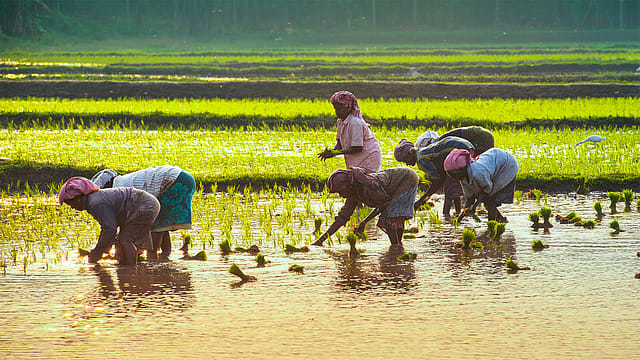
July's widespread rainfall has brought significant relief after a severely dry June, reducing immediate concerns over the progress of the southwest monsoon. However, uncertainty persists over the remainder of the season, with the risk of uneven rainfall continuing to threaten agricultural output, according to a Crisil report.
The report said the southwest monsoon covered the entire country in 35 days, broadly in line with the long-term average. After June ended with a 40% rainfall deficit, abundant rainfall in early July helped narrow the all-India rainfall shortfall to 15% as of July 8.
Despite the improvement, Crisil cautioned that the monsoon outlook remains uncertain. The India Meteorological Department (IMD) has forecast July rainfall at 6% below the long-period average, suggesting that the second half of the month could be considerably drier after the heavy rainfall seen in early July.
The report warned that the developing El Niño conditions continue to pose risks not only through rainfall deficits but also by increasing the likelihood of extreme rainfall events. Such swings between deficient and excessive rainfall can disrupt agriculture by affecting sowing, crop health and rural incomes.
"While copious showers have offered relief, it remains to be seen whether they signal a sustained recovery or merely a temporary respite," the report said.
Crisil noted that the speed of monsoon advancement does not necessarily determine the season's overall performance. It cited 2019 and 2021, when the monsoon took 40-41 days to cover the country but eventually delivered above-normal rainfall. Instead, the report said the quantity and distribution of rainfall remain the key determinants of agricultural outcomes.
June's rainfall deficit was comparable to that recorded in 2014, another strong El Niño year, when rainfall shortages persisted through the season and adversely affected farm output.
Kharif sowing also remains behind schedule across most crops. As of July 5, total sowing was about 21% lower than a year earlier, led by declines in oilseeds, cotton, pulses, coarse cereals and other cereals. Sugarcane, jute and mesta were the only major crops to record better sowing progress.
Among major kharif-growing states, Bihar recorded the highest rainfall deficiency at 53%, followed by Uttar Pradesh (40%), Punjab and Kerala (28-29%), and Karnataka, Haryana, Andhra Pradesh and Telangana (14-17%).
Rainfall deficits narrowed significantly in Gujarat and West Bengal to 5-6%, while Maharashtra, Madhya Pradesh, Rajasthan, and Odisha reported surplus rainfall.
Using its Deficient Rainfall Impact Parameter (DRIP), which measures the vulnerability of states and crops to rainfall shortages while factoring in irrigation coverage, Crisil found significant agricultural stress in Karnataka, Bihar, Uttar Pradesh, Andhra Pradesh, and Telangana. Haryana showed relatively moderate stress.
The report said DRIP provides a more accurate assessment of agricultural risks by accounting for irrigation availability in addition to rainfall deficiency. Current readings indicate pressure across most crops, with sugarcane remaining largely insulated due to better irrigation while groundnut and soybean have shown relatively greater resilience. Tur and coarse cereals face the highest levels of stress.
According to Crisil, higher DRIP scores indicate greater vulnerability to rainfall deficiency and a higher risk of adverse impacts on agricultural production.