
US leveraging uncertainty as negotiating tool, India should stay patient in trade talks: SBI Ecowrap
ADVERTISEMENT
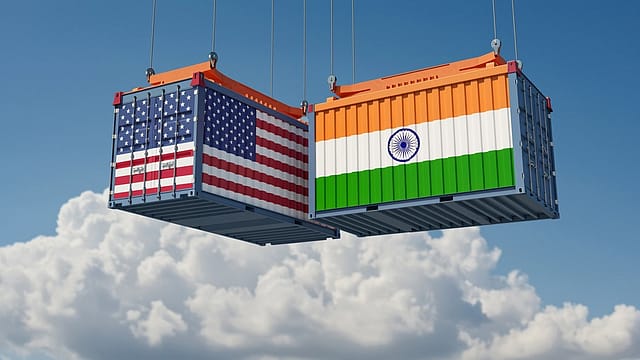
The US administration is increasingly using strategic uncertainty as a bargaining tool across issues ranging from NATO, tariffs and Iran to China, Greenland and India, with the short-term gains in negotiating leverage potentially coming at the cost of long-term trust, according to an SBI Ecowrap report.
The report said the US strategy resembles a game-theory approach in which Washington deliberately preserves "incomplete information" about its negotiating stance, forcing counterparts to decide whether to concede, wait, escalate or counter its moves.
"The short-run payoff is leverage. The long-run cost is trust depreciation," the report said, adding that repeated uncertainty eventually teaches allies, rivals and financial markets to discount future US signals.
It noted that if trading partners come to believe that the US ultimately softens its position whenever economic or political costs rise, the bargaining value of aggressive opening positions diminishes over time.
India should negotiate patiently
For India, SBI Ecowrap recommended a calibrated approach to trade negotiations, arguing that New Delhi should avoid reacting to Washington's initial demands and instead negotiate after US domestic and geopolitical constraints become more apparent.
India should "wear down the opening position, not the relationship," the report said. It advised India to keep diplomatic engagement constructive, avoid public escalation, make limited and reversible concessions, and wait until the US faces pressure from its own markets, China-related strategic considerations and alliance commitments.
According to the report, India's leverage stems from its large consumer market, technology talent, pharmaceutical industry, defence procurement, energy options, diaspora influence and strategic importance in the Indo-Pacific.
The report said India should be prepared to absorb short-term costs while signalling that it is willing to defend its long-term interests.
China remains the strongest negotiating counterweight
The report identified China as the only country with concentrated counter-leverage capable of imposing significant economic costs on the US through critical minerals, rare-earth magnets, manufacturing capacity, export controls and supply-chain influence.
Because Beijing can impose tangible economic costs, Washington has to calibrate its negotiating strategy differently with China, the report said.
Tariffs increasingly used as bargaining tool
SBI Ecowrap argued that tariffs are no longer being used purely as trade policy instruments but as negotiating tools across multiple strategic issues.
The report observed that the US administration has repeatedly announced sweeping tariff measures before delaying, narrowing or modifying them after assessing market and diplomatic reactions.
While this approach generates negotiating leverage, repeated use could reduce its effectiveness if counterparts begin expecting policy reversals.
NATO, Iran, and Greenland part of broader strategy
The report said Washington increasingly bundles trade, defence, security, critical minerals, and geopolitical issues into a single negotiating framework.
It cited NATO's higher defence spending targets, tensions with Spain, policy toward Iran and renewed interest in Greenland as examples of a broader strategy that links multiple policy domains to increase bargaining power.
According to the report, ambiguity over whether US statements represent firm policy, opening negotiating positions or public signalling has itself become an important strategic asset.
Hormuz shipping yet to normalise
The report also highlighted lingering uncertainty in the Middle East despite the June 17 memorandum of understanding between the US and Iran aimed at ending hostilities.
Shipping data from the Strait of Hormuz indicates only a gradual and uneven recovery in maritime traffic, it said.
While crude oil shipments have resumed on a limited scale, agricultural cargoes have shown only a partial recovery, and liquefied natural gas (LNG) and fertiliser shipments remain largely absent.
Long-term credibility at stake
SBI Ecowrap said the most likely outcome is neither a complete breakdown in US partnerships nor a full restoration of trust.
Instead, it expects allies to make selective concessions while simultaneously diversifying their strategic options, rivals to continue testing US resolve, and markets to adjust to recurring cycles of tariff announcements, market volatility and policy recalibration.
While the strategy has yielded short-term gains such as increased defence spending commitments and greater negotiating attention, the report warned that its long-term consequence could be an erosion of US credibility. "Repeated uncertainty reduces the value of US commitments, encourages allies to diversify and teaches rivals to test where the binding line actually lies," it said.