
OMCs raise petrol, diesel prices by ₹3 per litre amid West Asia crisis; first hike in four years
ADVERTISEMENT
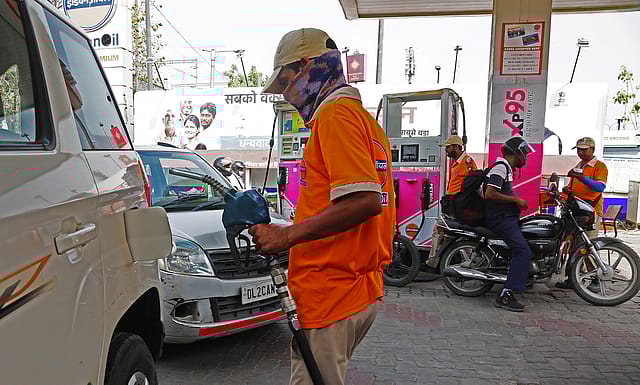
After holding fuel prices steady for nearly four years, state-run oil marketing companies (OMCs) on Friday raised petrol and diesel prices by about ₹3 per litre amid growing pressure of elevated crude oil prices in the international market and mounting under-recoveries in the sector.
Petrol and diesel prices had largely remained unchanged since April 2022, barring a one-time cut of ₹2 per litre in March 2024 ahead of the Lok Sabha elections. The latest increase comes shortly after assembly elections concluded in Assam, Kerala, Tamil Nadu and West Bengal.
Following the revision, petrol in Delhi is now priced at ₹97.77 per litre, while diesel costs ₹90.67. In Kolkata and Chennai, petrol prices rose to ₹108.74 and ₹103.67 per litre, respectively. Diesel prices in the two cities climbed to ₹95.13 and ₹95.25 per litre.
The move reflects the increasing financial strain on OMCs as global crude prices remain elevated amid geopolitical tensions in West Asia and supply disruptions around the Strait of Hormuz.
On February 28, 2026, conflict erupted in West Asia, rapidly spreading to multiple Gulf nations. As a result, almost entire sea freight navigating through the Strait of Hormuz (SoH), which moves 20mbpd of crude and natural gas, or about 20% of global petroleum consumption, was halted unilaterally by Iran. India, which imports nearly 90% of its crude oil requirements and around half of its natural gas consumption, emerged as one of the most vulnerable Asian economies to the energy shock.
According to government estimates, daily under-recoveries for public sector OMCs—Indian Oil Corp. Ltd, Bharat Petroleum Corp. Ltd and Hindustan Petroleum Corp. Ltd—have approached nearly ₹1,000 crore, a burden expected to rise further if crude sustains around the $100-per-barrel mark.
Even after the latest revision, the increase remains significantly lower than what several market analysts had anticipated. Brokerages had expected a sharper first round of hikes to partially offset losses being incurred by fuel retailers.
Domestic brokerage Emkay Global Financial Services estimated that OMCs are currently facing under-recoveries of around ₹18-20 per litre on petrol and diesel at prevailing crude prices. The brokerage had projected that the government may initially allow fuel prices to rise by about ₹10 per litre to reduce pressure on state-run retailers without triggering a severe inflation shock.
Analysts, however, caution that this may not be the end of the road for fuel price increases. If crude oil continues to trade above $100 per barrel over the coming quarters, further rounds of hikes may become unavoidable. Emkay estimates cumulative fuel price increases could eventually reach ₹18-20 per litre over the next three to six months if global energy prices remain elevated.
The broader economic implications are also beginning to come into focus. According to brokerage estimates, a ₹10-per-litre increase in fuel prices could lift retail inflation by nearly 75 basis points once secondary effects such as transportation costs and higher input prices are factored in.
That, in turn, could weigh on consumer demand and pressure sectors sensitive to fuel costs, including automobiles, cement and related industrial segments. Rising fuel prices also risk feeding into logistics and supply chain costs across the economy, potentially complicating the inflation outlook at a time when policymakers are attempting to balance growth with price stability.