
PM Modi completes 12 years; GST, UPI, PLI reshape India's economic growth story
ADVERTISEMENT
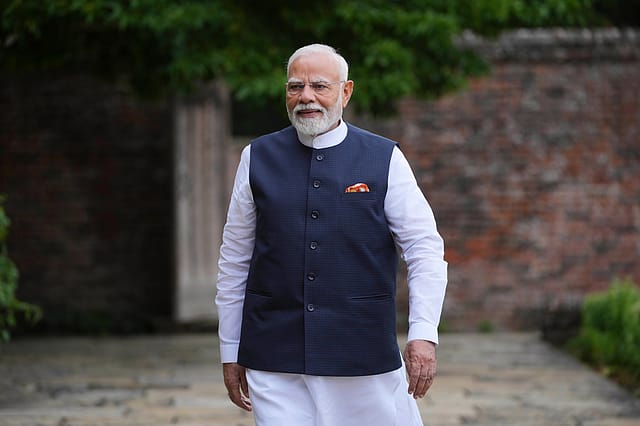
Prime Minister Narendra Modi on Wednesday became India's longest-serving elected Prime Minister, completing 4,399 consecutive days in office since taking oath on May 26, 2014. The milestone places him ahead of Jawaharlal Nehru's elected tenure of 4,398 days, which began after India's first general elections in 1952 and continued until May 27, 1964.
The achievement comes with a distinct economic legacy. Over the past 12 years, the Modi government has rolled out some of the most significant policy changes since the liberalisation era, spanning taxation, insolvency resolution, digital payments, manufacturing and infrastructure.
Recasting the formal economy
Among the defining measures was the introduction of the Goods and Services Tax (GST) in 2017, which replaced a complex web of indirect taxes with a unified framework. For businesses operating across states, it marked a fundamental shift towards a common national market.
The Insolvency and Bankruptcy Code (IBC), enacted a year earlier, sought to address a mounting bad-loan problem by creating a time-bound process for resolving stressed assets. Together, GST and IBC became central pillars of the government's efforts to formalise economic activity and strengthen institutional frameworks.
The push was reinforced by the Jan Dhan-Aadhaar-Mobile (JAM) architecture and the expansion of Direct Benefit Transfers (DBT), which transformed how subsidies and welfare benefits reached citizens and brought millions into the banking system.
The digital payments revolution
If one reform has become synonymous with the Modi government, it is the rise of the Unified Payments Interface (UPI). What began as a digital payments platform has evolved into the backbone of India's retail payments ecosystem, transforming transactions for consumers, small merchants and businesses alike.
The broader Digital India programme, coupled with initiatives such as faceless tax assessments and Startup India, accelerated the adoption of technology across sectors and helped build one of the world's most extensive digital public infrastructure networks.
Manufacturing, logistics, and investments
In recent years, the policy focus has increasingly shifted towards manufacturing and infrastructure. The Production-Linked Incentive (PLI) schemes, backed by the broader Make in India initiative, were designed to attract investment and expand domestic manufacturing capabilities across sectors ranging from electronics and pharmaceuticals to automobiles and advanced batteries.
The corporate tax rate reduction in 2019, PM Gati Shakti, the National Logistics Policy and record public capital expenditure reflected a parallel effort to improve competitiveness and reduce logistics bottlenecks. Large infrastructure programmes, including Bharatmala, Sagarmala, the National Infrastructure Pipeline and Dedicated Freight Corridors, further underscored the government's emphasis on building long-term economic capacity.
Alongside these reforms, welfare initiatives spanning healthcare, housing, clean cooking fuel and micro-credit sought to broaden economic participation. Taken together, the past 12 years have reshaped the way Indians transact, access public services and engage with the formal economy, leaving a policy legacy that will continue to influence business and investment decisions for years to come.