
‘Semicon 2.0 reaffirms India’s long-term commitment to becoming a global semiconductor hub’: PM Modi
ADVERTISEMENT
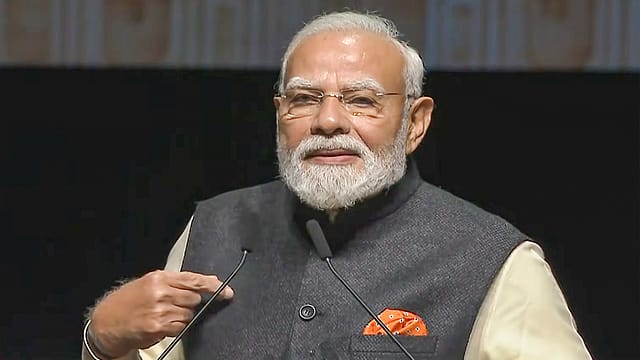
Prime Minister Narendra Modi on Wednesday said the Union Cabinet’s latest round of approvals across semiconductors, electronics manufacturing, transport infrastructure and fertilisers reflects the government’s sustained focus on strengthening India’s manufacturing ecosystem, enhancing supply-chain resilience and creating employment opportunities. The decisions, cleared at the Cabinet meeting earlier in the day, involve investments and policy support running into lakhs of crores of rupees across strategic sectors.
Among the marquee decisions were the approval of the ₹1.27 lakh crore Semicon 2.0 programme to deepen India’s semiconductor capabilities, the ₹62,500 crore Mobile Phone Manufacturing Scheme (MPMS) aimed at boosting domestic electronics production, two major railway multitracking projects, highway projects worth nearly ₹25,500 crore for Varanasi, and the new National Investment Policy for Urea (NIPU-2026) to encourage fresh investments in fertiliser manufacturing.
PM hails Semicon 2.0, mobile manufacturing push
Reacting to the Cabinet’s decision on Semicon 2.0, Modi said the programme would strengthen India’s ambitions of becoming a global semiconductor hub.
“India’s semiconductor journey gets even more vibrant! The Cabinet has approved Semicon 2.0 with an outlay of Rs 1,27,500 crore, reaffirming our long-term commitment to making India a global centre for semiconductor design, manufacturing and innovation,” Modi said in a post on X.
The Prime Minister said the expanded programme would help build a comprehensive semiconductor ecosystem by encouraging investment, creating high-value employment and improving India’s strategic capabilities.
“Semicon 2.0 will attract greater investment, create high-value opportunities for our youth, strengthen supply chains and advance technological self-reliance in critical sectors,” he said.
Welcoming the approval of the ₹62,500 crore Mobile Phone Manufacturing Scheme, Modi described it as a major milestone for India’s electronics manufacturing ambitions.
“The Cabinet’s approval of the Mobile Phone Manufacturing Scheme, with an outlay of Rs. 62,500 crore, will scale up production, deepen domestic value addition, strengthen supply chains and create a globally competitive ecosystem in India. Over the next few years, the scheme is expected to generate several job opportunities for the youth,” he said.
Rail, road projects to improve connectivity
The Prime Minister also highlighted the Cabinet’s approval of two railway multitracking projects in Odisha and Jharkhand, saying the investments would improve connectivity and support economic activity.
“The Cabinet has approved two important railway multitracking projects, the doubling of the Paradeep-Haridaspur line and the fourth line between Rajkharsawan and Dangoaposi. These projects will further growth in Odisha and Jharkhand. They will expand the railway network, ease congestion and boost tourism,” he said.
The Cabinet also cleared two major highway projects for Varanasi, including elevated corridors along the Varuna and Ganga rivers to ease traffic congestion and improve connectivity to key religious, educational and cultural centres.
“We are resolute in making darshan of Baba Vishwanath in Varanasi even more accessible and convenient with the expansion of connectivity in Uttar Pradesh.
In this direction, today our government has approved the construction of a 6/4-lane elevated corridor along the banks of the Varuna river. This project will not only serve as a model for our cities of cultural importance, but will also make the lives of people here easier through infrastructure development,” Modi said.
He added: “In line with this, today we have approved the construction of a state-of-the-art 6-lane corridor along the banks of the Ganga. This will further improve access to the city’s major religious, educational, and cultural sites. At the same time, the reduced pressure on the road network will make commuting even smoother. This project will accelerate economic development in Purvanchal.”
New urea policy to encourage fresh investments
The Prime Minister also welcomed the Cabinet’s approval of the National Investment Policy for Urea (NIPU-2026), which seeks to facilitate investments in 8-9 new gas-based urea plants with a combined annual production capacity of 10 million tonnes.
“Our government is leaving no stone unturned for the welfare of our farmer brothers and sisters across the country. In this direction, today the proposal for the National Urea Investment Policy-2026 has been approved.
This will not only encourage investment for the establishment of new gas-based urea production plants, but will also give new strength to the resolve for self-reliance in urea production,” Modi said.