
PM Modi meets Economic Advisory Council as India leans on 7.7% FY26 growth amid global turmoil
ADVERTISEMENT
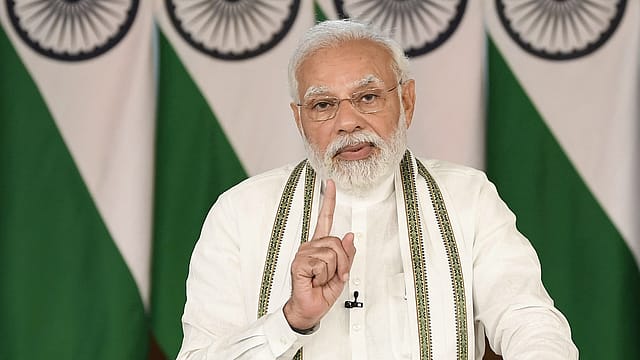
Prime Minister Narendra Modi on Saturday met members of the PM-Economic Advisory Council to discuss measures to sustain India’s growth momentum amid a turbulent global backdrop, with the talks focusing on reforms to improve ease of living and ease of doing business. The meeting also reviewed the impact of the West Asia conflict on India and the global economy, coming at a time when geopolitical tensions, trade uncertainty and uneven global growth trends continue to cloud the external environment.
Growth backdrop
The timing of the meeting is crucial because it comes just after official data showed India’s economy grew 7.8% in the March quarter and 7.7% for the full FY26, stressing the resilience of domestic growth. Real GDP at constant prices rose to ₹87.77 lakh crore in Q4 FY26 from ₹81.40 lakh crore a year earlier, while nominal GDP for the quarter was estimated at ₹94.65 lakh crore, up 9.1%.
For the full year, real GDP was estimated at ₹323.12 lakh crore, compared with ₹299.89 lakh crore in FY25, while nominal GDP rose 8.9% to ₹346.36 lakh crore. Gross Value Added also remained firm, rising 7.9% in FY26, with the secondary sector expanding 8.8% and the tertiary sector 9.3%, highlighting that industry and services remained the main growth engines.
CEA comments
Chief Economic Adviser V. Anantha Nageswaran said the latest numbers reflected a broad-based recovery, saying the GDP numbers are "very healthy, and reveal a picture of an economy that's growing solidly on all fronts". He also said that the Indian economy, post-Covid pandemic, has staged one of the best recoveries in the world.
In remarks on the medium-term outlook, Nageswaran said “macro stability measures and supply assurances will bring us back to a 7% plus growth track in FY28 or as soon as external conditions improve.”
Policy setting
The meeting also fits into PM Modi’s broader push for economic resilience in recent weeks, including calls to reduce dependence on imported fuel, use public transport more widely, adopt Swadeshi products and curb avoidable foreign spending. Those appeals have gained relevance as crude prices have stayed elevated amid the West Asia conflict, adding to concerns around imported inflation and external vulnerability.
At the same time, the policy backdrop remains mixed. The RBI this week cut its FY27 GDP growth forecast to 6.6% from 6.9% and raised its inflation projection to 5.1% from 4.6%, placing it closer to the upper end of the central bank’s 2% to 6% tolerance band.
That makes the Council meeting more than a routine consultation. With growth still strong on paper but inflation risks and geopolitical uncertainty rising, the government appears to be using India’s current macro strength to push reforms while preparing for a more difficult external environment.
The key takeaway is that India is discussing resilience from a position of relative economic strength. Strong FY26 growth, broad-based sectoral expansion and supportive commentary from the Chief Economic Adviser give the government a firmer base to argue that the economy can withstand global volatility better than many peers.