
RBI to launch unified digital portal to strengthen lead bank scheme
ADVERTISEMENT
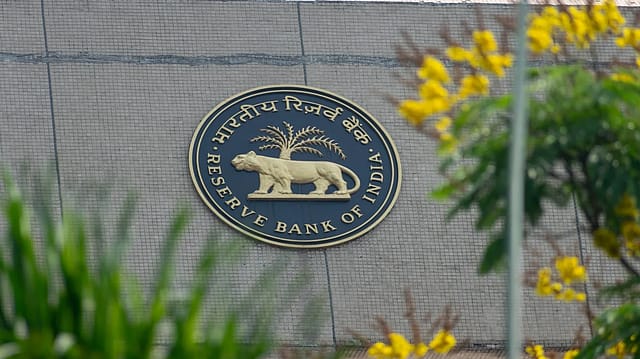
The Reserve Bank of India (RBI) will soon roll out a unified digital portal to improve the management, monitoring, and reporting of data under the lead bank scheme, Governor Sanjay Malhotra said, a move aimed at enhancing transparency and operational efficiency in the banking system.
Simplify oversight of bank-led initiatives
The proposed portal is expected to streamline oversight of bank-led initiatives, particularly credit delivery to priority sectors and micro, small, and medium enterprises (MSMEs). It will serve as a centralised platform for data management, reporting, and coordination between banks and the regulator, enabling more effective monitoring of district-level banking activities under the lead bank framework.
Malhotra said the initiative is part of a broader set of measures being undertaken by the central bank to strengthen financial stability, improve governance, and enhance customer protection. As part of this effort, the RBI has proposed raising the cap on collateral-free loans for MSMEs from ₹10 lakh to ₹20 lakh, a step aimed at improving access to credit for small businesses.
Draft guidelines to bolster safety in digital banking
In addition, the RBI plans to issue draft guidelines to bolster safety in digital banking and is working on a framework to compensate customers for losses arising from small-value fraudulent transactions. These measures are intended to address emerging risks in an increasingly digital financial ecosystem while reinforcing trust among banking customers.
The unified portal is expected to enhance coordination between banks and the RBI, improve the effectiveness of credit delivery under the lead bank scheme, and support ongoing efforts to promote financial inclusion and strengthen the overall banking ecosystem.
Neutral stance retained
On the monetary policy front, the Governor said policy settings were kept unchanged in line with market expectations. The six-member Monetary Policy Committee (MPC), which concluded its sixth and final bi-monthly meeting of FY26 on Friday, retained its neutral stance and left all key policy rates unchanged, with the benchmark repo rate held steady at 5.25%.
The RBI has already delivered a cumulative repo rate cut of 125 basis points during calendar year 2025, lowering rates by 25 basis points each in February and April, followed by a sharper 50 basis point cut in June and a final 25 basis point reduction in December. This marked one of the most aggressive easing cycles in recent years.
The latest policy review comes against the backdrop of key macroeconomic developments, including the presentation of the Union Budget for 2026–27 and the announcement of trade agreements between India and the United States, as well as India and the European Union. In its December policy, the MPC had retained a neutral stance, lowered its FY26 inflation projection, and maintained GDP growth for FY2025–26 at a robust 7.3%.