
India–Israel FTA gains momentum as Modi, Netanyahu unveil 16 MoUs and strategic tech push in Jerusalem
ADVERTISEMENT
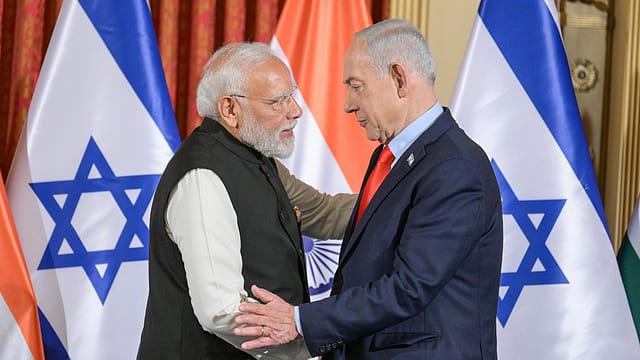
India and Israel have signalled fresh urgency in finalising a long-pending Free Trade Agreement (FTA), as Prime Minister Narendra Modi and Israeli Prime Minister Benjamin Netanyahu held wide-ranging talks in Jerusalem aimed at deepening their strategic and economic partnership.
FTA back in focus: From strategic intent to trade architecture
Addressing a joint press conference at the King David Hotel, Modi said India would soon give final shape to a “mutually beneficial” trade pact with Israel, underscoring that expanding economic engagement remains central to the next phase of bilateral ties.
The proposed FTA is expected to reduce tariff barriers, widen market access, and accelerate technology flows across sectors such as defence manufacturing, agriculture, digital innovation and clean energy. For both countries, the agreement is seen not merely as a trade instrument but as a strategic economic framework that aligns innovation ecosystems and supply chains.
Separately, the commerce ministry confirmed that the next round of in-person negotiations will be held in May 2026 in Israel after the conclusion of the first four-day round of talks, with both sides agreeing to continue virtual inter-sessional engagements.
Negotiations are covering goods and services trade, rules of origin, sanitary and phyto-sanitary measures, technical barriers to trade, customs procedures, intellectual property rights and digital trade. The talks are being conducted under a fresh Terms of Reference (TOR) signed in November last year, formally reviving negotiations that had stalled after eight rounds, the last of which was held in October 2021.
The renewed urgency comes amid fluctuating trade flows. In 2024–25, bilateral trade stood at $3.62 billion, with India’s exports to Israel falling 52% to $2.14 billion and imports declining 26.2% to $1.48 billion. India remains Israel’s second-largest trading partner in Asia
Innovation at the core: 16 MoUs signal sectoral depth
The two leaders oversaw the signing of 16 memorandums of understanding (MoUs), largely centred on technology and innovation. Agreements were inked across agricultural innovation, civilian drone applications, satellite data usage, irrigation and fertilisation management, pest control, greenhouse cultivation and advanced knowledge transfer.
A significant initiative includes the establishment of a research and innovation centre for agriculture in India, coupled with training programmes, expert exchanges and academic collaborations. These sector-specific arrangements are expected to feed into the broader architecture of the proposed FTA by creating ready pipelines for investment and joint ventures.
G2G mechanism to fast-track trade and technology
In a move that could accelerate decision-making, Netanyahu announced that both sides have agreed to convene a Government-to-Government (G2G) meeting in India at the earliest opportunity. The mechanism is expected to streamline approvals, push regulatory coordination, and provide momentum to the FTA negotiations.
Netanyahu also praised Modi’s governance model, remarking on the efficiency of his administration and its capacity to deliver outcomes swiftly.
Shared security concerns, expanding defence cooperation
Modi began his address with a warm “Shalom,” calling the visit a moment of pride and dedicating the ‘Speaker of the Knesset Medal’ to the people of India and the enduring friendship between the two nations. He reiterated India’s uncompromising stance against extremism.
“There is no place for terrorism in the world, in any form… We will oppose it shoulder to shoulder,” he said.
Beyond trade, defence cooperation featured prominently, with Modi indicating that the two countries would pursue joint development, production and transfer of critical technologies — an area that could see deeper integration under the FTA framework.