
Steel industry must decarbonise, diversify exports to stay competitive: Ashwini Kumar, Economic Advisor, Ministry of Steel
ADVERTISEMENT
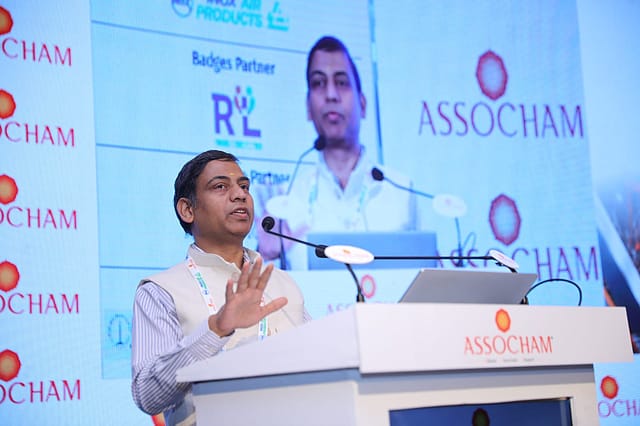
The Indian steel industry must accelerate decarbonisation, strengthen research and development (R&D), and diversify export markets to remain globally competitive as carbon border measures and trade tariffs reshape the global steel market, Ashwini Kumar, Economic Advisor at the Ministry of Steel, said on Thursday.
Speaking at ASSOCHAM's India Steel Conclave 2026, Kumar said the European Union's Carbon Border Adjustment Mechanism (CBAM) and similar trade measures would increasingly determine market access for steel exporters based not only on price and quality but also on the carbon intensity of production.
"CBAM essentially means that market access in high-value destinations will increasingly depend not only on the quality and price of the steel, but also on the carbon intensity of the production process. Given the high carbon intensity of Indian steel, it will become difficult for Indian steel exports to the EU," Kumar said.
He, however, described the emerging trade regime as an opportunity for the domestic industry to modernise production processes, reduce emissions and improve long-term competitiveness through policy support, technological innovation and closer collaboration between the government and industry.
Kumar said India's installed crude steel production capacity has reached around 220 million tonnes (MT), while crude steel production stood at 168.4 MT in FY26. Finished steel production was around 162 MT against domestic consumption of about 163.7 MT during the year.
He noted that unlike several major steel-producing economies facing weak domestic demand, India continues to benefit from strong consumption driven by infrastructure spending, urbanisation and demand from sectors such as automobiles and consumer durables.
The ministry has identified six priority areas for the sector, including faster decarbonisation, stronger carbon measurement and reporting under the Carbon Credit Trading System, higher investment in technology and R&D, securing long-term raw material availability, diversification of export destinations and wider adoption of digital technologies such as artificial intelligence (AI), machine learning and the Internet of Things (IoT).
Arun Maheshwari, Chairman of ASSOCHAM's National Council on Iron and Steel and Director (Commercial and Marketing) at JSW Steel, said India, despite being the world's second-largest steel producer, has a per capita steel consumption of about 110 kg, significantly below the global average of 425 kg, indicating substantial room for future growth.