
Tata Steel plans to expand its downstream capacity in tubes, tinplate, wires in India: N Chandrasekaran
ADVERTISEMENT
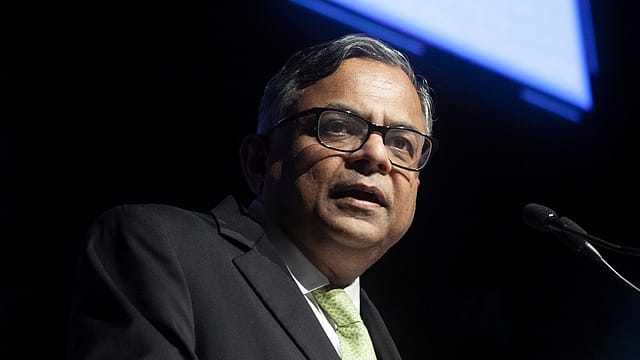
Tata Steel is looking to double down on its India focus with expansion in downstream capacities for tubes, tinplate and wire manufacturing, besides improving momentum in the defence and shipbuilding industries. Addressing the annual general meeting (AGM), Tata Group chairman N Chandrasekaran, who is also chairman of Tata Steel, said the steelmaker continues to focus on value-added products and digital engagements, achieving strong growth, supported by expansion into defence and shipbuilding.
"The company is also expanding its downstream capacity through Tubes, Tinplate and Wires," said Chandrasekaran.
In FY26, Tata Steel made Tata Steel Colors (formerly Tata BlueScope) a wholly owned subsidiary and acquired a majority stake in Thriveni Pellets – both critical to its long-term competitiveness, said Chandrasekaran. "The company’s position in India will be further reinforced through the planned expansion of NINL along with the recently inaugurated 0.75 MTPA Electric Arc Furnace in Ludhiana, which will significantly strengthen our long products portfolio," he said.
Tata Steel's board has approved the amalgamation of Neelachal Ispat Nigam Limited (NINL) into Tata Steel, which will enhance synergies and simplify the corporate structure.
Tata Steel is on an expansion spree in India and commissioned Phase II of the Kalinganagar project, taking the total capacity to 26.1 MTPA and expanding the site capacity from 3 to 8 MTPA. "With India’s largest blast furnace and state-of-the-art Cold Rolling Mill, we have strategically enhanced our flat products portfolio and strengthened our presence in high-value, technology-intensive segments such as automotive and defence. This is a decisive step towards our long-term vision of achieving 40 MTPA capacity," said Chandrasekaran.
Though the last year started with optimism and progressed with positive developments like the India-EU trade agreement and the interim India-US trade deal, the scenario shifted in March with the West Asia crisis leading to stagflation, falling output and rising inflation, he said. "Despite this, India’s economy remained resilient, recording a growth of 7.6% during fiscal 2026, primarily driven by strong domestic demand and manufacturing," he added.
The global steel industry witnessed subdued output as production fell 2% to 1.85 billion tonnes in 2025, driven by China’s slowdown and weak Western demand, coupled with cost volatility and regulatory pressures. However, the Indian steel industry displayed resilience and continued to grow, with production rising 10.7% to 168.4 million tonnes, supported by demand across infrastructure, construction, automotive and industrial sectors. Tata Steel's consolidated revenue grew 6% to ₹2,32,140 crore in FY26 and profit after tax jumped 243% to ₹10,886 crore.
According to Chandrasekaran, the strategy of structural intervention is yielding results in their European operations. "In the Netherlands, EBITDA tripled to €267 million, while in the UK, we have halved our EBITDA losses. In India, revenues were ₹1,40,302 crore and EBITDA was ₹34,272 crore, up 17% with EBITDA margins improving to 24% driven by cost efficiencies, better product mix and higher volume," he said. The company’s consolidated net debt stood at ₹80,144 crore.
In Europe, Tata Steel has entered into a transformation phase. In the UK, it broke ground on the £1.25 billion EAF Project at Port Talbot, marking the commencement of the UK’s largest low-carbon steelmaking transition, in partnership with the UK Government. The project is progressing in terms of engineering, design and construction, said Chandrasekaran.
In the Netherlands, the operating environment has become challenging for the steelmaker, with certain environmental regulations now exceeding European Union standards. "Emission norms have tightened to levels where, for some of Tata Steel Netherlands' legacy assets, viable solutions are not currently feasible within regulatorily accepted timelines," said Chandrasekaran.
The company is actively engaging with the Dutch Government and relevant stakeholders to develop a forward pathway which is environmentally compliant, financially affordable and viable over the long term, he added. Last year, Tata Steel Netherlands also acquired Vattenfall’s co-generation power plants to strengthen its energy security and support transition objectives.